Classic car police auctions: interpreting listings and lot notes - A Practical Buyer's Handbook
Police and government auctions offer access to classic cars, seized vehicles, and retired fleet inventory through platforms serving local jurisdictions, state agencies, and federal liquidation channels. Unlike traditional dealer sales, these vehicles are sold as-is, where-is, with no warranties or return options. Understanding how to read auction lot notes, decode condition abbreviations, and verify title status forms the foundation of successful bidding in this market. 1
Understanding Police Auction Lot Structure and Basic Columns
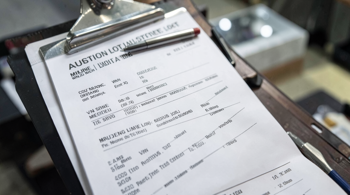
Police auction listings follow a standardized format that includes essential vehicle identification and condition data. The lot number, run order, year, make, model, vehicle identification number (VIN), reported mileage, and condition notes appear in predictable columns across most government auction platforms. 2 The VIN is the single most critical piece of data on any auction sheet because it connects to full vehicle history reports, service records, and title status. Mileage figures often include suffixes such as TMU (true mileage unknown), which signals uncertainty about odometer accuracy and should raise inspection priorities. 3
Location and run information tells buyers where the vehicle will be auctioned and in what sequence. Highlighting specific lot numbers before the auction allows bidders to position themselves physically and mentally for inspection. Lane assignments help buyers prioritize which vehicles to examine first, especially at large auctions where dozens of classic cars may be offered. Understanding these structural elements prevents confusion during fast-paced auction events and ensures bidders have confirmed the correct vehicle before committing funds. 4
Decoding Condition Abbreviations and Damage Notation Systems
Auction lot notes employ a standardized shorthand to describe vehicle condition efficiently. Common abbreviations include 4D for a quarter-sized dent, 3S for three scratches, and INOP for non-operational components such as air conditioning or power windows. These codes allow auctioneers to communicate specific damage in a single line without lengthy descriptions. 5 Understanding that 4D means cosmetic damage, not structural failure, prevents bidders from over-penalizing vehicles for minor issues that experienced repair shops can address affordably. Similarly, INOP A/C may signal only a refrigerant recharge or compressor replacement rather than catastrophic engine damage.
Damage notation extends to body condition diagrams found in detailed auction sheets for classic cars. Markings include A for scratches, U for dents, W for paint wave or repair evidence, S for surface rust, and C for corrosion or structural compromise. 6 These external diagrams provide visual confirmation of where damage exists on the vehicle's exterior. Sellers selling vehicles through police auctions often document whether paint repairs or Bondo (body filler) hide structural issues beneath the surface. Buyers should cross-reference photographic documentation with damage codes to verify that noted issues match visible evidence and that no significant damage is hidden from the lot notation.
Title Status, Ownership History, and Legal Considerations
Classic cars sold through police and government auctions carry different title designations that fundamentally affect legality, resale value, and insurance eligibility. Clean titles indicate the vehicle has no accidents, liens, or prior damage disclosures on record. Salvage titles signal the vehicle was declared a total loss by an insurance company at some point in its history and has undergone inspection and repair before resale. 7 Branded titles, including lien-hold status, indicate the vehicle has outstanding claims or legal encumbrances that must be resolved before ownership transfer.
Federal agencies and surplus vehicle auctions typically issue an SF-97 Certificate of Release rather than a state title, particularly for government fleet vehicles. 8 The SF-97 must be processed through the state DMV to obtain a permanent title, and some states (notably California, New York, New Jersey, Illinois, and Massachusetts) have historically misinterpreted these documents, incorrectly branding vehicles as salvage. Bidders should verify their state's SF-97 handling procedures before winning a bid on a federal surplus classic car. Running a Carfax or AutoCheck report before bidding confirms current title status, ownership history, and any past accident or service records that lot notes may not disclose. 9
Inspection Protocols and Documentation Before Bidding
Police auctions typically allow 24 to 48 hours of pre-auction inspection, during which bidders can examine vehicles in person, photograph condition, and run diagnostic checks. 10 Bringing an OBD-II code scanner reveals stored engine faults that visual inspection cannot uncover. A high-powered LED flashlight exposes rust hidden in wheel wells, door jambs, and undercarriage areas where corrosion may not be visible in auction photographs. A small magnet pressed against body panels instantly identifies Bondo (non-magnetic) concealing dent repairs versus solid metal, a critical technique for assessing hidden damage on classic cars.
Documentation during inspection should include written notes on fluid levels, battery condition, tire wear patterns, glass cracks, interior upholstery tears, and any mechanical sounds when the engine starts. Photographing the odometer, dashboard warning lights, and interior trim condition creates a baseline record if disputes arise after purchase. Lot notes often describe general condition but miss details visible only in person. Comparing personal inspection findings against the lot notation helps identify whether seller disclosures match physical reality or whether significant damage has been omitted from the listing. 11
Reserve Prices, Buyer's Premiums, and Total Cost Calculation
Police auction prices quoted in lot listings represent the hammer price or opening bid, not the final amount a bidder will pay. Buyer's premiums, added automatically after the gavel falls, typically range from 5 percent to 20 percent depending on the auction platform and seller. 12 A classic car listed at a $5,000 opening bid with a 10 percent premium results in a $5,500 actual cost before taxes, registration, and transport. Some auctions impose reserve prices, hidden minimum amounts that must be met before the vehicle can be purchased; others use no-reserve formats where the highest bidder wins regardless of price.
Administrative and processing fees vary significantly across platforms. GovDeals auctions, popular for local government surplus, typically charge 7.5 to 12.5 percent premiums, while PropertyRoom auctions for seized personal property charge approximately 16.5 percent flat. 13 Payment terms require deposit (often 10 to 25 percent of the winning bid) immediately after purchase, with full payment due within 3 to 7 days. Calculating total cost before bidding prevents surprise expenses and ensures the reserve budget covers all fees, not just the hammer price. Building a buffer above maximum bid amount accounts for tax, title, registration, and transport costs that arise after winning.
Comparing Auction Listings Against Vehicle History Reports
Cross-referencing auction lot notes against Carfax or AutoCheck reports reveals discrepancies and hidden history that lot descriptions omit. Carfax reports show accident damage, previous ownership, service intervals, and whether the vehicle carries a salvage or branded title. 14 If an auction listing describes a classic car as clean and well-maintained, but the Carfax report indicates multiple prior accidents or flood damage, the lot notation has deliberately or negligently misrepresented the vehicle's condition. AutoCheck, as an alternative reporting service, sometimes surfaces information that Carfax misses, particularly for vehicles sold across multiple states or through specialty auctions.
Service records visible in history reports validate seller claims about maintenance frequency and component replacement. A classic car showing consistent oil changes, brake service, and battery replacements at regular intervals suggests an owner who prioritized mechanical health. Conversely, gaps in service history or one-time repairs for major components raise red flags about interim neglect or undisclosed damage. Mileage progression across service dates also confirms whether the vehicle's reported odometer reading is consistent with documented usage patterns. 15 Comparing these objective history records against the subjective condition language in auction lot notes prevents bidders from overestimating vehicle quality based on selective or incomplete lot descriptions.
Risk Management and the As-Is, Where-Is Purchase Guarantee
Police and government auction purchases carry the phrase as-is, where-is prominently in terms and conditions, meaning the buyer accepts full responsibility for the vehicle's mechanical and cosmetic condition at the moment of sale. No warranties, no returns, and no refunds apply even if critical mechanical failures emerge immediately after purchase. 16 This legal framework shifts all inspection and verification responsibility to the bidder. A classic car that fails to start after leaving the auction lot remains the buyer's financial obligation with no recourse against the auctioneer or the selling agency.
Mitigating this risk requires thorough pre-purchase investigation and realistic budget allocation for immediate repairs. Classic cars often require special attention from specialists familiar with older mechanical systems, brake designs, and electrical configurations that modern technicians may mishandle. Allocating 15 to 25 percent of the purchase price as an emergency repair reserve acknowledges that auction-sourced vehicles typically require unforeseen maintenance. Setting a firm personal bid limit before the auction begins prevents emotional bidding that inflates prices above the vehicle's true value plus estimated repair costs. Successful auction buyers treat the winning bid as the beginning of investment, not the final cost, and account for the substantial risk premium that as-is status creates. 17
Sources
- Government Auctions Blog: Police Auctions: How to Buy Without Guesswork
- Snap Lap: Tips for Buying Retired Police Cars at Auction
- EatHealthy365: How to Read a VA Car Auction Run List Guide
- GovAuctions.app: How to Buy a Government Surplus Vehicle (2026)
- EatHealthy365: How to Buy a Used Detroit Police Car at Auction
- Glam Groups Pty Ltd: Japanese Car Auction Buying Guide
- EatHealthy365: The Process of Buying a Decommissioned Police Car
- 0TaxTags: Government Surplus Vehicle Guide: Ex-Police & SF-97 Fix
- EatHealthy365: What to Expect at a Police Car Auction in NJ
- EatHealthy365: Tips for a Michigan Police Car Auction
- EatHealthy365: Finding Value at a Car Police Auction
- GovAuctions.app: PropertyRoom vs GovDeals (2026)
- CLOSO: GovDeals NC Guide - How I Bought a Police Cruiser for $3,500
- Carfax: Vehicle History Reports
- AutoCheck: Vehicle History Reports
- EatHealthy365: A Guide to Finding a Local Police Car Auction
- Juraplot: Police Impound Vehicle Auctions and the American Legal System
Authored by MyTrendSpot team