Early symptoms of Lyme disease you should know: An analytical overview of clinical presentation and diagnosis
Understanding the Nature of Early Lyme Disease
Lyme disease is a bacterial infection primarily transmitted through the bite of infected black-legged ticks, also known as deer ticks 2. Caused by the bacterium Borrelia burgdorferi, the condition is the most common vector-borne illness in the northern hemisphere 5. Although approximately 500,000 Americans are estimated to be infected each year, the path to diagnosis is frequently complicated by the non-specific nature of early indicators 1. Because many individuals do not recall a specific tick bite, clinical vigilance remains the most effective tool for identifying the infection in its initial 3 to 30-day window 6.
The complexity of Lyme disease arises from its ability to mimic other common ailments, such as seasonal flu or viral infections 3. Public awareness campaigns often emphasize a classic bull’s-eye rash, yet reliance on this single diagnostic marker can lead to missed opportunities for early intervention 1. Understanding that the disease may present through varied dermatological and systemic symptoms is essential for recognizing the infection when it deviates from idealized textbook descriptions 9.
The Variability of the Erythema Migrans Rash
The most characteristic early sign of Lyme disease is a skin rash medically termed erythema migrans 1. While often cited as appearing in a bull’s-eye pattern, this appearance is not universal. The rash typically manifests as a flat, red, or oval-shaped patch at the site of the tick bite, gradually expanding in size over several days 1. In many instances, the center may fade, but it is equally common for the rash to appear as a uniformly red lesion 2.
Clinical observations suggest that the rash occurs in approximately 75% of those infected, though its visibility is heavily influenced by skin tone, where it may appear darker or less defined on darker skin 2. It is generally warm to the touch, but notably, it is often not intensely itchy or painful, which may lead an individual to dismiss it as a minor skin irritation 2. Furthermore, as the bacteria spread through the bloodstream, a patient might develop multiple erythema migrans lesions across different parts of the body, rather than a single site of infection 7.
Systemic Flu-Like Symptoms
Beyond dermatological signs, early Lyme disease often presents with systemic manifestations that mirror flu-like illnesses 9. Patients frequently report a combination of fever, chills, and profound fatigue that feels more intense than routine tiredness 3. This fatigue is often described as persistent, where regular rest or sleep does not fully resolve the sense of exhaustion 3. Coupled with these symptoms, individuals may experience headache, muscle aches, and joint pain, further complicating the initial assessment 6.
Swollen lymph nodes are another common indicator as the body’s immune system responds to the Borrelia burgdorferi infection 4. Because these symptoms are highly nonspecific, they are frequently misattributed to stress, heavy physical activity, or environmental viruses 3. Clinicians emphasize that when these symptoms occur in tandem with known outdoor exposure in tick-prone regions-such as gardening, hiking, or walking through tall grass-they should prompt a more thorough medical evaluation 3.
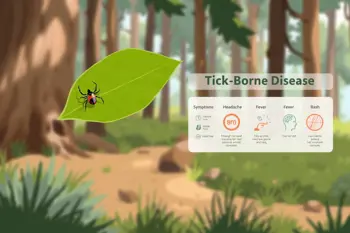
Diagnostic Challenges and Testing Limitations
The diagnosis of Lyme disease is frequently hindered by the size of the vectors involved. Black-legged ticks can be as small as a poppy seed, particularly in their nymph stage, making them difficult to detect on the skin 5. Consequently, many patients report no memory of a tick bite 6. Furthermore, laboratory testing presents its own set of hurdles; standard antibody tests for Lyme disease often produce false-negative results during the first few weeks of infection 8.
Antibody production takes time to reach detectable levels in the bloodstream, meaning that a negative test during the initial symptomatic phase does not necessarily rule out infection 9. Medical professionals typically rely on a combination of patient history, reported symptoms, and physical examinations to guide treatment decisions in the absence of definitive laboratory data during the early stage 9.
Geographic and Seasonal Considerations
While Lyme disease has been reported in all 50 U.S. states, the risk is not uniform across the country 8. The highest concentration of cases typically occurs in the Northeast, the mid-Atlantic, and the upper Midwest regions 2. Tick activity is most pronounced during the warm spring and summer months, but it is important to note that ticks can remain active well into the fall or even year-round in milder climates 4. Understanding one's local environment is a critical component of risk management.
| Region | Primary Risk Factors |
|---|---|
| Northeast/Mid-Atlantic | High population of deer ticks; frequent wooded areas |
| Upper Midwest | Wooded and brushy areas; tick life cycle maintenance |
| West Coast | Localized areas in Northern California and Pacific Northwest |
Consequences of Delayed Detection
If left untreated, early Lyme disease can progress to a disseminated stage, involving more severe complications that impact the nervous system, heart, and joints 9. Patients may develop facial palsy-a drooping of the facial muscles-or nerve pain and inflammation 2. Cardiac involvement, such as irregular heartbeats or rhythm problems, may also occur as the infection spreads deeper into body tissues 9. Prompt administration of antibiotics in the early stages is highly effective at preventing these long-term outcomes, making early recognition and clinical assessment vital 9.
Sources
- Harvard Health: The problem with 'classic' Lyme disease symptoms
- Family Doctor: Lyme Disease
- The Well by Northwell: The Warning Signs Of Lyme Disease
- Geisinger: Don't Ignore These Lyme Disease Symptoms
- Medscape: Lyme Disease
- Labcorp: Ask the expert: Your top questions about Lyme disease, answered
- Sharecare: How to spot the warning signs of Lyme disease
- Medical Xpress: Lyme disease: What to know about symptoms, treatment and prevention
- Acibadem International: Lyme Disease: Symptoms, Common Causes, and When to See a Doctor
Authored by MyTrendSpot team