Easy home treatments for pulled muscles: Clinical guidance and safety notes
After a sudden pull, ache, or tight feeling from bending, lifting, reaching, or exercising, the first question is often whether a pulled muscle can be treated at home. Most minor strains improve with basic care, but severe pain, weakness, swelling, bruising, or loss of function can indicate a more significant injury.
What a pulled muscle means
A pulled muscle is another name for a muscle strain, an injury in which muscle fibers or nearby connective tissue are overstretched or torn. Strains may result from overuse, heavy exertion, an unusual movement, poor lifting technique, inadequate warm-up, or exercising while muscles are weak, fatigued, or tight. Commonly affected areas include the back, hamstrings, calves, shoulders, and neck. 1
Symptoms vary with the extent of tissue damage. A mild strain may cause localized tenderness, tension, and soreness while preserving most strength. More substantial injuries can cause sharp pain, limited range of motion, swelling, bruising, weakness, or reduced muscle function. A popping sensation at the time of injury, major swelling, or inability to bear weight raises concern for a more serious tear or another condition that may resemble a strain. 2
First 48 to 72 hours: protect the area
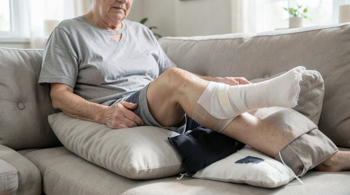
For a minor strain, the RICE approach is commonly used during the first one to three days: rest, ice, compression, and elevation. Rest means stopping the activity that caused the pain and avoiding unnecessary stress on the injured muscle, not remaining completely motionless. Ice can be applied for about 20 minutes at a time, approximately four to eight times daily, with a thin towel between the cold pack and skin. 3
Compression may reduce swelling when an elastic bandage is applied snugly but not tightly. Numbness, tingling, increasing pain, coolness, or color changes below the wrap indicate that it should be loosened. Elevating an injured limb above heart level when practical can also reduce swelling and bruising. These measures are supportive rather than curative, so the painful activity should not be resumed simply because swelling decreases. 4
Cold, heat, and medication choices
Cold therapy is generally emphasized during the early phase because it can reduce acute swelling and temporarily numb pain. Once acute swelling has subsided, often after roughly 48 to 72 hours, gentle warmth may relax tight tissue and make movement more comfortable. Heat should not be used as a reason to continue an activity that produces sharp pain, and neither cold nor heat should be applied directly to bare skin for prolonged periods. 5
Over-the-counter pain medicines can be considered according to the product label and individual medical circumstances. Ibuprofen and naproxen are nonsteroidal anti-inflammatory drugs that may help pain and localized swelling, while acetaminophen helps pain but does not provide the same anti-inflammatory effect. People with medication restrictions, stomach or kidney problems, bleeding risks, or other health conditions should obtain professional advice before using NSAIDs. 6
Gentle movement during recovery
Once acute pain begins to settle, gentle, pain-limited movement can help reduce stiffness and restore range of motion. Examples described in the research include light walking, controlled range-of-motion exercises, and gentle isometric contractions that activate the muscle without visible movement. Stretching should begin only after the acute phase and should never create sharp pain. A mild pulling sensation may be tolerable, but worsening pain is a signal to stop. 7
- Keep movements slow and controlled.
- Avoid explosive exercise, heavy lifting, and positions that reproduce sharp pain.
- Use discomfort during activity and the following day as guides for progression.
- Uninjured muscle groups may remain active if doing so does not stress the strained area. 8
Returning to exercise and normal activity
Recovery time depends on the muscle involved, the severity of the strain, and whether normal strength and movement return. Research supplied for this guide describes mild to moderate strains as commonly improving within approximately two to six weeks, while another clinical summary reports that many improve within two to three weeks. These ranges are general, not guarantees, and persistent weakness or pain should take priority over a calendar-based return. 9
A gradual return generally begins with ordinary daily movement, followed by low-impact activity and then light strengthening. The injured muscle should tolerate each stage without sharp pain, renewed swelling, or a notable increase in symptoms the next day. Returning to full training while the muscle remains painful or weak can increase the risk of reinjury. Warm-up, improved lifting mechanics, and a slower increase in activity can help address common contributors such as sudden workload changes and repetitive strain. 10
When home treatment is not enough
Professional evaluation is appropriate when pain is severe, the area appears deformed, a pop occurred, the muscle cannot be used normally, or the person cannot bear weight. Significant bruising or swelling, progressive symptoms, numbness, and loss of strength also warrant assessment. These findings can occur with larger tears, tendon injuries, fractures, or nerve-related problems rather than a simple minor strain.
- Seek assessment if symptoms worsen instead of gradually improving.
- Arrange medical evaluation when there is no meaningful improvement after several days or symptoms remain unresolved after about two weeks.
- Do not rely on home care alone when function is substantially impaired.
- For severe or uncertain injuries, a clinician can determine whether imaging, physical therapy, or other treatment is needed. 11
Sources
- Nolla Health, “How to Treat a Pulled Muscle: Recovery Steps”
- Biofreeze, “How to Treat and Manage a Pulled Muscle at Home”
- California Pain, “Pain Relief for a Pulled Muscle”
- Doctronic, “How to Care for a Pulled Muscle”
- Imperial Fitness Hub, “How to Speed Up Muscle Strain Recovery”
- Merck Manual Professional Edition, “Rehabilitative Measures for Treatment of Pain and Inflammation”
- Harvard Health Publishing, “Treating Sports Injuries”
- Ubie Doctor’s Note, “Can You Exercise Around a Pulled Muscle?”
- Tap Telehealth, “The Weekend Warrior Injury Guide”
- Hometown Urgent Care, “Muscle Strains and When to Seek Care”
- American Academy of Orthopaedic Surgeons, “Sprains and Strains”
Authored by MyTrendSpot team