Police auction construction equipment for sale: A guide to navigating government surplus and seized property markets
Key facts
- Government agencies, including police departments and transit agencies, sell surplus or seized equipment through public, legally mandated auction channels 1 2 3.
- Construction equipment sold at these auctions is typically offered on an as-is, where-is basis, meaning the buyer assumes all risks regarding mechanical or structural condition 1 2.
- Market pricing for used excavators currently ranges from approximately 19,000 USD for high-hour mini units to over 350,000 USD for large, low-hour machinery 4.
- Total acquisition costs often include the winning bid, buyer premiums, taxes, and specialized transport fees, as the buyer is responsible for hauling the equipment 1 5.
Public agencies, including local police departments, county road districts, and federal entities, frequently dispose of equipment that has reached the end of its service cycle or was recovered through legal forfeiture processes 1 2 3. Finding construction equipment for sale via these channels is a process that requires understanding both the administrative requirements of public auctions and the technical realities of used heavy machinery. Because these sales occur to fulfill legal mandates rather than retail objectives, the process differs significantly from visiting a private dealer.
Understanding the Sources of Public Surplus Equipment
Construction equipment appearing at public auctions generally originates from two distinct channels: surplus inventory and seized property 3. Surplus property consists of machines retired by municipal, state, or federal agencies, such as county public works departments or public universities, due to age, changing project requirements, or fleet standardization 1. These items are often sold to recoup costs and prevent waste 3. Conversely, seized property represents assets taken into law enforcement custody through forfeiture or recovery actions, which are subsequently sold under specific state or local statutes after legal holding periods expire 2 6.
It is important to distinguish between these categories because their histories differ. A machine from a public works fleet may have comprehensive maintenance records, whereas seized property might have sat in an impound facility for an extended duration with minimal environmental protection 6. Buyers should always confirm the seller's identity, as not every auction carrying law enforcement branding is operated by a police department; many utilize third-party regional or national auction platforms to facilitate the sale 1 7.
Common Equipment Categories and Market Price Ranges
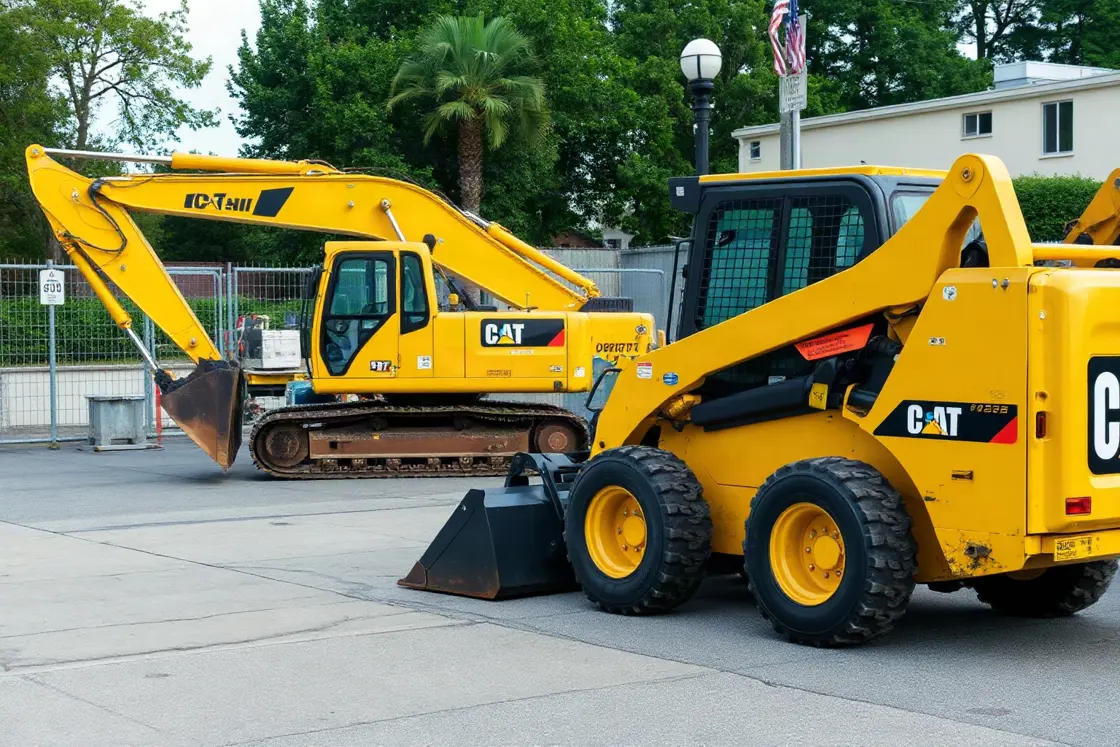
Inventory at these auctions often includes a wide array of jobsite machinery. Common items include backhoe loaders, skid steers, mini and standard excavators, wheel loaders, dump trucks, trailers, and various attachments like buckets, hydraulic breakers, and brush cutters 1 5. In 2026, market data indicates that prices for these assets vary based on brand, operating hours, and physical condition 8 4.
| Equipment Type | Typical Market Price Range (2026) |
|---|---|
| Mini Excavators | 25,000 USD to 65,000 USD 4 |
| Mid-size Excavators | 45,000 USD to 310,000 USD 4 |
| Skid Steer Loaders | 8,000 USD to 65,000 USD 9 |
| Backhoe Loaders | 15,000 USD to 130,000 USD 8 10 |
| Wheel Loaders | 85,000 USD to 700,000 USD 10 |
The Bidding and Inspection Process
Buying at a public auction involves strict adherence to stated terms, as these sales are typically conducted on an as-is, where-is basis 1 2. This terminology indicates that the equipment is sold without a warranty and the buyer bears the risk of any mechanical, electrical, or structural issues discovered after the sale 2 3. Before placing a bid, potential buyers should prioritize a physical inspection, though some online-only sales may limit this opportunity. In such cases, verifying the machine's serial number, matching it to the documentation provided, and reviewing available maintenance logs is essential 1 7.
Prospective bidders must also be aware of the registration requirements and payment deadlines set by the auction operator. Many jurisdictions require specific bidder information to comply with procurement laws 7. Because police and government surplus auctions are legally authorized events rather than private retail transactions, the rules governing transparency and fairness are often mandated by state or municipal statutes, which can vary significantly between different locations 2 7.
Logistics: Transportation and Hidden Costs
The final cost of equipment acquired through public auctions often exceeds the winning bid. Buyers must account for additional expenses, including buyer's premiums, applicable sales taxes, and the cost of specialized transportation 1 5. Unlike purchasing from a dealer who may provide delivery, the buyer is almost exclusively responsible for loading and hauling the machinery from the auction site 1.
For heavy construction equipment, this requires coordinating with professional heavy-haul transport services, securing necessary permits if the equipment exceeds standard road dimensions, and ensuring the loading site has the appropriate capacity for the machine's weight 1. Neglecting to plan for these logistics can lead to storage fees, as auctions often impose strict removal deadlines for sold items 1 2.
Verifying Legitimacy and Avoiding Fraud
Due to the public interest in surplus sales, it is vital to distinguish between legitimate agency-sanctioned auctions and potentially misleading advertisements. Official surplus auctions are typically announced through government websites, official local newspapers, or established, reputable public procurement platforms 7. A buyer should verify the seller’s name and contact information provided in the listing against public records to ensure the agency is authorized to dispose of the property 6 7.
Authentic government auctions prioritize transparency and will clearly outline the governing statutes, the identity of the seller, and the complete terms of sale, including payment and pickup procedures 2 7. If a listing requires a payment method that does not align with the formal processes described in the auction's official terms and conditions, or if the auction operator's identity cannot be independently verified through a public agency’s website, the buyer should exercise extreme caution 3.
Sources
- Surplus Construction Equipment Auctions Explained – Government Auctions Blog: https://www.governmentauctions.org/blog/2026/08/05/surplus-construction-equipment-auctions-explained/
- Are police auctions legit and how do they work?: https://news.worldlawdigest.com/police/police-auctions-authenticity/
- Are Police Auctions Legit? What Buyers Need to Know - Engineer Fix: https://engineerfix.com/are-police-auctions-legit-what-buyers-need-to-know/
- Used Excavator Prices in 2026: What Every Model Is Worth | HeavyDutyYard: https://www.heavydutyyard.com/blog/used-excavator-prices
- How Federal Surplus Property Auctions Work – Government Auctions Blog: https://www.governmentauctions.org/blog/2026/08/08/federal-surplus-property-auctions/
- Police Impound Tractors: Auction Opportunities – Frugal Info: https://frugalinfo.com/shopping/police-impound-tractors-auction-opportunities-en-us/
- NJ Police Auctions: Where to Find and How to Bid - LegalClarity: https://legalclarity.org/nj-police-auctions-where-to-find-and-how-to-bid/
- Used Backhoe Prices in 2026: What Every Model Is Worth | HeavyDutyYard: https://www.heavydutyyard.com/blog/used-backhoe-prices
- Used Skid Steer Prices in 2026: What Every Model Is Worth | HeavyDutyYard: https://www.heavydutyyard.com/blog/used-skid-steer-prices
- Heavy Equipment Value Guide — Free Pricing Data | HeavyDutyYard: https://www.heavydutyyard.com/heavy-equipment-value-guide
Authored by MyTrendSpot team