Ways to manage plantar fasciitis at home: An evidence-based care overview
For people looking for ways to manage plantar fasciitis at home, the central approach is conservative care rather than a single remedy. Most cases improve over time with a consistent combination of activity modification, stretching, icing, appropriate shoes, and support for the arch. Mayo Clinic reports that many people recover within a few months using simple treatments that do not involve surgery. 1 The characteristic pattern is heel pain with the first steps after waking or after sitting, sometimes easing as movement begins. 2
Recognizing the typical pain pattern
Plantar fasciitis usually causes tenderness near the heel attachment of the plantar fascia, the strong band of tissue running along the bottom of the foot from the heel toward the toes. Pain may be sharp, dull, or aching, and repeated walking, running, standing, or exercise can aggravate it. 2 Diagnosis is generally based on medical history and a physical examination, while X-rays or magnetic resonance imaging may be used when another problem, such as a stress fracture, needs to be ruled out. 1
- Morning or post-rest pain is a common feature.
- Heel tenderness helps distinguish the condition from some other causes of foot pain.
- A bone spur seen on an X-ray does not necessarily cause the pain. 1
Reducing aggravating activity and using ice
Rest does not necessarily mean complete inactivity. It means reducing or temporarily changing activities that clearly increase heel pain, particularly repeated impact, prolonged standing, running, jumping, or walking on hard surfaces. Mayo Clinic identifies icing the heel, stretching, and avoiding painful activities as basic measures that can support recovery. 1 A gradual return to exercise is more appropriate than abruptly resuming the previous level of activity after symptoms ease. 5
- Replace high-impact exercise with activity that causes less heel irritation.
- Apply an ice pack or chilled bottle to the heel for about 15 to 20 minutes when appropriate. 3
- Do not use an activity as a test if it repeatedly causes sharper pain.
Stretching the calf and plantar fascia
Stretching is a central home strategy because tight calf muscles can increase tension through the Achilles tendon and plantar fascia. Cleveland Clinic describes seated and standing stretches intended to lengthen and strengthen the tissues that support the foot, while Mayo Clinic notes that physical therapy commonly includes plantar fascia and Achilles tendon stretches. 3 1 A gentle routine performed consistently is more useful than forceful stretching that provokes pain.
- Stretch the calf with the affected leg positioned behind the other leg.
- Use a towel or resistance band to gently draw the toes toward the body while seated.
- Stretch before the first steps in the morning and after periods of inactivity.
- Stop or reduce the stretch if it causes sudden, severe, or worsening pain.
Improving footwear and foot support
Footwear affects how pressure is distributed across the heel and arch. Appropriate shoes with cushioning, arch support, and some heel elevation can reduce strain, while walking barefoot or wearing unsupportive footwear on hard surfaces may increase irritation. 4 5 Store-bought arch supports, heel cups, or custom orthotics may help distribute pressure more evenly, although fit and comfort matter because an insert that increases pain is not providing useful support. 1
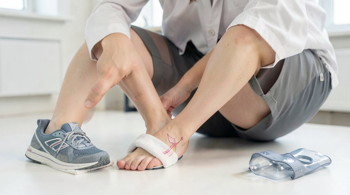
- Use supportive shoes for routine walking and household tasks.
- Avoid relying on flip-flops or going barefoot when symptoms are active.
- Consider arch supports for unusually high or low arches.
- Replace footwear when cushioning or structural support has deteriorated.
Night splints, taping, and pain medicines
A night splint holds the foot in a stretched position during sleep and may reduce the tight, painful feeling associated with the first morning steps. 1 Athletic taping can also provide temporary support, and a physical therapist can demonstrate an appropriate technique. 1 Nonprescription medicines such as ibuprofen or naproxen may ease pain and inflammation, but they are not appropriate for everyone and should be considered with a clinician or pharmacist when medical conditions or other medicines are involved. 1
- Introduce a night splint gradually if it causes discomfort or sleep disruption.
- Use taping only on clean, intact skin and remove it if irritation develops.
- Follow the product label for any nonprescription pain reliever.
- Do not treat medication as a substitute for activity modification and stretching.
Maintaining progress and knowing when to seek care
Home management requires ongoing adjustment because plantar fasciitis can be linked with repeated impact, prolonged standing, tight tissue, foot-arch differences, weight-related mechanical load, or a sudden change in exercise. 2 Maintaining a healthy weight may reduce pressure on the plantar fascia, while gradual increases in activity and continued supportive footwear can limit recurrence risk. 5 Professional assessment is appropriate when pain is severe, persists despite home care, disrupts sleep or walking, or occurs with swelling, numbness, fever, or a specific injury. 6
- Seek evaluation if symptoms do not steadily improve over several weeks.
- Request assessment for unusual pain patterns or inability to bear weight.
- Physical therapy, orthotics, or temporary walking aids may be considered when home measures are insufficient. 1
- Imaging may be used to investigate alternative diagnoses rather than to confirm a painful bone spur. 1
Sources
- Mayo Clinic, Plantar fasciitis: Diagnosis and treatment, https://www.mayoclinic.org/diseases-conditions/plantar-fasciitis/diagnosis-treatment/drc-20354851
- FamilyDoctor.org, Plantar Fasciitis, https://familydoctor.org/condition/plantar-fasciitis/
- Cleveland Clinic, Plantar Fasciitis Stretches and Exercises, https://health.clevelandclinic.org/plantar-fasciitis-stretches-exercises
- MSD Manual Professional Edition, Plantar Fasciitis, https://www.msdmanuals.com/professional/musculoskeletal-and-connective-tissue-disorders/foot-and-ankle-disorders/plantar-fasciitis
- Franciscan Health, Heel Pain in the Morning: Help Plantar Fasciitis, https://www.franciscanhealth.org/community/blog/heel-pain-in-the-morning--how-to-help-plantar-fasciitis
- Acibadem International, Plantar Fasciitis: Symptoms, Causes and Treatment Options, https://acibademinternational.com/health-library/plantar-fasciitis-symptoms-causes-and-treatment-options/
Authored by MyTrendSpot team