Understand esophageal cancer treatment options: A clinical overview of modern care
Understanding esophageal cancer treatment options requires looking beyond a single procedure or medicine. Treatment decisions are generally based on stage, tumor location, histology, biomarker findings, resectability, nutritional status, and the person’s overall health, with care commonly coordinated by a multidisciplinary team. 1
How doctors determine the treatment plan
Esophageal cancer is primarily divided into squamous cell carcinoma and adenocarcinoma. These are biologically different diseases and can respond differently to treatment. Staging evaluates how deeply the tumor has grown, whether regional lymph nodes are involved, and whether cancer has spread to distant organs. The tumor’s position in the upper, middle, or lower esophagus, or near the gastroesophageal junction, also affects the treatment strategy. 2
Medical teams also consider whether the cancer can be removed completely, the patient’s heart and lung function, nutritional condition, swallowing ability, and preferences. Biomarker testing can influence systemic treatment, particularly assessments involving HER2, PD-L1, and mismatch repair or microsatellite instability status. These factors help determine whether treatment is intended to cure the disease, control it, relieve symptoms, or combine several goals. 3
Endoscopic treatment for very early disease
Some cancers confined to the inner layers of the esophageal wall may be treated through an endoscope rather than a major operation. Endoscopic mucosal resection removes abnormal tissue from the lining, while related endoscopic techniques may be used to assess or treat carefully selected superficial tumors. These approaches can preserve the esophagus when the cancer has a low likelihood of having reached lymph nodes. 7
Endoscopic treatment is not suitable for every early tumor. The depth of invasion, cell type, tumor size, margins, and other pathological findings determine whether additional surgery or treatment is needed. Ablation may also be used for certain abnormal precancerous or superficial areas, but continued endoscopic surveillance remains important because new abnormal tissue or residual disease can occur. 5
Surgery and treatment before an operation
An esophagectomy removes part or most of the esophagus and usually includes removal of nearby lymph nodes. The digestive tract is then reconstructed so that swallowed food can pass to the stomach or another connected section of the gastrointestinal tract. Because esophagectomy is a major operation, assessment of physical fitness, respiratory function, nutritional status, and operative risk is an important part of preparation. 8
Surgery is often combined with treatment given beforehand, known as neoadjuvant therapy. Depending on histology and clinical circumstances, this may involve chemotherapy, radiation, or chemoradiation. The objectives are to reduce the tumor, improve the chance of complete removal, and treat microscopic cancer cells that may already have traveled beyond the visible tumor. Metastatic disease is generally managed with systemic therapy rather than curative esophagectomy. 4
Chemotherapy, radiation, and chemoradiation
Chemotherapy uses medicines that circulate through the body to damage cancer cells or limit their growth. Radiation therapy uses focused external energy to destroy cancer cells in a defined area. When chemotherapy and radiation are delivered together, the chemotherapy can increase the tumor’s sensitivity to radiation. Chemoradiation may be used before surgery or, for selected patients, as the main treatment when surgery is unsuitable or not preferred. 9
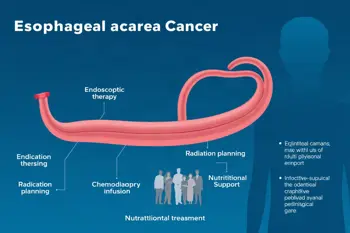
The combination and timing of these treatments depend on tumor histology, location, stage, operability, and the patient’s ability to tolerate treatment. Cross-disciplinary planning is important because radiation fields, surgical reconstruction, and systemic medicines must be coordinated. Potential treatment burdens include swallowing difficulty, fatigue, nutritional decline, and other side effects, making monitoring and supportive care part of the treatment plan rather than an afterthought. 5
Immunotherapy and biomarker-directed medicines
Immunotherapy, including immune checkpoint inhibitors such as pembrolizumab, helps the immune system recognize and attack cancer cells. It has become an important option in advanced esophageal cancer, particularly when treatment selection is guided by tumor characteristics and clinical context. Research and updated guidelines describe improved outcomes from incorporating immunotherapy into selected treatment strategies compared with older chemotherapy-only approaches. 1
Targeted therapy is designed for tumors with particular molecular features. Trastuzumab, for example, may be considered for HER2-positive disease, while broader biomarker assessment can identify other treatment-relevant characteristics. Eligibility is not determined by symptoms alone. Pathology and laboratory testing are required, and treatment selection also depends on prior therapy, organ function, expected benefits, risks, and local regulatory approvals. 10
Care when cancer has spread or symptoms require relief
For unresectable or metastatic disease, treatment usually focuses on medicines that work throughout the body. Chemotherapy, immunotherapy, targeted therapy, or combinations may be used according to histology, biomarkers, previous treatment, and fitness. The objectives may include slowing progression, extending life, preserving swallowing, and controlling pain or other symptoms. Clinical trials can provide access to investigational approaches while also requiring careful review of eligibility and potential risks. 2
Supportive and palliative procedures address problems caused by the tumor or treatment. Esophageal dilation can widen a narrowed passage, and an esophageal stent can help keep the channel open for food and liquids. Nutrition support, including a feeding tube when swallowing is unsafe or inadequate, may be necessary during treatment. Symptom control, psychological support, and follow-up care remain relevant at every stage, including when treatment is intended to cure. 12
Questions that help compare treatment options
Before treatment begins, patients commonly need clear information about the cancer’s histology, stage, location, biomarker results, treatment intent, and whether surgery is technically feasible. It is also important to understand how different options affect swallowing, nutrition, recovery time, daily functioning, and the likelihood of needing more treatment. A multidisciplinary review can help integrate surgical, radiation, medical oncology, gastroenterology, pathology, radiology, and nutrition perspectives. 3
Important questions include whether a second pathology review is appropriate, whether the proposed plan is based on current evidence, what side effects require medical attention, and what alternatives exist if treatment is not tolerated. Clinical trials may be relevant at different stages, but participation depends on specific eligibility requirements. Decisions should be individualized, with expected benefits balanced against treatment risks and personal priorities. 13
Sources
- SEOM–GEMCAD–TTD clinical guideline, Springer Nature: https://link.springer.com/article/10.1007/s12094-026-04291-y
- Multidisciplinary Management of Esophageal Cancer, JCO Oncology Practice: https://doi.org/10.1200/op-26-00198
- Penn Medicine, Esophageal Cancer Treatment: https://www.pennmedicine.org/conditions/esophageal-cancer/treatment
- Mayo Clinic, When Is Surgery Recommended for Esophageal Cancer?: https://newsnetwork.mayoclinic.org/discussion/mayo-clinic-qa-when-is-surgery-recommended-for-esophageal-cancer/
- Advances in the Medical Management of Esophageal Cancer: https://doi.org/10.21037/aoe-25-16
- Esophageal Cancer: From Pathogenesis to Precision Therapies: https://www.nature.com/articles/s41392-026-02614-7
- American Cancer Society, Endoscopic Treatments: https://www.cancer.org/cancer/types/esophageal-cancer/treating/endoscopic-treatments.html
- National Cancer Institute, Esophageal Cancer Treatment: https://www.cancer.gov/types/esophageal/patient/esophageal-treatment-pdq
- Johns Hopkins Medicine, Esophageal Cancer: https://www.hopkinsmedicine.org/health/conditions-and-diseases/esophageal-cancer
- Cleveland Clinic, Esophageal Cancer: https://my.clevelandclinic.org/health/diseases/6137-esophageal-cancer
- Memorial Sloan Kettering Cancer Center, Esophageal Cancer Treatment: https://www.mskcc.org/cancer-care/types/esophageal/treatment
- Cancer Research UK, Palliative Treatment: https://www.cancerresearchuk.org/about-cancer/esophageal-cancer/treatment/palliative
- American Society of Clinical Oncology, Esophageal Cancer Treatment Options: https://www.cancer.net/cancer-types/esophageal-cancer/treatment-options
Authored by MyTrendSpot team