Affordable endosteal dental implants near me: A consumer cost and eligibility report
The search for affordable endosteal dental implants near me usually reflects two concerns at once: replacing missing teeth and understanding whether treatment can fit within a household budget. Endosteal implants are the most common implant type, but the quoted amount can vary substantially depending on imaging, bone support, surgery, restoration, and follow-up care.
What endosteal implants are
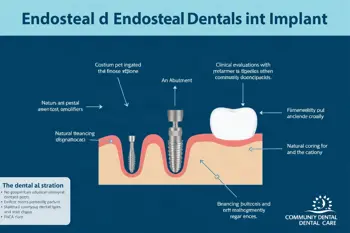
Endosteal implants are small, generally screw-shaped devices placed directly into the jawbone. Titanium posts act as artificial tooth roots, and an abutment later connects the post to a crown, bridge, or denture. This design differs from subperiosteal implants, which rest above the jawbone and below the gum tissue. Endosteal treatment is generally considered when sufficient healthy bone is available. 1
The implant must integrate with surrounding bone through a process called osseointegration before the final replacement tooth is attached. Endosteal implants can support a single missing tooth, multiple teeth, implant-supported dentures, or broader full-mouth restoration. Clinical sources describe them as durable and natural-looking, although candidacy depends on bone density, medical history, and the condition of the gums. 2
Typical costs and what the quote includes
General United States cost estimates place a single dental implant, including the abutment and crown, at approximately $3,000 to $4,500. That range should be treated as a broad market reference rather than a guaranteed local fee, because some advertised figures cover only the implant post or surgical placement and exclude the restoration. 3
A complete written estimate should identify the consultation, three-dimensional imaging, extraction if required, implant placement, abutment, crown, temporary tooth, anesthesia or sedation, and follow-up visits. Bone grafting and sinus lifts can increase the total when the jaw lacks adequate support. Comparing itemized plans is more informative than comparing one headline figure with another. 4
Where lower-cost care may be available
Dental schools may provide implant procedures at rates reported to be 30% to 50% below private-practice fees. Treatment is typically performed within a supervised training environment, which can mean additional appointments or a longer timetable. Availability, eligibility, and the exact services included vary by institution, so a school-based quote requires careful review of clinical supervision and laboratory charges. 5
Federally Qualified Health Centers may sometimes offer sliding-scale oral surgery services based on household income. These centers are located through the Health Resources and Services Administration search system, although implant availability is not uniform and some locations may focus on urgent, preventive, or restorative care instead. A community clinic assessment can still clarify whether referral pathways or income-based fees apply. 6
Financing and dental plan considerations
Dental discount plans, including examples such as Careington and Aetna Vital Savings, may reduce participating-provider charges for implant surgery by approximately 15% to 40%, depending on the network and procedure. These plans are not the same as dental insurance, and the patient remains responsible for fees not covered by the plan, including possible grafting, imaging, or restoration charges. 7
Some oral surgeons and periodontists work with third-party financing providers such as CareCredit or LendingClub. Financing can spread an upfront clinical expense across scheduled payments, but approval requirements, interest, account fees, and repayment periods must be reviewed before treatment. A monthly amount does not represent the total clinical cost, so both figures should appear in the financial documents. 8
Eligibility, safety, and clinical risks
Patients generally need adequate jawbone volume and healthy gum tissue for predictable endosteal placement. When bone density is insufficient, bone grafting or a sinus lift may be considered, while mini implants, subperiosteal implants, bridges, or dentures may be alternatives in selected cases. A board-certified periodontist or oral surgeon can assess anatomy and medical factors before a final treatment recommendation. 9
Three-dimensional cone-beam imaging can help clinicians evaluate bone structure and plan implant placement. Risks include surgical complications, infection, inadequate integration, damage to nearby structures, and eventual implant failure. A very low quote may reflect omitted imaging, fewer implants than clinically indicated, a lower-cost restorative material, or excluded follow-up rather than a safer or equivalent treatment pathway. 10
Maintenance and long-term value
Implants are intended to function as long-term tooth replacements, and research summaries report success rates above 95% when endosteal implants are placed by experienced professionals. Proper care remains necessary because the surrounding gums and bone can develop disease even when the titanium post itself is stable. Regular professional examinations and daily oral hygiene are therefore part of the treatment commitment. 2
Traditional dentures and bridges may have lower initial fees, but they can require replacement over time and do not preserve jawbone structure in the same way as an implant that replaces a tooth root. The most meaningful comparison considers the complete treatment plan, likely maintenance, restoration durability, and the consequences of postponing care. Clinical suitability should take priority over a headline price. 4
How to compare nearby providers responsibly
A useful comparison begins with provider qualifications, documented implant experience, digital imaging capability, and a clear explanation of who performs surgery and who places the final crown. Practices may divide the procedure among a general dentist, oral surgeon, periodontist, and laboratory, while other offices coordinate more of the process in one location. The responsible choice depends on clinical fit, not marketing language alone. 9
Before consenting to treatment, patients can request an itemized plan showing the implant brand or material, number of implants, restoration type, imaging, grafting assumptions, anesthesia, warranty terms, and expected follow-up. Questions about complications, replacement responsibility, and payment obligations can reveal differences hidden by simplified estimates. Public and nonprofit resources may help identify care pathways, but every clinical recommendation requires an individual examination. 6
Sources
- American Academy of Implant Dentistry and Silicon Valley Smile Solutions, information on endosteal implant design and treatment options
- My Dental Implants Center, information on endosteal implants, durability, and reported success rates
- CostHelper, United States dental implant cost estimates
- Mayo Clinic, dental implant cost factors and potential risks
- Healthline, information on reduced-cost dental school care
- Health Resources and Services Administration, community health center search information
- WebMD, information on dental plans and implant-related patient costs
- CareCredit, financing information for dental procedures
- American Academy of Periodontology, endosteal implant procedure and candidacy information
- 5D Smiles, discussion of imaging, materials, implant planning, and omitted treatment components
Authored by MyTrendSpot team