Warning signs of congestive heart failure: clinical context and emergency guidance
What congestive heart failure means
Congestive heart failure, often called heart failure, occurs when the heart cannot pump enough blood to meet the body's needs or cannot fill properly between beats. The term does not mean that the heart has stopped. Instead, impaired pumping or filling can reduce blood flow and cause blood or fluid to back up in the lungs, legs, feet, or abdomen. Coronary artery disease, heart attack, high blood pressure, valve disease, and genetic conditions are among the possible causes. 14
Symptoms may develop gradually over days, months, or longer periods, although a sudden worsening can represent acute decompensated heart failure. Some people have structural or functional heart abnormalities before symptoms become noticeable, while others develop clear limitations in daily activity. Because breathlessness, tiredness, and swelling can also occur with lung disease, kidney problems, anemia, obesity, or physical deconditioning, symptoms alone cannot confirm the diagnosis. Clinical examination, blood tests, and imaging are generally used for evaluation. 23
Breathlessness and sleeping difficulties
Shortness of breath is one of the most recognizable warning signs. It may first appear during walking, stair climbing, or other activities that were previously manageable. As congestion progresses, breathing difficulty can occur with less exertion, while lying flat, or sometimes at rest. Fluid pressure in the lungs can also cause a cough or wheeze that becomes more noticeable at night. These changes are clinically important when they represent a clear departure from a person's usual breathing pattern. 67
- Needing extra pillows or sleeping propped up because lying flat worsens breathing. 10
- Waking suddenly at night gasping for air, a pattern associated with paroxysmal nocturnal dyspnea. 10
- Persistent cough or wheezing, particularly when accompanied by increasing breathlessness. 9
Swelling and rapid weight changes
Fluid buildup may cause edema in the feet, ankles, lower legs, or abdomen. Swelling can be more apparent later in the day or after prolonged standing, but its location and severity vary. Rapid weight gain is another warning sign because it may reflect retained fluid rather than an increase in body tissue. Presbyterian Healthcare Services identifies a gain of 2 to 3 pounds in one day or 5 pounds in one week as a possible indication that fluid retention is worsening. 6
Changes in swelling and weight are most informative when tracked against an established personal baseline. A gradual increase, tighter shoes, increasing abdominal fullness, or a noticeable change in how clothing fits can provide useful information for a clinician. Fluid may accumulate in the lungs, abdomen, or legs, and congestion can occur even when a person does not feel dramatic chest discomfort. These signs should be interpreted alongside breathing, energy, appetite, and activity changes. 74
Fatigue and reduced physical capacity
Unusual fatigue can occur when the heart cannot deliver enough oxygen-rich blood to meet the body's energy demands. The symptom may be described as persistent tiredness, weakness, low energy, or difficulty recovering from ordinary tasks. A person may notice that routine activities such as bathing, shopping, walking, or climbing stairs require more rest than before. Harvard Health places fatigue among the FACES warning signs developed to help clinicians and patients recognize possible heart failure symptoms. 1
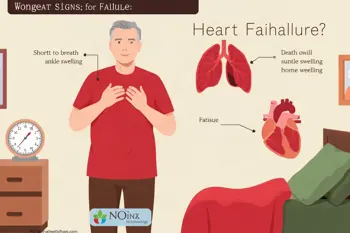
Reduced exercise tolerance is significant when it is new, progressive, or disproportionate to recent activity. It may appear together with breathlessness, swelling, rapid heartbeat, dizziness, or sleep disruption. Fatigue is not specific to heart failure, and aging alone can also change physical capacity, so a persistent or worsening pattern requires medical assessment rather than self-diagnosis. The functional stage of heart failure is partly described by how symptoms affect ordinary activity, from no limitation to symptoms at rest. 28
Cough, wheezing, and other bodily symptoms
When fluid accumulates in the lungs, a persistent cough or wheezing may develop. The cough can worsen when lying down or at night and may occur with shortness of breath. More advanced pulmonary congestion can produce pink, blood-tinged, or frothy sputum, which is a serious symptom. Heart failure can also affect digestion and general well-being, with possible loss of appetite, nausea, abdominal discomfort, or a feeling of fullness related to fluid congestion. 311
- Loss of appetite or nausea may occur alongside other congestion symptoms. 11
- Abdominal swelling or discomfort can accompany fluid retention beyond the legs and feet. 4
- Confusion, reduced alertness, or difficulty concentrating can be reported when circulation and oxygen delivery are impaired. 11
Heart rate, dizziness, and fainting
Heart failure may be accompanied by a fast or irregular heartbeat, palpitations, dizziness, lightheadedness, or fainting. The body can attempt to compensate for reduced circulation by increasing heart rate, while rhythm disorders may also contribute to symptoms or cause heart failure. These signs do not identify a single cause, but a new irregular pulse, repeated lightheadedness, or fainting is clinically important, particularly when combined with breathlessness, chest discomfort, weakness, or swelling. 912
Emergency evaluation is appropriate for sudden severe shortness of breath, chest pain, fainting, severe weakness, confusion, blue lips, or pink frothy sputum. A rapid and obvious deterioration can signal acute congestion or another dangerous cardiovascular or pulmonary problem, including a heart attack or serious rhythm disturbance. Symptoms that are less severe but steadily worsening should also be communicated to a healthcare professional because early assessment can distinguish heart failure from other conditions and guide appropriate testing. 37
How symptom patterns are assessed
No single warning sign establishes congestive heart failure. Clinicians consider the timing, severity, and combination of symptoms, as well as medical history such as coronary artery disease, previous heart attack, high blood pressure, diabetes, valve disease, arrhythmia, obesity, sleep apnea, severe lung disease, or prior heart muscle injury. Heart failure may involve a weakened heart muscle, a stiff heart muscle that fills poorly, or both, so symptoms can differ among individuals. 84
Assessment commonly includes a physical examination, blood tests, and imaging such as echocardiography, an ultrasound examination of the heart. Monitoring daily weight, swelling, breathing position, nighttime awakenings, activity tolerance, and medication-related changes can give clinicians a clearer picture of progression. Because symptoms overlap with multiple disorders, treatment decisions should be based on professional evaluation rather than one isolated measurement or symptom. 27
Sources
- Harvard Health, “5 Warning Signs and Symptoms of Early Heart Failure”
- Merck Manual Professional Edition, “Chronic Heart Failure”
- Acibadem Hospitals Group, “Signs of Heart Failure: Possible Causes and When to Seek Care”
- Acibadem Hospitals Group, “Congestive Heart Failure: An Evidence-Based Guide for Patients”
- Keck Medicine of USC, “How Doctors Should Treat Congestive Heart Failure Today”
- Presbyterian Healthcare Services, “Early Signs and Symptoms of Heart Failure”
- Merck Manual Consumer Version, “Heart Failure”
- Baylor Scott & White Health, “Understanding the Early Signs of Heart Failure”
- Johns Hopkins Medicine, “Congestive Heart Failure: Prevention, Treatment and Research”
- Cleveland Clinic, “Heart Failure”
- American Heart Association, “Warning Signs of Heart Failure”
- Stanford Health Care, “Heart Failure Symptoms”
Authored by MyTrendSpot team