Warning signs of liver disease to watch for: A clinical guide to symptoms and next steps
Warning signs of liver disease to watch for include changes in the skin, eyes, urine, stool, appetite, energy, and abdominal size. Liver disease may develop without obvious symptoms, so a person can have liver damage even when feeling well. Recognizing patterns such as jaundice, swelling, easy bruising, or persistent fatigue can help identify when medical assessment is appropriate, although symptoms alone cannot confirm a diagnosis. 1
Early symptoms can be easy to miss
Many liver conditions develop gradually over months or years, and early symptoms are often mild or nonspecific. Fatigue, weakness, nausea, poor appetite, unintended weight loss, general malaise, or discomfort beneath the ribs on the upper right side may occur, but these symptoms can also have many other causes. Some people have no symptoms until the liver is substantially damaged, which is why symptoms are not a reliable way to determine whether the liver is healthy. 35
- Persistent tiredness despite rest
- Reduced appetite or unexplained weight loss
- Nausea, vomiting, or mild upper-right abdominal discomfort
- Itching, muscle weakness, cramps, or loss of muscle
Jaundice and changes in body waste
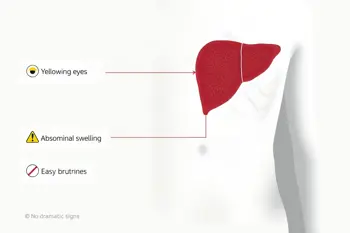
Jaundice is yellowing of the skin or the whites of the eyes and is one of the most recognizable signs of liver or bile-processing problems. It occurs when bilirubin builds up in the blood. Dark urine and unusually pale or clay-colored stool can also indicate that bile is not being processed or transported normally. These findings do not identify a specific disease, but new jaundice, especially when combined with feeling unwell, warrants medical attention. 15
- Yellow skin or yellow eye whites
- Urine that becomes noticeably darker
- Pale, clay-colored, or otherwise unusual stool
- Itching that occurs without an obvious skin rash
Swelling, fluid retention, and abdominal changes
Swelling of the abdomen, legs, ankles, or feet can appear as liver function worsens. Abdominal swelling may result from ascites, a buildup of fluid in the abdomen, while swelling in the lower limbs is called edema. Liver disease can also cause abdominal discomfort or an enlarged liver. These changes are clinically important because they may reflect advanced disease, although heart, kidney, digestive, and other conditions can produce similar swelling. 15
- A steadily enlarging or tense abdomen
- Swollen ankles, feet, or lower legs
- Increasing abdominal discomfort or fullness
- Shortness of breath occurring with significant swelling
Bruising, bleeding, and digestive warning signs
Easy bruising or bleeding can occur when the damaged liver makes fewer proteins needed for normal blood clotting. Advanced cirrhosis may also produce internal bleeding from enlarged veins, known as varices, in the esophagus, stomach, or intestines. Vomiting blood or passing very dark, black, or tar-like stool is not a symptom to monitor at home. These signs require emergency assessment because they may indicate serious internal bleeding. 45
- Bruises appearing with little or no injury
- Bleeding that is difficult to stop
- Vomiting blood or material resembling coffee grounds
- Black, tar-like stool
Confusion and other emergency warning signs
Confusion, difficulty thinking, memory changes, personality changes, unusual sleep patterns, or difficulty staying awake can occur when advanced liver disease affects brain function. Liver UK identifies new jaundice, vomiting blood, black or tar-like stool, breathing difficulty, unusual confusion, and difficulty staying awake as red-flag symptoms requiring emergency care. These symptoms may have causes other than cirrhosis, but their potential seriousness means they should be assessed in an emergency department or through local emergency services. 45
- New or worsening confusion
- Marked drowsiness or inability to stay awake
- Vomiting blood
- Black stool
- Breathing difficulty or newly developed jaundice
Why symptoms need medical evaluation
Liver disease has many possible causes, including viral hepatitis, alcohol-related injury, medication or toxin exposure, fatty liver disease, inherited disorders, autoimmune conditions, and cancer. The symptoms overlap across these conditions and can resemble problems affecting other organs. Healthcare professionals may use medical history, examination, liver function blood tests, and imaging such as ultrasound, CT, MRI, or elastography to investigate possible damage. A symptom checklist cannot replace diagnostic testing. 12
People with possible risk factors should not rely on the appearance of symptoms before discussing testing with a clinician. NHS inform identifies obesity, undiagnosed hepatitis infection, and alcohol misuse as major causes of liver disease in the United Kingdom, while NIDDK identifies alcohol-associated disease, fatty liver disease, and chronic hepatitis B or C among common causes of cirrhosis. Early assessment can identify conditions that may be treatable or manageable before complications develop. 35
Sources
- MedlinePlus, Liver Diseases: https://medlineplus.gov/liverdiseases.html
- Penn Medicine, Liver Disease: https://www.pennmedicine.org/conditions/liver-disease
- NHS inform, Liver disease: https://www.nhsinform.scot/illnesses-and-conditions/stomach-liver-and-gastrointestinal-tract/liver-disease/
- Liver UK, Symptoms of liver disease: https://liveruk.org/about-liver-disease/symptoms-of-liver-disease/
- NIDDK, Symptoms and Causes of Cirrhosis: https://www.niddk.nih.gov/health-information/liver-disease/cirrhosis/symptoms-causes
- Mayo Clinic, Cirrhosis: https://www.mayoclinic.org/diseases-conditions/cirrhosis/symptoms-causes/syc-20351487
Authored by MyTrendSpot team