Early Symptoms of Osteoporosis in Adults: Clinical Signs, Screening, and Risk Context
Early symptoms of osteoporosis in adults can be difficult to recognize because early-stage bone loss typically causes no physical symptoms or pain. The condition is often identified only through screening or after a fracture, although gradual height loss, back pain, posture changes, and fractures after minor trauma may signal more advanced bone weakness. 1
Why osteoporosis is called a silent disease
Osteoporosis is a progressive skeletal disease involving reduced bone mass, lower bone mineral density, and deterioration of bone structure. These changes can develop over many years without producing sensations that would alert an adult to a problem. As a result, the absence of pain does not demonstrate that bone strength is normal. 3
Many people receive a diagnosis after a screening test or after breaking a bone during an event that would not ordinarily cause a fracture. Fragility fractures can occur after minimal trauma, including a fall from standing height, and are especially important in adults over 50. 4
Height loss and a stooped posture
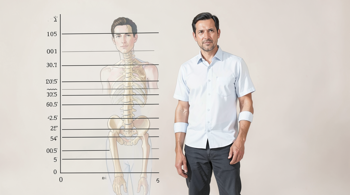
A measurable reduction in height may reflect compression or collapse of vertebrae weakened by osteoporosis. A loss of 1.5 inches, or 3.8 centimeters, is particularly concerning in the provided clinical guidance, while even smaller changes may be relevant to overall health risk. Height loss can be gradual and may be noticed when clothing fit or posture changes. 1
Kyphosis, commonly described as a rounded or hunched upper back, can develop when vertebrae lose strength and compress. Posture change is not specific to osteoporosis because it can have other causes, but new or progressive rounding combined with height loss should be assessed, particularly in an older adult or someone with fracture risk factors. 1
Back pain and hidden spinal fractures
Early osteoporosis itself generally does not cause pain. Back pain is more often associated with a vertebral compression fracture, which may result from ordinary movements such as turning in bed, coughing, sneezing, or lifting. Some vertebral fractures produce no symptoms, while others cause pain that worsens with movement or changes in posture. 5
Repeated or untreated spinal fractures can reduce vertebral height, contribute to kyphosis, impair function, and promote further loss of bone mineral density. Persistent, sudden, or unexplained back pain therefore deserves clinical attention, even when there has been no major accident. Imaging may be used when a spinal fracture is suspected. 5
Fractures after minor trauma
A fracture caused by a low-impact event is one of the clearest clinical clues to weakened bones. The wrist, hip, and vertebrae are common sites associated with osteoporosis-related fractures, and a fracture after a standing-height fall or similarly limited force may prompt fracture-risk assessment and bone-density evaluation. 7
Fragility fractures are not only diagnostic clues; they can also lead to chronic pain, disability, reduced mobility, loss of independence, and increased mortality. A fracture in an adult over 50 after minimal trauma should be reported to a healthcare professional because clinical diagnosis and treatment decisions may remain relevant even when a later DXA result shows osteopenia rather than osteoporosis. 4
Subtle signs and limits of symptom checklists
Some sources describe receding gums, reduced grip strength, or brittle nails as possible indicators associated with lower bone density. These findings are not diagnostic on their own and can arise from dental disease, aging, nutrition-related issues, medication effects, or other medical conditions. They should therefore be treated as context rather than proof of osteoporosis. 2
Osteoporosis cannot be confirmed from symptoms alone. A symptom checklist may identify a reason to discuss bone health, but it cannot replace fracture-risk evaluation, medical history, physical assessment, or bone mineral density testing. The most reliable approach is to combine observed changes with age, menopause or hormone history, medication exposure, and prior fracture history. 3
Risk factors that justify earlier assessment
Risk increases with age, and women face particular risk after menopause because of declining estrogen. Other reported contributors include low body weight, family history, smoking, heavy alcohol use, early menopause, low testosterone in men, autoimmune or thyroid disease, digestive disorders, and medications that promote bone loss, including long-term glucocorticoids. 6
Guidance summarized in the supplied research recommends screening women aged 65 and older, postmenopausal women with relevant risks, and men aged 50 and older who have risk factors. Adults with a prior fragility fracture or long-term glucocorticoid exposure may also warrant assessment. A DXA scan measures bone mineral density, while fracture-risk tools and, when indicated, spinal imaging provide additional context. 4
What evaluation can establish
A DXA T-score of minus 2.5 or lower is described as diagnostic of osteoporosis even without a fracture. In adults over 50, a minimal-trauma fracture may support a clinical diagnosis regardless of the DXA result, although clinicians commonly use DXA for baseline measurement and monitoring. 8
Assessment may also consider secondary causes of bone loss and medications that affect skeletal health. Prevention and management strategies described in the research include adequate calcium and vitamin D, weight-bearing activity, strength training, avoiding smoking, limiting alcohol, maintaining a healthy weight, and reviewing relevant medications with a clinician. These measures reduce risk but do not confirm or reverse a diagnosis by themselves. 6
When symptoms warrant medical attention
New height loss, a stooped posture, unexplained persistent back pain, or a fracture after a minor fall should prompt discussion with a healthcare professional. Particular attention is appropriate when these changes occur alongside older age, postmenopausal status, low body weight, family history, smoking, heavy alcohol use, endocrine or digestive disease, or prolonged steroid treatment. 1
Urgent evaluation is especially important after a hip fracture, severe back pain, sudden functional decline, or an injury that causes deformity or inability to bear weight. Because osteoporosis may remain silent until a fracture, waiting for obvious symptoms can miss an opportunity for earlier risk assessment and treatment planning. 4
Sources
- GoodRx, “What Are the Early Signs of Osteoporosis?”
- Prevention, “5 Surprising Early Warning Signs of Osteoporosis, According to Doctors”
- Medscape, “Osteoporosis: A Bare-Bones Guide to Diagnosis and Management”
- Medical Independent, “Osteoporosis: An update for clinical practice”
- American Family Physician, “Vertebral Compression Fractures”
- Ubie Doctor’s Note, “Osteoporosis Signs in Your 30s & 40s: Prevention & Next Steps”
- Woman’s World, “Sneaky Osteoporosis Symptoms That Can Signal Bone Loss in Women Over 50”
- Healthed, “Simplifying osteoporosis assessment and diagnosis”
Authored by MyTrendSpot team