Warning signs of herniated disc: A clinical guide to symptoms and urgency
The warning signs of herniated disc are often mistaken for a muscle pull, particularly when pain begins after lifting, bending, or prolonged sitting. Persistent or radiating pain, numbness, tingling, and weakness are more suggestive of nerve involvement than isolated muscle soreness, although symptoms alone cannot confirm the diagnosis. 3
What a Herniated Disc Can Cause
A herniated disc develops when the softer inner material of a spinal disc pushes through a weakened or torn outer layer. If the displaced material irritates or compresses a nearby nerve root, symptoms can extend beyond the back or neck into an arm or leg. Some herniations produce no symptoms and are discovered incidentally during imaging for another concern. 1
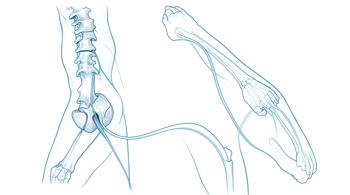
Clinical effects depend on the disc's location and the structures under pressure. Lumbar herniations occur most often at the L4-L5 and L5-S1 levels, while cervical herniations can affect nerve pathways leading into the shoulder, arm, hand, or fingers. Local pain may therefore be accompanied by neurological symptoms in a specific distribution. 2
Lower-Back and Leg Warning Signs
The lower back is the most commonly affected region. A lumbar herniation may cause sharp, burning, stabbing, or electric-like pain that travels from the lower back or buttock into one leg, a pattern commonly called sciatica. Pain may reach the thigh, calf, sole of the foot, or other areas served by the irritated nerve. 3
Symptoms may intensify after sitting or standing, at night, or with bending, walking, coughing, sneezing, laughing, or other actions that aggravate the nerve pathway. One-sided pain is common, but the most important distinguishing features are radiation away from the back and accompanying changes in sensation or strength. 3
Neck, Shoulder, and Arm Symptoms
A cervical disc herniation may begin with neck pain or deep discomfort near the shoulder blade. Irritation of a cervical nerve can then send pain into the shoulder, upper arm, forearm, or fingers. Numbness or tingling may follow a similar route, depending on which nerve is affected. 3
Neck movement can worsen symptoms, and the affected arm or hand may feel weak or less coordinated. These symptoms should not automatically be attributed to a herniated disc because other neck, shoulder, or nerve conditions can produce overlapping patterns. A physical examination helps clinicians compare sensation, strength, and reflexes across the limbs. 4
Numbness, Tingling, and Muscle Weakness
Numbness and tingling are sensory warning signs associated with irritation or compression of a spinal nerve. People may describe tingling as pins and needles, burning, or an altered sensation in the leg, foot, arm, or fingers. The location can help identify the affected nerve, but the symptom pattern does not establish a diagnosis without clinical assessment. 9
Weakness is a more concerning neurological finding because it can interfere with walking, balance, grip, or specific movements. In the lower limb, difficulty lifting the front of the foot may contribute to tripping or foot drop. Clinicians may also test reflexes, since nerve compression can produce diminished or absent responses in an affected limb. 7
- 7Difficulty lifting the foot or repeated tripping
- 4Progressive weakness in an arm or leg
- 10Reduced reflexes identified during examination
Emergency Red Flags
New loss of bladder control, loss of bowel control, or inability to urinate can indicate severe compression of the nerves that control these functions. Numbness in the saddle area, including the groin, inner thighs, or buttocks, is another critical warning sign. This combination can occur with cauda equina syndrome, a rare but serious condition requiring emergency medical evaluation. 8
Rapidly worsening weakness is also a reason for urgent assessment, particularly when it affects walking or both legs. Harvard Health describes severe disc-related nerve compression as capable of causing urinary incontinence and loss of bowel control. These symptoms should be treated as emergency indicators rather than monitored as ordinary back pain. 1
Assessment, Imaging, and Expected Course
Diagnosis begins with the symptom history and a neurological examination. A clinician may assess strength, sensation, reflexes, walking, and movements that reproduce symptoms. MRI or CT imaging may be used when confirmation is needed or when the examination suggests that disc material is pressing on a nerve root. Imaging findings must be interpreted alongside symptoms because some herniations cause no symptoms. 10
Many herniated discs improve with conservative care, including anti-inflammatory medication, physical therapy, and structured exercise programs, while some require procedures or surgery when symptoms persist or neurological compression is significant. Persistent, progressive, or disabling pain warrants medical review, and any bowel, bladder, saddle-sensation, or rapidly worsening weakness requires emergency evaluation. 4
Sources
- Harvard Health Publishing, Herniated Disk
- Johns Hopkins Medicine, Lumbar Disk Disease (Herniated Disk)
- Penn Medicine, Herniated Disc Disorders
- NCBI Bookshelf, Disk Herniation, StatPearls
- Mayo Clinic, Herniated Disk: Symptoms and Causes
- Cleveland Clinic, Herniated Disk
- American Academy of Orthopaedic Surgeons, Herniated Disk in the Lower Back
- Mount Sinai Health System, Herniated Nucleus Pulposus
- MedlinePlus, Herniated Disk
- WebMD, Herniated Disc Examination Information
Authored by MyTrendSpot team