Best creative writing workshops for seniors near me: A comprehensive guide to finding local literary programs
Finding creative writing workshops for seniors involves navigating a diverse landscape of local community centers, academic institutions, and national aging-focused organizations. These programs offer older adults an avenue for self-expression, memory preservation, and social connection while honing literary craft across genres like memoir, fiction, and poetry 23. Engaging in these activities can provide mental stimulation and a renewed sense of purpose, often serving as a foundation for building lasting community bonds 2.
Identifying Local Writing Opportunities
For those seeking in-person instruction, the most effective starting point is often a local senior center or adult activity center. Many of these locations host recurring creative writing groups designed for all levels of experience 16. For example, community centers in regions like Lexington or Madison utilize instructors to lead workshops that incorporate diverse writing strategies, such as the use of prompts, peer feedback, and the analysis of established professional literature 149. Prospective participants should inquire about enrollment prerequisites, such as membership requirements or age-based eligibility, which often start at age 50 or 60 18.
Utilizing National Resources and Directories
When localized information is not readily apparent, national networks and government-backed services can bridge the gap. The Eldercare Locator, provided by the U.S. Administration for Community Living, connects individuals with Area Agencies on Aging, which are frequently aware of local arts and lifelong learning initiatives 20. Furthermore, organizations like Lifetime Arts specialize in developing professionally led creative-aging programs within community settings, making their partner organizations valuable leads for those seeking verified, high-quality instruction 14. These resources often prioritize environments that are inclusive of various skill levels and physical needs 12.
Academic and Lifelong Learning Models
University-affiliated programs offer another robust path for literary engagement. The Osher Lifelong Learning Institute (OLLI) network, for instance, operates at colleges and universities across the United States, providing literature and writing courses tailored to older adult learners 13. Similarly, specialized centers such as the Adirondack Center for Writing have facilitated intensive legacy writing workshops that balance creative craft with personal reflection 7. These academic models often provide a more structured approach, frequently including 8-week or multi-session formats that allow for deeper exploration of narrative techniques and individual projects 7.
Common Workshop Structures and Goals
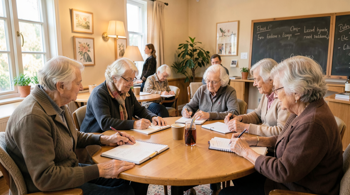
Most senior writing programs follow a predictable structure to maximize participation and comfort. A typical session might include a themed introduction, a writing exercise prompted by the instructor, time for sharing work, and a period dedicated to group discussion and feedback 24. These programs emphasize an environment of mutual support rather than competitive critique. By reading the work of professional authors alongside their own efforts, participants learn to identify what makes a narrative compelling, fostering both skill development and confidence in their unique voices 510.
Virtual Alternatives for Flexible Learning
For those who prefer not to commute or who seek specific niche topics, virtual workshops offer high accessibility. Organizations like Senior Planet and various literary houses offer online sessions that allow writers to participate from their own homes 1116. These online offerings range from short-term intensives to sustained courses covering specific genres, including flash fiction and non-fiction. While virtual, these platforms still prioritize community building, utilizing small cohort sizes-often capped around 20 participants-to ensure that every writer has an opportunity to receive constructive, encouraging feedback 10.
Key Considerations for Prospective Participants
When evaluating different workshops, it is helpful to assess several functional factors beyond the subject matter. These include the instructor's background, the class size, the frequency of meetings, and the specific focus-whether it be memoir writing for legacy purposes or general creative exploration 15. Financial commitment also varies significantly; some programs are offered at no cost through sponsorships or senior services, while others operate on a sliding-scale or fixed-fee basis 2710. Always review cancellation policies, especially for community-based classes that may require minimum enrollment thresholds to proceed 1.
Sources
- Carnegie Center for Literacy & Learning: Seniors Writing Group Fall 2026
- East End Arts Council: Leave Your Legacy Workshop
- East End Arts Council: Life Writing for Seniors
- City of Madison Senior Center: Writing Your Life
- Riverdale Senior Services: Creative Writing with Robert
- RBJ Senior Housing: Creative Writing Events
- Adirondack Center for Writing: 8-week Online Legacy Writing Workshop
- Active.com: Alpharetta Adult Activity Center Writing Class
- Greater Madison Writing Project
- Hugo House: The Late Show: (Re)start Your Writing at 50+
- Senior Planet from AARP
- OASIS Lifelong Learning
- Osher Lifelong Learning Institutes
- Lifetime Arts
- Story Circle Network
- Gotham Writers Workshop
- The Loft Literary Center
- GrubStreet
- Poetry Foundation Education
- U.S. Administration for Community Living: Eldercare Locator
Authored by MyTrendSpot team