Available items from police impound auctions: What agencies list, what bidders typically receive, and what to verify before bidding
Available items from police impound auctions are frequently centered on impounded vehicles and sometimes broader seized or forfeited property categories, reflecting how municipal agencies document custody and disposition. For example, the City of Saint Paul describes unclaimed property coming into custody of the Police Department, including motor vehicles, which are then sold at public auctions. 7
What “available items” typically include at police impound sales
In many U.S. jurisdictions represented in the provided research, the most consistently listed category is motor vehicles stored at impound lots, including cars, trucks, vans, motorcycles, and other vehicle types. Auction757’s listing for the Norfolk Police Auction states the sale is expected to include “87+/- cars, trucks, vans, & motorcycles,” with brands such as Toyota, BMW, Chevrolet, Mazda, Nissan, Ford, GMC, Acura, Pontiac, Mercedes, Honda, Chrysler, Cadillac, Lexus, Hyundai and others. 1
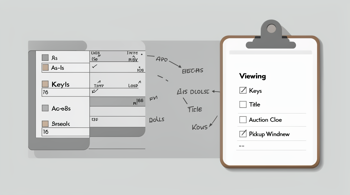
Vehicle lots are commonly accompanied by as-is disclaimers and limited knowledge at purchase time. The Kansas City Police Tow Lot auction terms emphasize that bidders are buying abandoned vehicles at a municipal impound facility where many are not running, most do not have keys, and buyers will typically only know what they run or drive after purchase. 2
Examples of vehicle-heavy listings and inspection windows
Inspection and viewing arrangements appear as a recurring logistics feature. Auction757’s Norfolk Police Auction listing specifies onsite inspection on Tuesday, August 11th from 10AM-2PM, followed by an online auction date of Thursday, August 13, 2026 at 10:30 a.m., with a Norfolk address listed as the location. 1
Saint Paul similarly describes in-person auctions held at impound lots and an option to send select vehicles to an online auction house, indicating that “available items” may differ between on-site and online channels even within the same police auction program. 7
Observed item variety beyond cars: property auctions and seized items
While vehicle lots dominate many police impound auctions, the provided research also shows that some police units auction non-vehicle seized or forfeited property. The City of San Antonio’s SAPD “Seized Property & Auctions” page describes a Legal Asset Seizure Detail that posts notices of auctions on its News Release section and SAPD Facebook page, and states that asset seizure property auctions are held at a specified VFW Post address with an auction date and viewing timing. 8
San Antonio’s page includes an item list table with multiple categories such as Louis Vuitton train cases, Gucci leather bags and belts, Chanel crossbody purse, and tools and chargers (for example, Milwaukee finishing nailer and Milwaukee 2 tool kit). This illustrates that the term “police impound auctions” can, in practice, cover more than vehicles depending on agency process and how the property was classified. 8
Kansas City impound auctions: what bidders can expect to find
Multiple Kansas City Tow Lot auction pages in the provided data describe consistent item sourcing and lot categories. The March 03, 2026 auction page lists broad categories including Electronics, Other, and a large Vehicle segment. In that same page’s auction item search section, Vehicles are broken down into Cars, SUV, Trucks, Vans, Trailer, and Other, reflecting how “available items” are typically structured for filtering. 5
The February 03, 2026 Kansas City Tow Lot page similarly uses category and filtering language, with Vehicle categories including Cars, Motorcycles & Recreational, Other, SUV, Trucks, Vans, and Other. 6
| Provided example (auction) | Item categories shown on the auction page | Operational notes from page text |
|---|---|---|
| Kansas City Police Auction March 03 2026 | Electronics, Other, Vehicles; Vehicles subcategories include Cars, SUV, Trucks, Vans, Trailers, and Other. 5 | In-person viewing at 7750 E Front St from 8am to 4pm; auction close at 5pm Central. 5 |
| Kansas City Police Auction February 03 2026 | Vehicles subcategories include Cars, Motorcycles & Recreational, SUV, Trucks, Vans, plus Other. 6 | In-person viewing Tuesday at 7750 E Front St from 8am to 4pm; auction close at 5pm Central. 6 |
Eligibility, payment, and retrieval rules that affect what items become “available”
Police impound listings commonly restrict attendance and impose final-sale conditions, which directly shape what items bidders can realistically obtain. Kansas City’s tow lot terms state all sales are final, bidders should expect many abandoned vehicles to not be running and often to have no keys, and non-payment results in forfeiture of vehicles and a ban from the auction. 2
City of Kansas City also describes a structured public auction cadence and bidder requirements. Starting in December 2025, two public vehicle auctions are held each month online only on the first and third Tuesdays to sell unclaimed vehicles and surplus public fleet vehicles. The page lists bidder requirements including a viewing day on the second Tuesday from 8 AM to 4 PM, and that all auctions are online via OAI Auctions. 3
Payment and removal conditions in provided examples
Payment deadlines and pickup windows recur as concrete operational constraints. Kansas City’s tow lot pages state payment is due the day after the auction closes, with cash accepted at the window due by a stated time, and wire due before a stated time, while late or partial payments are not accepted and unpaid lots are forfeited. They also include storage and pickup rules, with vehicles removed by a specified Saturday and a $30/day storage fee for late pickups. 5
Saint Paul describes additional payment mechanics and consequences for non-payment, stating that vehicles must be paid for in cash with payment received by 4:30 p.m. on the day of the auction, and that not paying results in a permanent ban from further auctions. It also outlines that attendees must be at least 18 years old, must purchase a $5 bid card on-site with valid photo ID, and must have that bid card to bid. 7
Case-based public notices: the types and quantities of items mentioned
Provided public notices from NoticeRegistry illustrate how agencies publish auction details for impounded vehicles, including quantities, timing, and payment format. One Columbus, OH notice states that the Columbus Division of Police will auction about 110 impounded vehicles at 2700 Impound Lot Rd. on Saturday, August 8, 2026, with vehicles sold as-is and salvage titles referenced in the notice summary. It also specifies cash-only payment with checks by prior approval and bank letter. 4
A related Dispatch report provides qualitative context on another Columbus impound auction, describing about 120 vehicles at 2700 Impound Lot Road and noting that vehicles were impounded because they were forfeited and abandoned or involved in crimes or a crash. The Dispatch article states that vehicles are sold as-is, most sold with salvage titles, all bidders must be 18 or older, registration with ID is required, and payment is due by 1 p.m., with removal by noon on a specified date. 15
- Columbus, OH example notice: about 110 impounded vehicles; cash-only with check options via prior approval; sold as-is with salvage titles. 4
- Columbus Dispatch report: about 120 vehicles; sold as-is; registration and ID required; payment due by 1 p.m.; removal by noon several days later. 15
Why “available items” can differ from listing to listing: titles, keys, and condition knowledge
Across the provided research, a central friction point is uncertainty about condition and documentation. Kansas City’s tow lot terms emphasize that bidders will not know whether vehicles run and drive until after purchase, that most do not have keys, and that information available is limited to what is posted on the website, which buyers must treat as due diligence only. 2
Documentation also varies, affecting whether buyers can obtain titles and how paperwork is processed. The Global Auction Guide example for a Freer, Texas law-enforcement auction item describes that purchasers receive a Law Enforcement Auction Sales Receipt (Form VTR-71-1) and that Texas residents must present this form to a county Tax Assessor-Collector for tax, title, and registration, while out-of-state residents may not be eligible for Texas title and must check their home state’s DMV requirements. 20
Operational readiness: keys, starts, and labeled title types
Some auction listings include explicit statements about whether keys are included and whether a vehicle starts. The Global Auction Guide entries for Freer, Texas include “Keys?: Yes” and “Starts?: Yes, with battery boost” while also noting “As-Is, Where-Is” with no guarantees expressed or implied. Another Global Auction Guide item notes a “BRANDED TITLE: REBUILT SALVAGE,” illustrating that title branding can be part of the listing narrative. 20
Internationally or across agencies, “available items” can include police equipment removed from vehicles at sale. The Central Auction Group listing for a 2025 Ford Explorer Police Interceptor states that lights and police equipment are not included, and that the unit may come with salvage title or other paperwork depending on transfer and jurisdiction. 22
Summary checklist: what to verify before assuming an item is obtainable
Because “available items” are defined by posting rules and custody conditions, verifying key details is repeatedly highlighted across the provided sources. San Antonio’s seized property page ties auction participation to posted notices and fixed payment and pickup requirements, and its item list shows that lots may be non-vehicle personal property. 8
For vehicle-heavy impound sales, the provided sources emphasize as-is terms, non-payment consequences, and retrieval deadlines. Kansas City’s tow lot terms and Saint Paul’s auction rules both describe final sales and strict payment timing, while Columbus public notices provide additional parameters like cash-only or check approval processes. 2 7 4
| Verification point | What the provided sources indicate |
|---|---|
| Inventory type | Vehicles are repeatedly listed (cars, trucks, vans, motorcycles), while some agencies also auction seized non-vehicle items (for example, San Antonio’s item list). 1 8 |
| Condition certainty | Implied uncertainty is common, including cases where vehicles may not run and may have no keys until after purchase. 2 |
| Keys and start status | Some listings provide “Keys?: Yes” and “Starts?: Yes, with battery boost,” but title branding and condition statements can vary by lot. 20 |
| Title and paperwork | Law-enforcement auctions can require specific receipts such as Form VTR-71-1 and may affect out-of-state title eligibility. 20 |
| Payment and removal | Rules often require cash or wire/check with approvals and set strict pickup windows with storage fees for late removal. 5 7 4 |
Authored by MyTrendSpot team