Ways to manage insomnia at home: An evidence-based guide to healthier sleep
What home management can and cannot address
Insomnia involves difficulty falling asleep, staying asleep, or waking earlier than intended. Short-term sleep disruption can occur during stress, while chronic insomnia is generally described as sleep difficulty at least three nights a week for three months or longer. 3 Home strategies can reduce behaviors and surroundings that reinforce wakefulness, but persistent insomnia may involve conditioned alertness, anxiety, or another sleep-related problem.
Cognitive Behavioral Therapy for Insomnia, commonly called CBT-I, is identified by Cleveland Clinic as the first-line treatment for insomnia and is designed to change sleep routines, behaviors, and sleep-related thinking patterns. 1 Research summaries from Cedars-Sinai report that CBT-I is often more effective than medication for chronic insomnia, particularly because its benefits can continue after the structured treatment ends. 2
Keep sleep and wake times consistent
A consistent schedule is a central part of sleep hygiene. Going to bed and waking at approximately the same times each day helps organize the body’s internal sleep timing. A fixed wake time is particularly important in self-guided CBT-I approaches because it provides a stable anchor for the daily sleep routine, even after a difficult night.
Spending excessive time awake in bed can weaken the association between bed and sleep. CBT-I-based guidance therefore emphasizes following a planned sleep window rather than repeatedly extending time in bed to compensate for poor sleep. Sleep restriction therapy is a formal CBT-I component, so substantial reductions in time allotted for sleep should be approached carefully and preferably within a structured program rather than improvised indefinitely. 4
Use stimulus control when sleep does not come
Stimulus control aims to retrain the brain to associate the bed with sleep instead of frustration, alertness, or extended wakefulness. The method includes using the bed primarily for sleep, going to bed when sleepy, and leaving the bed when unable to sleep. A commonly cited instruction is to get up if sleep has not occurred after roughly 20 minutes, then return when drowsiness returns. 8
During an awake interval, a quiet activity in dim light can help avoid turning the bed into a place for worrying or monitoring the clock. The purpose is not to force sleep but to reduce conditioned wakefulness. Digital CBT-I material describes stimulus control, a fixed wake time, a temporarily shortened sleep window, and attention to anxious sleep-related thoughts as core techniques that can be practiced at home. 4
Adjust light, devices, and the bedroom
Morning exposure to natural or bright light can support alignment of the circadian rhythm, the internal timing system that influences sleep and wakefulness. In the evening, reducing exposure to blue-light-emitting devices may make it easier for the body to transition toward sleep. These measures are most relevant when late-night device use or irregular light exposure contributes to a shifted schedule.
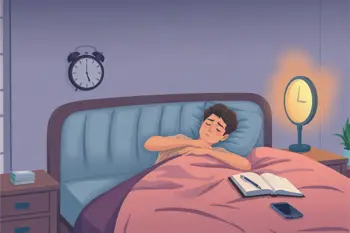
A suitable bedroom is generally quiet, dark, and cool. The supplied sleep guidance identifies approximately 60 to 67 degrees Fahrenheit as a commonly recommended temperature range for rest. 8 Practical adjustments can include reducing noise, blocking unwanted light, and reserving the room for sleep rather than prolonged work, entertainment, or anxious problem-solving. Environmental changes support CBT-I, but they do not replace it when chronic insomnia is maintained by persistent arousal.
Limit substances and evening disruptions
Caffeine can remain active for several hours, so limiting it, particularly during the afternoon and evening, may reduce difficulty falling asleep. Nicotine is also identified as a substance that can interfere with sleep. Alcohol may initially make a person feel drowsy, but research-based guidance notes that it can disrupt sleep cycles and contribute to fragmented rest later in the night. 2
Evening meals and fluids can also affect sleep continuity. Avoiding large or heavy meals, spicy foods, and high fluid intake shortly before bedtime may reduce discomfort and nighttime awakenings. Daytime physical activity is associated with better sleep, while vigorous exercise close to bedtime may be counterproductive because of temporary increases in alertness and body temperature. 8 These changes are supportive habits, not standalone treatment for established chronic insomnia.
Reduce pre-sleep arousal and unhelpful thoughts
Relaxation techniques can address the physical tension that accompanies pre-sleep alertness. Progressive muscle relaxation, meditation, and slow deep breathing are commonly used to lower physiological arousal before bed. Progressive muscle relaxation works by deliberately tightening and releasing muscle groups, helping a person notice and reduce bodily tension rather than trying to force sleep.
CBT-I also addresses thoughts that intensify fear about not sleeping. Cedars-Sinai guidance recommends writing worries and negative sleep thoughts on paper before bed, then challenging or reframing them during the day. 2 Focusing on positive memories may help neutralize negative thinking at bedtime, but cognitive restructuring is more systematic when delivered through a therapist or a structured program. The objective is to change the cycle of worry, monitoring, and arousal.
When home treatment needs professional support
Self-guided techniques may be reasonable for recent, mild sleep difficulty, but therapist-assisted CBT-I can be more effective than fully automated digital versions, especially when insomnia is severe or long-running. 4 Cleveland Clinic describes CBT-I as short-term, structured, licensed-therapist-guided care that targets both nighttime and daytime symptoms, including overnight waking and daytime sleepiness. 1
Professional evaluation is also relevant when symptoms continue despite consistent home measures. One self-help guide suggests seeking a sleep psychologist or structured program after four weeks without improvement, particularly when insomnia has lasted months or occurs alongside a psychiatric condition. 4 Sleeping pills may have a role in selected short-term situations, but supplied research summaries associate long-term use with tolerance, dependence, next-day grogginess, fall risk in older adults, and rebound insomnia after discontinuation. 3 Medication decisions therefore require clinical oversight rather than unsupervised use.
Sources
- Cleveland Clinic, Cognitive Behavioral Therapy for Insomnia (CBT-I): What It Is, https://my.clevelandclinic.org/health/treatments/cognitive-behavioral-therapy-insomnia
- Cedars-Sinai, How to Get Better Sleep, https://www.cedars-sinai.org/stories-and-insights/healthy-living/how-to-get-better-sleep
- Better Sleep Project, How to Manage Insomnia Without Medication, https://bettersleepproject.com/articles/insomnia/managing-insomnia-without-medication/
- Mindful Journey Sleep, CBT-I Techniques You Can Do at Home, https://www.mindfuljourneysleep.com/2026/07/cbt-i-techniques-you-can-do-at-home.html
- The Edge State, Sleep Hygiene for Insomnia, https://www.theedgestate.com/articles/sleep-hygiene-for-insomnia
- University of Miami Health, Sleep Training for Adults: How CBT-I Rewires Your Brain, https://news.umiamihealth.org/en/sleep-training-adults-cbt-i-insomnia-treatment/
- Marham, Insomnia Treatment at Home, https://www.marham.pk/healthhub/insomnia-treatment/
- General research sources supplied for sleep hygiene, bedroom environment, exercise, alcohol, and stimulus control
Authored by MyTrendSpot team