Best Social Dance Classes Near Me: A Guide to Navigating Local Instruction and Community Hubs
Understanding the Social Dance Educational Landscape
Social dance refers to a diverse category of partner-based movement styles including Salsa, Bachata, West Coast Swing, Lindy Hop, Argentine Tango, and Ballroom 1. Unlike performance-based choreography, social dancing prioritizes lead-and-follow mechanics, allowing individuals to interact with various partners in environments such as wedding receptions, clubs, and community social events 2. Most reputable studios now emphasize these foundational techniques over rote pattern memorization, focusing instead on rhythm, musicality, and comfort on the floor 3. This approach helps beginners build confidence, regardless of their prior experience or fitness level 4.
For those exploring options, the modern dance landscape is divided between national studio franchises and independent community clubs. Franchises, such as Fred Astaire Dance Studios, provide standardized curricula often utilized for those seeking competitive or structured progression 5, 16. Conversely, local establishments like Dance Harmony in Alpharetta or Social Dance Studio 45 in Spring, Texas, often focus on community building through monthly socials and beginner-friendly, non-intimidating atmospheres 2, 10. Regardless of the specific venue, the primary objective of these programs remains the same: ensuring participants can navigate a social environment with ease 10.
Evaluating Learning Formats and Commitment Levels
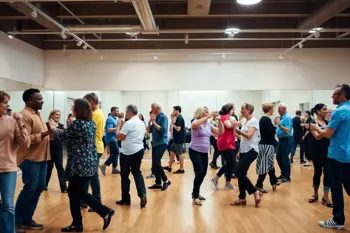
Adult learners typically encounter three primary instruction formats when researching local dance studios. Private lessons offer one-on-one time with an instructor, which is frequently cited as the fastest method for mastering weight transfer, frame, and individual styling 4, 14. Group classes provide a social, lower-pressure environment where students rotate partners frequently to practice with a variety of leads and follows 2, 10. Finally, social dance parties often begin with a short, complimentary mini-lesson before opening the floor to free-form practice 2, 7.
Pricing for these services varies based on the type of facility and the region. Single drop-in sessions generally range from $15 to $25 in most urban centers, while multi-class series, which typically run for 4 to 6 weeks, often yield a lower per-class cost 11. Many studios also provide introductory offers, sometimes priced around $49 for an initial private or group session, allowing prospective students to assess the environment before making a long-term commitment 4, 6. It is important to note that many studios do not require participants to bring a partner, as the rotating nature of classes ensures everyone gets equal floor time 8, 10.
Identifying Regional Dance Opportunities
Finding the right class requires a multi-faceted search strategy. Digital platforms such as Meetup are widely regarded as primary resources for discovering student-led practice groups and local community sessions 11, 15. Additionally, location-based services like Google Maps serve as essential tools for verifying physical proximity and current business hours, while Yelp provides insights into the community atmosphere of specific studios through user-generated feedback 11, 18. Dedicated directories, such as DancePlug and USA Dance, are also valuable for locating chapters or studios that specialize in specific genres like West Coast Swing or formal Ballroom 17, 19.
| Resource Type | Primary Function |
|---|---|
| Digital Meetup Groups | Connecting hobbyists and finding informal practice nights |
| Studio Franchises | Providing standardized, structured curricula |
| Local Dance Studios | Offering progressive group lessons and community socials |
| ClassPass/Aggregators | Testing multiple boutique studios without memberships |
Key Considerations for New Students
The transition from a beginner to a proficient social dancer involves more than just attending lessons. Instructors emphasize the importance of consistent practice, often encouraging students to attend social events where they can apply their skills in a live setting 10. Risks for beginners typically include muscle fatigue or minor strain from improper technique, which is why studios place a high priority on the basics of posture and weight distribution during the first few weeks of training 10. Students should look for studios that focus on progressive learning rather than those that jump directly into complex, rapid-fire choreography 10.
Furthermore, regulatory oversight in the dance industry is generally limited to basic business licensing and insurance, meaning that the quality of instruction varies by studio. It is advisable to evaluate a studio based on their transparency regarding curriculum and their willingness to facilitate a trial session 11. When searching for "best" classes, prioritize venues that explicitly state they are beginner-friendly and offer a clear path for students to move from introductory levels to intermediate mastery 9, 10. Engaging with local Facebook groups can also provide real-time updates on venue changes or special event nights that might not be captured in static directories 11.
Navigating Genre Differences
The "social dance" category covers a wide spectrum of movement. Salsa and Bachata, for instance, are known for their energetic, Latin-influenced rhythms and are often paired together during social nights 8. Swing dancing-which encompasses sub-styles like Lindy Hop, East Coast Swing, and Balboa-tends to focus on vintage jazz musicality and high-energy improvisation 9. Understanding these nuances is essential for choosing a class that aligns with the music and atmosphere the student finds most enjoyable 8.
For those unsure of their preference, most instructors recommend starting with a "general" ballroom or social foundation class. These courses usually introduce a variety of steps, such as Waltz, Foxtrot, and Rumba, to help students identify which styles resonate with them 2. Over time, many dancers choose to specialize, but the initial exposure to multiple rhythms remains the standard pedagogical approach for building a versatile foundation 2. Always ensure the studio offers both classes and social practice time, as this combination is the most reliable way to achieve consistent progress in any dance style 3.
Maintaining Long-Term Engagement
Sustaining progress in social dancing often depends on consistent attendance and social immersion. Unlike seasonal sports, social dance is a lifelong pursuit, with community hubs often hosting weekly or monthly events that welcome dancers of all ages and skill levels 6, 7. To stay motivated, many students find that participating in workshops or specialized technique sessions helps refine the foundational skills learned in standard group classes 4, 9. As skills develop, the ability to transition between dance halls and community events becomes easier, opening up a wider range of social experiences 10.
Finally, avoid the common mistake of focusing exclusively on advanced, high-velocity choreography too early. Precision in the basics-such as the connection with a partner and the ability to maintain timing-is what defines a successful social dancer 4. By focusing on the "how" and "why" of movement rather than just the visual aesthetic of a pattern, students can ensure their skills remain useful in any social context for years to come 10.
Sources
- Dance Harmony - Social Dance Classes and Parties
- Dance With Me USA - Midtown Group Dance Classes
- LaVida Studio - Adult Dance Classes
- Dance With Me USA - Swing Dance Lessons NYC
- Fred Astaire Dance Studios - Miami Beach
- First Class Dance - St. Augustine Social Dancing
- Springfield Social Dance Club - Upcoming Events
- LaVida Studio - Salsa and Bachata FAQ
- Atomic Ballroom - Swing and Lindy Hop Program
- Social Dance Studio 45 - Tuesday Group Classes
- General Research Data on Social Dance Education
- Arthur Murray Dance Studios
- Fred Astaire Dance Studios
- Meetup - Local Dance Groups
- Yelp - Dance Studio Directories
- DancePlug - Studio Directories
- USA Dance - Chapter Directory
- SalsaNewYork - Latin Dance Resources
- World Swing Dance Council - Local Lookup
- Google Maps - Business Verification
Authored by MyTrendSpot team