Best endocrinology centers for thyroid health: A clinical overview of specialized diagnostic and treatment facilities
When seeking specialized care for thyroid disorders, patients often navigate a complex healthcare landscape where multidisciplinary expertise is critical for accurate diagnosis and long-term management 1. While no single universal ranking exists for the best endocrinology centers, several academic medical institutions are widely recognized for their comprehensive, research-backed approaches to thyroid conditions, ranging from hypothyroidism and hyperthyroidism to complex thyroid nodules and malignancies 2. Identifying an appropriate center often requires an assessment of the facility's specific clinical strengths, surgical capabilities, and focus on endocrine research 3.
Academic Centers of Excellence in Thyroid Care
Academic health systems frequently provide the highest level of specialized thyroid care due to their integration of clinical practice, cutting-edge research, and robust fellowship programs. Facilities such as the Mayo Clinic, Cleveland Clinic, and Johns Hopkins Medicine maintain dedicated departments for endocrinology, diabetes, and metabolism, where thyroid health is treated with specialized sub-focuses 4, 5, 6. These institutions typically employ multidisciplinary teams consisting of endocrinologists, endocrine surgeons, and radiologists who collaborate on complex cases involving goiters, thyroid nodules, or endocrine tumors 7.
Similarly, UCSF Health and UCLA Health are recognized for their robust endocrine programs, which often feature specialized clinics specifically for thyroid-related surgical procedures and endocrine oncology 8, 9. For instance, experts like Dr. Michael W. Yeh at UCLA have gained recognition for establishing endocrine surgery programs that focus on minimally invasive techniques for parathyroid and thyroid conditions 10. Such specialization is vital for patients requiring precision procedures, such as ultrasound-guided fine needle aspiration or radioiodine therapy, which are standard offerings at high-volume academic centers 11.
Clinical Expertise and Specialized Surgical Leadership
The quality of care at any thyroid-focused center is heavily defined by the experience of its clinical leadership. Leading specialists in this field often serve as board members for professional organizations such as the American Thyroid Association or the Endocrine Society, ensuring that their practice adheres to the latest clinical guidelines 12, 13. For example, Dr. David S. Cooper of Johns Hopkins Medicine has played a pivotal role in drafting clinical practice guidelines for the management of thyroid nodules and cancer, underscoring the deep level of expertise often found at major university-affiliated hospitals 14.
These centers frequently utilize advanced diagnostic tools that are essential for the accurate identification of thyroid pathologies. Practitioners such as Dr. Sara Ahmadi at Brigham and Women's Hospital hold specialized certifications, such as the Endocrine Certification in Neck Ultrasound (ECNU), reflecting a commitment to precise diagnostic imaging within the clinical setting 15. When evaluating a center, it is beneficial to look for providers with clear academic credentials, established records in thyroid research, and a multidisciplinary team capable of addressing the full spectrum of thyroid-related disorders, including autoimmune and malignant conditions 16.
Multidisciplinary Management and Research Integration
Effective management of thyroid disease often requires more than just endocrinology; it frequently integrates surgical oncology, pathology, and radiology. Centres like the Columbia University Irving Medical Center maintain specialized units such as the Columbia Thyroid Center, which facilitates collaboration between different medical disciplines to address complex cases 17. This collaborative structure is essential, particularly for patients requiring surgery, as high-volume centers often report better outcomes for complex procedures like thyroidectomies due to the high frequency and specialized training of their surgical teams 18.
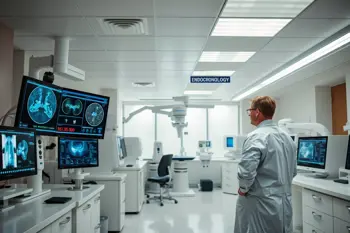
Beyond clinical care, many of these centers act as hubs for ongoing research. Physicians like Dr. Allan Siperstein at the Cleveland Clinic have contributed extensively to technical advances in surgical sonography and minimally invasive ablation techniques 19. Engaging with such centers can provide patients with access to the latest evidence-based protocols and emerging treatments. It is important for patients to consider the facility's alignment with their specific medical needs, as the best center for a routine metabolic thyroid condition may differ from the ideal location for complex endocrine surgical oncology 20.
Evaluating Institutional Capabilities
When assessing the suitability of an endocrinology center, several factors should be weighed. First, the availability of specialized diagnostics is paramount. Centers that perform high volumes of ultrasound-guided fine needle aspirations, like the Thyroid Associates at Massachusetts General Hospital, are generally well-equipped to handle diagnostic challenges 21. Additionally, the presence of an active endocrine surgery program, as seen in institutions like the Cleveland Clinic or UCLA, indicates a facility that can manage cases that progress beyond medical management into surgical intervention 22.
| Metric/Characteristic | Focus Area |
|---|---|
| Sub-specialty Focus | Thyroid, Parathyroid, Adrenal Oncology |
| Multidisciplinary Approach | Endocrinology, Surgery, Radiology |
| Research Output | Clinical Trials and Guideline Development |
| Diagnostic Capability | ECNU-certified Ultrasonography/Fine Needle Aspiration |
Furthermore, geographic accessibility and insurance coverage are practical considerations. While high-tier academic centers provide exceptional care, they are typically concentrated in major urban hubs. Patients may need to verify in-network status, as even well-known institutions may have varied agreements with insurance providers 23. Utilizing resources like the American Thyroid Association's specialist-finder can serve as a starting point to identify local experts who maintain the high standards of care found in the larger academic centers discussed 24.
Risk Mitigation and Patient Eligibility
Patients should approach their search for endocrinology care with an understanding of both the potential benefits and the inherent frictions of the healthcare system. High-demand centers often have longer wait times for initial consultations, particularly for subspecialty experts 25. Furthermore, it is common for major institutions to require referrals from a primary care physician. Understanding the referral process and gathering all relevant medical records-including prior lab results, imaging reports, and pathology findings-can expedite the intake process significantly 26.
It is also important to acknowledge that thyroid health is a longitudinal endeavor. Many thyroid conditions require lifelong monitoring and medication titration. Therefore, the strength of the doctor-patient relationship and the accessibility of the clinical team are as important as the facility’s reputation 27. Choosing a center that balances clinical rigor with clear communication channels will likely result in a more sustainable and effective long-term treatment plan. Always verify current practice focus, as many leading endocrinologists specialize in specific conditions like thyroid cancer or autoimmune disorders and may not be accepting new patients for general endocrine conditions 28.
Sources
- UCLA Health - Stephanie Smooke Praw, MD
- Johns Hopkins Medicine - David Stephen Cooper, MD
- Massachusetts General Brigham - Douglas S. Ross, MD
- Mayo Clinic - Endocrinology, Diabetes, and Metabolism
- Cleveland Clinic - Endocrinology and Metabolism Institute
- Johns Hopkins Medicine - Thyroid and Parathyroid Center
- UCSF Health - Chienying Liu, MD
- UCSF Health - Endocrine Programs
- UCLA Health - Endocrine Surgery
- UCLA Health - Michael W. Yeh, MD
- Massachusetts General Brigham - Gilbert H. Daniels, MD
- American Thyroid Association - Patient Resources
- The Endocrine Society - Clinical Guidelines
- Johns Hopkins Medicine - Professional Biography of David S. Cooper
- Brigham and Women's Hospital - Sara Ahmadi, MD
- University of Michigan Health - Thyroid Disorders
- Columbia University Irving Medical Center - James A. Lee, MD
- Columbia University - Thyroid and Parathyroid Centers
- Cleveland Clinic - Allan Siperstein, MD
- Mount Sinai - Specialized Thyroid Services
- Massachusetts General Thyroid Associates - Clinical Services
- Cleveland Clinic - Endocrine Surgery Program
- Columbia University - Patient Insurance Information
- American Thyroid Association - Specialist Finder Tool
- Stanford Health Care - Thyroid Clinic
- Northwestern Medicine - Conditions and Care: Thyroid
- University of Utah Health - Devaprabu Abraham, MD
- General Medical Intake Standards for Specialized Endocrinology
Authored by MyTrendSpot team