Police auction commercial vehicles on sale: A research guide for understanding government asset disposal
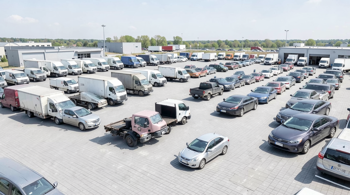
Law enforcement agencies and local government bodies frequently manage the disposal of property that has been seized, impounded, or declared surplus through public auction processes 18. These sales often include a wide variety of assets, ranging from retired cruisers and patrol vehicles to specialized heavy-duty commercial equipment such as utility trucks, cargo vans, and flatbed trailers 247. Understanding these sales requires a grasp of public procurement regulations, as these transactions differ significantly from traditional commercial retail environments 315.
Common Platforms and Auction Modalities
Government agencies utilize various digital and physical channels to facilitate these sales. Platforms like GovDeals are frequently employed by municipal departments to reach a broad base of potential buyers for surplus items, while other agencies may contract with professional third-party auction houses to handle the logistics of large-scale fleet liquidations 714. Auctions may be conducted as live events at designated impound facilities or through online-only portals that allow for extended bidding windows 135.
The 'As-Is' Purchase Reality
A fundamental characteristic of police-sanctioned vehicle auctions is that items are sold on an as-is, where-is basis 1312. This implies that no warranties, whether expressed or implied, are attached to the purchase, and the seller typically disclaims responsibility for the mechanical condition of the asset 310. Potential buyers should assume that vehicles may require significant repairs, may be missing keys, or could have been sitting in outdoor storage for extended periods, necessitating professional inspection prior to placing a bid 1312.
Bidder Registration and Eligibility
Participation in these auctions is often restricted to registered users who can provide valid identification or, in certain cases, proof of business credentials 112. Agencies may also impose requirements regarding non-payment, where failure to complete a transaction results in immediate penalties, such as the forfeiture of a security deposit or a permanent ban from future bidding opportunities 356. It is essential for prospective bidders to review the specific terms and conditions associated with each unique auction event before participating 25.
Logistics: Transportation and Removal
Winning bidders are almost exclusively responsible for the removal of their purchased assets from the auction site 111. Given that many impounded commercial vehicles are non-operational, buyers must coordinate with towing services or heavy-haul transport companies to ensure the asset is removed by the agency's strict deadlines, which often fall within a few days of the auction's conclusion 1912. Failure to meet these removal deadlines can lead to additional fees or the cancellation of the sale 114.
Legal and Title Considerations
The acquisition of a vehicle at a police auction does not include the standard administrative hand-holding found in private sales. Buyers must perform their own due diligence, which may include obtaining independent vehicle history reports, understanding the status of the title, and identifying any potential liens that must be cleared through state motor vehicle departments 2512. In some instances, vehicles may come with salvage titles or require specific state forms to facilitate the titling process, particularly for assets that were previously part of a government fleet 18.
Market Trends and Availability
The inventory available at these auctions is highly variable and depends on department turnover schedules, budgetary changes, and the frequency of asset seizures within a given jurisdiction 716. While some agencies release lists incrementally throughout the year, others hold singular, large-scale events that feature dozens of vehicles simultaneously 713. Researchers and commercial fleet managers often monitor public notice registries and official municipal websites to stay informed about upcoming opportunities for asset procurement 19.
Sources
- NoticeRegistry: Official public records for Columbus impound auctions.
- Auction757: Listings for Norfolk police department vehicle auctions.
- Official Auctions: Terms and conditions for municipal tow lot sales.
- Global Auction Guide: Market data for police department surplus and seizure auctions.
- Miramar Police News: Reporting on government surplus vehicle disposal.
- Puget Press: Coverage of county-level surplus vehicle auction programs.
- Jackson Township: Public notice regarding law enforcement surplus assets.
- Okoboji City Hall: Documentation for municipal sealed-bid vehicle sales.
- Starbridge: Data on RFP and government agency vehicle disposal.
- Brock Auction: Details on county surplus equipment and vehicle sales.
- Tender Impulse: International data on police department vehicle disposal tenders.
- RTI Auctions: Listing information for municipal vehicle liquidations.
- ABC Auctions: Commercial vehicle and tipping truck disposal records.
- BidScope: Public notice data for police department vehicle auctions.
- Go2Tutors: General analysis of police auction market dynamics.
- TenderDetail: Competitive bidding information for government vehicle surplus.
Authored by MyTrendSpot team