Affordable All-on-6 dental implants near me: A consumer cost and care analysis
The search phrase “Affordable All-on-6 dental implants near me” usually reflects two needs at once: finding a provider within a practical distance and understanding whether a full-arch restoration fits a household budget. All-on-6 treatment uses six strategically positioned implants to support a fixed arch of replacement teeth, but published prices, included services, eligibility standards, and long-term obligations differ substantially among practices. 1
What All-on-6 treatment involves
All-on-6 replaces most or all teeth in one upper or lower arch with six titanium implants supporting a fixed prosthetic bridge. The implants function as artificial roots, while the attached arch is designed to restore chewing, speech, appearance, and stability. Compared with removable dentures, the fixed design does not come out during meals or ordinary daily activities. The additional implants compared with All-on-4 may distribute chewing pressure across a broader foundation. 2 13
The treatment process can include examination, three-dimensional imaging, tooth extractions, implant placement, a provisional bridge, healing, and a final restoration. Some practices describe temporary teeth being delivered on the day of surgery, while the implants integrate with the jaw over subsequent months. Same-day teeth do not necessarily mean the definitive prosthesis is completed that day, so the written treatment plan should distinguish provisional and final appliances. 1 10
Published price examples near different markets
General United States cost research places All-on-6 treatment commonly between $20,000 and $35,000 per arch, with geographic location, provider expertise, implant components, and prosthetic materials affecting the quote. A published New Jersey example lists $12,995 for one arch and $25,990 for two arches, while a Downey, California practice reports treatment beginning at $20,000 per arch with several listed services included. These figures are provider-specific examples, not national guarantees or live market rates. 11 15 2 3
Comparing headline prices can be misleading when one quote includes extractions, bone grafting, sedation, imaging, provisional teeth, final zirconia, and maintenance while another excludes some of those items. A Hackensack-area published package lists a CBCT scan, six implants per arch, extractions, any needed bone graft, general sedation, two years of maintenance, and both provisional and final prostheses. Each item should be confirmed in writing before prices are compared. 4
Materials and restoration choices
The final prosthesis is a major cost variable. Acrylic teeth mounted over a titanium framework are generally positioned as a more economical material category than monolithic zirconia, while zirconia is often selected for strength, appearance, or a particular restorative design. Published clinical marketing also describes titanium or zirconia implant materials, but the implant material and the visible bridge material are separate decisions. The treatment plan should identify both, along with warranties and replacement terms. 19 1
One Downey provider describes a package containing surgery, intravenous sedation, three-dimensional CBCT planning, a same-day arch, a final zirconia bridge, and bone grafting when needed. Another provider describes a full-arch workflow in which provisional teeth are placed first and stronger final teeth, typically zirconia, follow healing. These examples illustrate why a low initial number may not represent the total treatment investment if the final arch, laboratory work, or surgical additions are billed separately. 3 10
Eligibility, imaging, and surgical considerations
Potential candidates commonly include people missing most or all teeth, people with loose dentures, and patients whose remaining teeth cannot be restored predictably. Adequate bone volume and general health influence eligibility, although bone grafting may be considered when support is insufficient. Smoking, active gum disease, uncontrolled medical conditions, and poor oral hygiene can increase clinical concerns and may affect timing or candidacy. A dentist must make the final determination after examination and imaging. 5 6 7
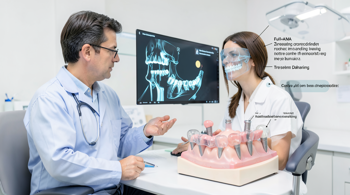
Three-dimensional CBCT imaging and digital planning are frequently used to assess anatomy and plan implant positions. Some practices report robotic assistance or guided surgery, including a Cedar Park provider describing robotic-assisted placement and submillimeter guidance. Such technology may improve planning precision, but it does not remove the need for clinician judgment, informed consent, or discussion of surgical risks. Patients should ask who performs surgery, who designs the prosthesis, and how complications are managed. 1 4
Financing, insurance, and other payment factors
Dental insurance commonly treats full-arch implants as elective or cosmetic and may provide limited or no coverage for the implant procedure itself. Coverage can differ for extractions, diagnostic imaging, anesthesia, or medically necessary services, so benefit language should be reviewed rather than assumed. Health Savings Accounts and Flexible Spending Accounts may be used for qualifying medical expenses under applicable rules, but eligibility depends on the account and tax circumstances. 18 11
Third-party healthcare financing providers, including CareCredit, LendingClub, and Sunbit, are commonly discussed as ways to spread payments over time. Financing is credit-based and may involve interest, deferred-interest conditions, fees, or repayment obligations. Dental schools can sometimes provide reduced-cost care through supervised residents, although availability, waiting periods, case selection, and treatment complexity vary. Dental tourism in Mexico, Costa Rica, and Thailand is another cost-related option, but travel, follow-up, legal jurisdiction, and complication management create additional friction. 12 14 16
Maintenance, longevity, and practical risks
All-on-6 is not maintenance-free. Fixed arches require professional examinations, hygiene visits, daily cleaning around the implants, and attention to gum inflammation or loosening. Published provider information describes titanium or zirconia components that may last 15 to 25 years with proper care, while a Downey source cites approximately 96 percent ten-year implant survival in peer-reviewed cohort data and discusses durability into later decades. These figures describe populations or provider-reported claims, not an individual guarantee. 1 3
Risks and market friction points include surgical complications, infection, implant failure, prosthetic fracture, bite problems, maintenance expenses, and the possibility that a provisional bridge must be worn longer than expected. A fixed bridge can also require specialized cleaning tools and periodic repair or replacement. Before treatment, the financial document should state what happens if an implant fails, whether maintenance is included, how long warranties last, and which clinician handles follow-up care. 17 20
How to compare nearby providers objectively
“Near me” should be treated as a starting point rather than the only selection criterion. A useful comparison records the clinician’s training, surgical and restorative responsibilities, imaging method, laboratory location, sedation approach, implant system, provisional design, final material, maintenance schedule, and complication policy. Board-certified prosthodontists are one professional category associated with complex implant rehabilitation, while periodontists and oral surgeons may contribute surgical expertise. The appropriate team depends on the patient’s anatomy and treatment needs. 20 7
A written consultation summary should separate one-arch and two-arch pricing and identify every included and excluded service. Questions should cover extractions, grafting, anesthesia, imaging, temporary teeth, final teeth, laboratory charges, taxes, maintenance, warranty limits, and emergency visits. Published examples from New Jersey, California, Texas, Florida, North Carolina, Georgia, and other markets show that local availability and package structure vary widely, making standardized national comparisons unreliable. 2 3 5 6 8
Sources
- Cedar Park Dental Wellness, All-on-6 Dental Implants
- NJ Implant, All-on-6 Dental Implants in Paramus, NJ
- 5D Smiles, All-on-6 Dental Implants in Downey, California
- The Town Dentist, All-on-6 Dental Implants in Hackensack, NJ
- Flossy Smiles, All-on-6 Dental Implants in Davie, Florida
- All Star Implants, All-on-6 Dental Implants in Garner, North Carolina
- Palisades Dental Care, All-on-6 Dental Implants in Dumont, NJ
- Ponce Dental Studio, All-on-6 Dental Implants in McDonough, Georgia
- NJ Implant, All-on-X Dental Implants
- Twin Rivers Periodontics, All-on-X Full-Mouth Dental Implants
- Authority Dental, All-on-6 Implant Costs
- CareCredit, Dental Implant Cost and Financing
- Healthline, All-on-6 Dental Implants
- American Dental Association, Dental Implants
- Forbes Health, Dental Implant Costs
- WebMD, Dental Tourism Overview
- PubMed Central, Technical Research on Implant-Supported Restorations
- Internal Revenue Service, Publication 502
- Colgate, All-on-6 Dental Implant Materials
- American College of Prosthodontists, Dental Implants
Authored by MyTrendSpot team