What a tension headache feels like: A clinical guide to pressure, pain, and warning signs
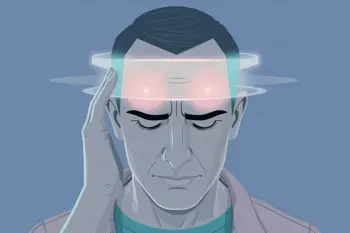
What a tension headache feels like is often described as a dull ache, steady pressure, or tightness across the forehead, temples, sides, or back of the head. The sensation may resemble a band or vice around the skull rather than a sharp, pulsing pain. This guide explains the typical pattern, associated muscle symptoms, duration, common triggers, differences from migraine, and warning signs that should not be dismissed.
The typical sensation and location
A tension-type headache usually causes mild to moderate pain on both sides of the head. Many people describe pressure across the forehead or a tightening feeling that extends around the head. The discomfort may also be concentrated near the temples, scalp, back of the neck, or shoulders, and it is generally steady rather than throbbing. 1
The pain can feel more like weight, squeezing, or an ache than an intense stabbing sensation. Scalp, neck, and shoulder muscles may feel tender when touched or moved. In some cases, the headache is felt throughout the head rather than at one precise point. These features help describe the pattern, but they do not by themselves establish a diagnosis. 2
How intensity and movement usually behave
Tension headaches are commonly mild or moderate, and the discomfort does not usually prevent ordinary activities. Routine movement, such as walking or climbing stairs, generally does not intensify the pain in the way it can during some migraine attacks. The sensation can nevertheless be distracting, persistent, and tiring, particularly when it continues for hours. 3
- Pressure or tightness rather than a pulse-like sensation.
- Pain that is commonly present on both sides of the head.
- Possible tenderness in the scalp, neck, and shoulder muscles.
- Discomfort that usually does not become substantially worse with normal physical activity. 4
Symptoms that are usually absent
A classic tension-type headache usually does not include nausea or vomiting. Visual disturbances such as bright spots or flashing lights are also not typical. Light, sounds, smells, and ordinary movement generally do not make the pain markedly worse, although individual experiences can vary and a person may have more than one type of headache. 1
The distinction from migraine is based on the overall pattern rather than one isolated symptom. Migraine pain is more often associated with stronger intensity, pulsation, nausea, sensory sensitivity, or worsening during activity. Mild migraine and tension-type headache can overlap, so a new or changing pattern should be assessed rather than labeled solely from a description. 3
Duration and frequency patterns
An episodic tension-type headache may last from 30 minutes to one week. Episodes may occur infrequently or several times each month. A pattern occurring on fewer than 15 days per month is generally categorized as episodic, while headaches occurring 15 or more days per month for at least three months are categorized as chronic. 1
Chronic tension-type headaches may last for hours and can sometimes feel constant. Frequency matters because recurring pain can affect sleep, concentration, work, and daily activities. Headaches that become more frequent, fail to improve, or require repeated use of pain medicine warrant discussion with a healthcare professional. 5
| Pattern | General description |
|---|---|
| Episodic | Occurs fewer than 15 days per month and may last 30 minutes to seven days. |
| Chronic | Occurs 15 or more days per month for at least three months and may be persistent. |
Triggers and related muscle tension
Stress, fatigue, anxiety, prolonged computer work, eye strain, and holding the head or neck in one position for a long time are associated with tension headaches. Jaw clenching or teeth grinding, poor sleep, excessive exertion, caffeine changes, alcohol use, and illnesses such as a cold or flu may also be involved. 2
The physical context can be as important as the emotional context. Long periods of typing, fine hand work, or screen use may keep the neck and scalp muscles tense. Sleeping with the neck in an unusual position can also contribute. These associations do not mean that every headache after stress or screen use is a tension headache, because other headache disorders and medical conditions can produce overlapping symptoms. 4
When the pattern needs medical attention
Most headaches are not serious, but a sudden, extremely severe headache requires urgent evaluation, particularly when it follows a severe head injury. Immediate medical attention is also important when severe headache occurs with confusion, drowsiness, slurred speech, memory loss, vision problems, weakness, a stiff neck, rash, or a very high temperature. 5
Professional advice is appropriate when headaches are frequent, interfere with daily activities, worsen despite pain medicine, or do not follow a familiar pattern. A headache triggered by coughing, laughing, sneezing, a change in posture, or physical effort should also be assessed. The absence of nausea or throbbing does not automatically prove that pain is a tension headache. 5
Practical comparison with migraine
The most useful comparison is based on quality, intensity, associated symptoms, and response to activity. Tension-type pain is typically pressing or tightening, mild to moderate, and not substantially aggravated by routine movement. Migraine can be more intense and may involve pulsation, nausea, vomiting, light sensitivity, sound sensitivity, or visual symptoms. 6
- Tension-type pattern: dull, steady pressure; tight-band sensation; commonly both-sided; usually no vomiting.
- Migraine pattern: may be more intense or pulsating and may involve nausea, sensory sensitivity, or visual disturbances.
- Overlap: mild migraine can resemble tension-type pain, so recurring or changing symptoms should be medically reviewed. 1
Sources
- Mayo Clinic, “Tension headache: Symptoms and causes”
- MedlinePlus, “Tension headache: Medical Encyclopedia”
- Harvard Health, “Tension Headache: A to Z”
- Merck Manuals Consumer Version, “Tension-Type Headaches”
- NHS inform, “Headaches”
- Kaiser Permanente, “Migraines vs. tension headaches: Key differences and symptoms”
Authored by MyTrendSpot team