Warning signs of Crohn's disease: A clinical guide to symptoms and evaluation
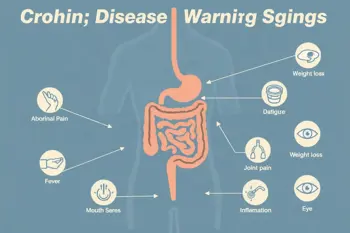
Warning signs of Crohn's disease can be subtle at first, but recurring diarrhea, abdominal pain or cramping, and unexplained weight loss are the central symptoms identified by the National Institute of Diabetes and Digestive and Kidney Diseases. Symptoms may develop gradually, vary according to the location and severity of inflammation, and alternate with periods of remission. 1
Common digestive warning signs
Persistent or recurring diarrhea is one of the clearest symptoms to monitor. Crohn's disease may also cause cramping or pain in the abdomen, particularly when inflammation affects the small intestine or colon. Some people experience frequent loose stools, bloating, a feeling of fullness, constipation, or a sensation that the bowel has not completely emptied. These symptoms are not specific to Crohn's disease, but a recurring pattern deserves clinical attention. 2
Changes in stool can provide additional information. Blood, mucus, or rectal bleeding may occur, especially when inflammation involves the colon. Nausea, vomiting, and reduced appetite can accompany digestive symptoms and may contribute to unintended weight loss. Crohn's disease can affect any part of the digestive tract from the mouth to the anus, so the exact symptom pattern differs between individuals. 3
Weight loss, fatigue, and fever
Unintended weight loss is a significant warning sign when it occurs alongside ongoing bowel symptoms. It may reflect reduced appetite, nausea, difficulty eating because of pain, or inflammation affecting digestion. Fatigue is also common and may be related to active inflammation, inadequate nutrition, or anemia. The NIDDK lists anemia, tiredness, fever, nausea, loss of appetite, and vomiting among possible symptoms. 1
Fever can indicate active inflammation, although it is not present in every case. NHS Inform describes a temperature of 38°C or higher as a less common symptom and identifies extreme tiredness, unintended weight loss, and blood or mucus in stool as symptoms associated with Crohn's disease. A combination of persistent bowel changes, declining weight, fatigue, and fever is more concerning than any single symptom alone. 5
Symptoms outside the digestive tract
Crohn's disease can produce manifestations beyond the intestines. Joint pain, soreness, stiffness, or swelling may occur, while eye inflammation can cause redness, pain, or irritation. Skin changes may include rashes or painful, red, tender bumps, often on the legs. These symptoms can appear with digestive complaints or, in some cases, become noticeable before a person has received an explanation for ongoing bowel problems. 4
Mouth sores are another possible clue, particularly when they recur with appetite loss, diarrhea, or abdominal pain. Johns Hopkins Medicine lists joint or muscle pain, mouth sores, skin rashes, and eye problems among extraintestinal symptoms. Such findings do not establish a diagnosis because infections, nutritional deficiencies, medication effects, and other inflammatory conditions can produce similar problems. Their importance lies in the overall pattern and persistence. 4
Perianal and bowel complications
Inflammation near the anus may cause pain, swelling, discharge, or persistent irritation. Crohn's disease can involve the skin around the anus and may be associated with abnormal tunnels called fistulas or pockets of infection known as abscesses. Drainage, a tender lump, or recurrent perianal discomfort should not be dismissed as an ordinary bowel symptom, particularly when it occurs with diarrhea, weight loss, or fever. 7
Long-term inflammation can also narrow sections of the bowel through swelling and scarring. Narrowing may contribute to cramping, bloating, constipation, or a feeling of incomplete evacuation. Merck Manual notes that Crohn disease may lead to strictures, fistulas, and abscesses, while diagnosis may involve colonoscopy, video capsule endoscopy, or imaging such as computed tomography or magnetic resonance imaging. 7
Warning signs in children and teenagers
Children may show the same digestive symptoms as adults, including abdominal pain, recurring diarrhea, poor appetite, fatigue, and weight loss. However, growth-related changes can be especially important. Slower-than-expected growth, poor weight gain, or delayed puberty may signal chronic illness even when bowel symptoms are not prominent. Johns Hopkins identifies older children, teenagers, and young adults as commonly affected age groups. 4
Concern about a child's development should be considered alongside changes in eating, energy, bowel habits, and body weight. NHS Inform specifically advises contacting a general practitioner when there is concern about a child's development, as well as when diarrhea continues for more than seven days, abdominal pain persists, weight loss is unexplained, or blood appears in stool. These findings require assessment rather than self-diagnosis. 5
When symptoms require medical evaluation
There is no single symptom that confirms Crohn's disease, and similar complaints can result from infections, medication effects, irritable bowel syndrome, or other digestive conditions. NIDDK describes Crohn's disease as a chronic inflammatory condition caused by abnormal immune reactions in the digestive tract, with symptoms that may range from mild to severe and occur during flares separated by remission. 6
Medical evaluation is particularly appropriate for diarrhea lasting more than seven days, persistent abdominal pain, unexplained weight loss, blood or mucus in stool, recurrent fever, or fatigue that interferes with normal activities. Severe abdominal pain, a swollen abdomen, persistent vomiting, inability to pass stool or gas, heavy rectal bleeding, or signs of dehydration warrant prompt medical attention because they may indicate a complication requiring urgent evaluation. 5
What an assessment may consider
- The duration, frequency, and pattern of diarrhea or constipation.
- Abdominal pain, appetite changes, weight trends, fever, and fatigue.
- Blood or mucus in stool and symptoms around the anus.
- Joint, eye, skin, or mouth changes.
- Growth and puberty patterns in children.
Doctors interpret these details together with examination findings and appropriate testing. Crohn's disease may affect the small intestine, large intestine, or other digestive locations, so the evaluation is guided by the suspected area and severity of inflammation rather than by symptoms alone. 6
Sources
- National Institute of Diabetes and Digestive and Kidney Diseases, Symptoms & Causes of Crohn's Disease
- Mayo Clinic, Crohn's disease: Symptoms and causes
- Cleveland Clinic, Crohn's Disease: Symptoms & Treatment
- Johns Hopkins Medicine, Crohn's Disease
- NHS Inform, Crohn's disease symptoms and treatments
- National Institute of Diabetes and Digestive and Kidney Diseases, Definition & Facts for Crohn's Disease
- Merck Manual Consumer Version, Crohn Disease
Authored by MyTrendSpot team