Early symptoms of mesothelioma you should know: A clinical overview of warning signs
The early symptoms of mesothelioma you should know are often subtle, gradual, and similar to those of more common respiratory or gastrointestinal conditions. Early-stage mesothelioma does not usually cause many symptoms, so persistent or changing symptoms deserve medical discussion, particularly when there has been past asbestos exposure. 1
Why early mesothelioma symptoms can be difficult to recognize
Mesothelioma is a rare cancer affecting the mesothelium, the thin tissue lining around organs and body cavities. It most commonly begins in the pleura around the lungs, although it can also develop in the peritoneum around abdominal organs and, much more rarely, around the heart or testicles. 3 The disease may remain unnoticed because its first effects can resemble infection, chronic lung disease, muscle pain, or digestive problems.
The interval between asbestos exposure and diagnosis can be very long. One clinical account describes a latency period often lasting 20 to 50 years, meaning symptoms may appear decades after exposure in construction, shipbuilding, manufacturing, automotive, military, or other settings. 6 This history can be important even when exposure occurred many years earlier and the person no longer works around asbestos.
Early signs associated with pleural mesothelioma
Pleural mesothelioma commonly involves shortness of breath, chest pain, persistent cough, tiredness, and weight loss without dieting. 1 Breathlessness may gradually become more noticeable during ordinary activity, while chest discomfort can be constant or localized to the side or lower chest. A cough that continues rather than resolving as expected is another symptom that may require assessment.
Fluid can collect between the lung and chest wall, a condition called pleural effusion. This buildup may contribute to breathing difficulty and chest pain, and imaging such as a chest X-ray or CT scan can reveal the fluid. 5 Other reported pleural symptoms include fatigue, fever or sweating, reduced appetite, difficulty swallowing, a hoarse voice, and changes in the fingers or nails known as finger clubbing. 1
Abdominal symptoms in peritoneal mesothelioma
Peritoneal mesothelioma begins in the lining of the abdomen rather than around the lungs. Its symptoms may include abdominal pain, abdominal swelling, nausea or vomiting, poor appetite, unintended weight loss, and changes in bowel habits such as constipation or diarrhea. 1 These complaints can initially be interpreted as ordinary gastrointestinal illness because they are not specific to cancer.
Swelling or bloating is particularly important when it is persistent, painful, or accompanied by appetite loss and unexplained weight change. The American Lung Association also identifies abdominal swelling and pain, nausea, vomiting, constipation, and bowel obstruction among possible symptoms. 5 Symptoms vary according to the tumor’s location and the effects of fluid buildup or pressure on nearby abdominal structures.
Additional symptoms that may develop
Some people experience general symptoms that affect the whole body, including fatigue, fever, night sweats, reduced appetite, and weight loss without trying to lose weight. The American Lung Association reports that fatigue, fever, and unintended weight loss may occur across mesothelioma types. 5 These symptoms do not establish a diagnosis, but their persistence or combination with chest or abdominal symptoms can provide useful information during a clinical history.
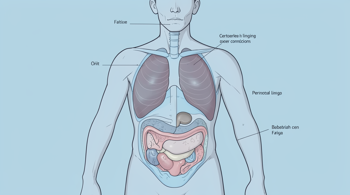
Less common or later symptoms can include difficulty swallowing, prolonged hoarseness, blood in coughed-up phlegm, nausea, low oxygen levels, or repeated fluid accumulation around the lungs. 4 A lump or mass may also be noticed as disease progresses, although this is not an expected finding in every case. Symptoms depend on whether disease affects the pleura, peritoneum, or another much rarer site.
Why symptoms are often mistaken for other illnesses
Mesothelioma symptoms overlap with conditions such as pneumonia, chronic obstructive pulmonary disease, asthma, benign pleural effusion, pleural plaques, tuberculosis, lung cancer, and noncancerous gastrointestinal disorders. 4 A cough, breathlessness, fatigue, or chest discomfort may therefore be attributed to a more familiar explanation, especially when symptoms develop slowly and no previous cancer history is known.
Asbestos exposure does not mean that a person has mesothelioma, and many symptoms have causes unrelated to cancer. However, occupational and household exposure can be relevant because asbestos was used in insulation, cement, roof shingles, flooring, brake linings, and other industrial materials. 3 Family members could also have encountered fibers carried home on contaminated work clothing, according to Harvard Health’s overview.
Medical assessment and the limits of screening
When symptoms are present, assessment generally begins with a physical examination and a review of medical, occupational, and exposure history. A clinician may order chest imaging, including an X-ray or CT scan, particularly when pleural fluid or other lung changes are suspected. 5 Draining pleural fluid can help exclude other causes, but fluid analysis alone is not usually sufficient to confirm mesothelioma.
A biopsy is typically required to establish the diagnosis, because it allows specialists to examine tissue directly. 5 There are currently no recommended screening tests for people without symptoms who are not at increased risk, and major medical organizations do not recommend routine screening solely because someone has known asbestos exposure. 2 Some clinicians may consider periodic imaging in selected circumstances, but the usefulness of such testing for finding mesothelioma early remains uncertain.
When persistent symptoms merit discussion
Persistent or worsening breathlessness, cough, chest pain, abdominal pain, swelling, fatigue, or unintended weight loss should be described to a healthcare professional rather than evaluated from symptoms alone. The American Lung Association specifically advises people with asbestos exposure, frequent bouts of pneumonia, or listed mesothelioma symptoms to consult a healthcare provider. 5 A clear timeline can help, including when symptoms began and whether they are changing.
Useful details include previous work in construction, shipbuilding, manufacturing, automotive, military, or marine environments; renovation or demolition involving older materials; and possible household exposure. Symptoms remain nonspecific, so medical evaluation does not imply that mesothelioma is the likely cause. The purpose of reporting them is to allow common conditions and, when appropriate, serious causes to be considered through examination, imaging, and tissue testing. 2
Sources
- Cancer Research UK, Symptoms of mesothelioma, https://www.cancerresearchuk.org/about-cancer/mesothelioma/symptoms
- American Cancer Society, Early Detection, Diagnosis, and Staging of Mesothelioma, https://www.cancer.org/cancer/types/malignant-mesothelioma/detection-diagnosis-staging.html
- Harvard Health, Mesothelioma, https://www.health.harvard.edu/cancer/mesothelioma
- UT MD Anderson Cancer Center, Mesothelioma Symptoms, https://www.mdanderson.org/cancer-types/mesothelioma/mesothelioma-symptoms.html
- American Lung Association, Mesothelioma Symptoms and Diagnosis, https://www.lung.org/lung-health-diseases/lung-disease-lookup/mesothelioma/symptoms-diagnosis
- Westchester Medical Center Health Network, Understanding Mesothelioma, https://www.wmchealth.org/living-well/understanding-mesothelioma-what-this-rare-cancer-is-and-why-it-matters
Authored by MyTrendSpot team