Warning signs of arthritis you should know: A clinical overview of early detection
Understanding the Early Indicators of Arthritis
Arthritis is an umbrella term for more than 100 distinct conditions that impact the joints and surrounding tissues 1, 2. Because symptoms frequently emerge subtly, they are often dismissed as simple fatigue or the natural consequence of aging 3, 4. Recognizing these early warnings is critical, as timely clinical evaluation can help slow the progression of joint damage, maintain functional mobility, and improve overall long-term quality of life 5, 6.
While every individual may experience these conditions differently, clinical observation reveals consistent patterns of pain, stiffness, and structural changes 7, 8. Persistent symptoms that recur or interfere with daily activities indicate a need for professional assessment rather than home-based observation alone 9, 10. Establishing a clear history of when these symptoms appear is a fundamental step in the diagnostic process 11, 12.
The Nature of Joint Pain and Stiffness
Joint pain often serves as the primary signal that internal joint structures are experiencing stress, inflammation, or degenerative wear 13, 14. In the early stages, this pain might only be noticeable following strenuous physical activity or after prolonged periods of inactivity 15, 16. Over time, if left unmanaged, this discomfort can become more frequent, eventually impacting the ability to perform basic tasks like climbing stairs or using common hand tools 17, 18.
Stiffness is similarly informative, particularly when evaluated by its duration and timing 19. A notable clinical marker is morning stiffness, which may suggest inflammatory arthritis if it persists for 30 minutes or longer 20, 21. Conversely, briefer periods of stiffness that emerge after rest but quickly ease with movement are frequently associated with the natural wear and tear of osteoarthritis 22, 23.
Visual and Sensory Changes in the Joints
Beyond internal pain, the physical appearance of a joint provides significant diagnostic clues 24. Swelling, often caused by fluid buildup or inflammatory responses in the surrounding tissues, can manifest as a puffy, warm, or red area around the joint 25, 26. While these symptoms may come and go initially, they rarely resolve completely without intervention as the condition advances 27, 28.
Sensory feedback from the joint can also indicate internal changes 29. Patients may report clicking, popping, or grating sensations, known medically as crepitus, which occur when cartilage surfaces are no longer smooth 30. Table 1 summarizes the primary physical markers that clinicians often monitor during an initial examination:
| Symptom | Common Clinical Characteristics |
|---|---|
| Swelling | Visible puffiness, fluid retention, or tissue inflammation |
| Temperature | Localized warmth around the joint surface |
| Discoloration | Visible redness or inflammation of the skin over the joint |
| Flexibility | Reduced range of motion or inability to move the joint fully |
Distinguishing Between Arthritis Types
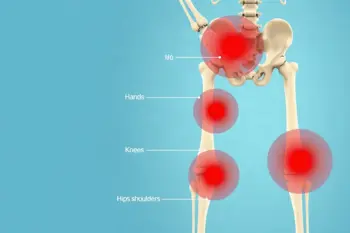
Differentiating between various forms of arthritis is vital for determining an appropriate care strategy 31, 32. Osteoarthritis is largely driven by mechanical wear over time, typically affecting weight-bearing joints such as the hips, knees, and spine, or joints frequently subjected to repetitive use, such as the hands 33, 34. It is a chronic condition characterized by the gradual breakdown of protective cartilage 35.
In contrast, inflammatory conditions like rheumatoid arthritis are systemic autoimmune responses 36, 37. These conditions are marked by widespread inflammation that often affects multiple joints in a symmetrical pattern, meaning both hands or both knees are impacted simultaneously 38, 39. Unlike mechanical wear, systemic inflammation may also present with non-joint symptoms, including persistent fatigue, unexplained fever, or general weakness 40.
When to Seek Urgent Medical Attention
While many joint concerns can be addressed during routine checkups, certain presentations require immediate clinical attention 41, 42. A joint that becomes suddenly hot, severely swollen, and intensely painful-especially when accompanied by a fever or a generalized feeling of being unwell-suggests a potential infection within the joint, known as septic arthritis 43, 44. This is a medical emergency because it can lead to rapid, irreversible joint damage if not treated immediately 45.
Healthcare professionals also advise consultation if joint symptoms last for more than three days or occur multiple times within a single month 46, 47. Even in less urgent scenarios, keeping a log of symptoms can assist a provider in identifying patterns that distinguish between minor strain and chronic joint disease 48, 49.
Long-Term Management Considerations
Managing arthritis is a multifaceted process that evolves alongside the patient's condition 50, 51. Early interventions often focus on conservative measures, such as activity modification, physical therapy to strengthen supporting muscles, and the use of assistive devices to reduce joint load 52, 53. While over-the-counter options for pain management exist, they are not intended for indefinite use, and patients must discuss long-term therapeutic options with their clinician 54.
The goal of modern clinical care is not merely the alleviation of pain but the preservation of long-term mobility and structural integrity 55. Because arthritis can cause secondary health complications, proactive monitoring ensures that the management plan remains aligned with the patient's specific health status and disease progression 56, 57.
Sources
- Arthritis Foundation: Recognizing the Symptoms of Arthritis
- Dartmouth Health: Early Signs of Arthritis
- Acibadem Hospitals Group: Early Signs of Arthritis and Next Steps
- Arthritis Foundation: When to See a Doctor for Joint Pain
- WFMC Health: Recognizing the First Signs of Arthritis
- MultiCare Vitals: Knowning the Signs of Arthritis
- Manipal Hospitals: Early Signs and Acting Before Damage
- Acibadem Hospitals Group: Joint Pain Early Warning Signs
- Nuffield Clinic: Early Signs and Symptoms You Should Not Ignore
- Jade Clinic: Early Signs of Arthritis You Should Not Ignore
- Centers for Disease Control and Prevention: Arthritis Symptoms
- National Institute of Arthritis and Musculoskeletal and Skin Diseases: Arthritis Information
- Mayo Clinic: Symptoms and Causes of Arthritis
- MedlinePlus: Understanding Arthritis
- Cleveland Clinic: Septic Arthritis Overview
- Johns Hopkins Medicine: Osteoarthritis Progression
- Hospital for Special Surgery: Arthritis Management
- National Health Service: Common Arthritis Symptoms
- American College of Rheumatology: Rheumatoid Arthritis Guidelines
Authored by MyTrendSpot team