How to find police impound auctions for musical instruments: An evidence-based search guide
People researching how to find police impound auctions for musical instruments should begin with official public-agency sources, because police, sheriff, state, and contracted auction sales operate under different schedules and rules. Musical instruments may appear within unclaimed property, evidence-room property, seized assets, or general surplus categories, but no single nationwide marketplace guarantees a particular type of instrument. 1
Understand which auctions may contain instruments
“Police auction” can describe several legally distinct sales, including impounded property, seized assets, unclaimed items, evidence-room property that may be sold, and retired government equipment. The category matters because the seller, title status, inspection access, and release conditions can differ. A musical instrument may therefore be listed under general merchandise, electronics, communications equipment, collectibles, or miscellaneous property instead of under an instrument-specific heading. 1 Agencies commonly publish these sales independently, so location-based research is more reliable than assuming one national calendar. 2
- Search city police and county sheriff websites for “unclaimed property auction” and “evidence auction.”
- Check state police, state surplus, and public-property disposal pages.
- Review the auction contractor named in the agency’s official notice.
Start with official government pages
The most authoritative starting point is the website of the police department, sheriff’s office, state agency, or municipal property division serving the relevant area. Official pages may identify the auctioneer, sale date, registration process, viewing period, payment method, and pickup address. Spokane’s police department, for example, publishes an auction list and directs readers to the auctioneer’s website for additional information. 10 Minneapolis separately publishes unclaimed-property auction details, including viewing times, identification requirements, payment rules, and final-sale conditions. 11
- Search the agency name with “police auction,” “surplus auction,” or “property and evidence.”
- Inspect notices, downloadable auction lists, and public-meeting or procurement pages.
- Confirm that an outside auction company is identified by the government agency itself.
Use government auction marketplaces carefully
Several platforms host public-sector listings, but their presence does not automatically mean that every lot comes from a police impound operation. GSA Auctions handles federal surplus and forfeited property, while GovDeals and Public Surplus provide government-agency listings searchable by category or location. 3 4 5 Searches using “musical instruments,” “guitars,” “keyboards,” “amplifiers,” or individual instrument types can broaden results, although availability is not guaranteed and agency identity still requires verification.
- Check the seller field, agency name, location, and stated source of the property.
- Read whether the listing is surplus, unclaimed, seized, or impounded.
- Record closing time, buyer fees, tax treatment, and collection deadlines.
Check law-enforcement and local auction directories
PropertyRoom.com is associated with online property auctions supplied by law-enforcement and other public agencies. 6 Municibid serves municipalities and other public entities, while HiBid and AuctionZip aggregate local auction listings that can include municipal or public-property sales. 7 8 9 These directories can identify a possible sale, but they should be treated as discovery tools. The agency or authorized contractor should remain the reference point for authenticity, terms, and possession rights.
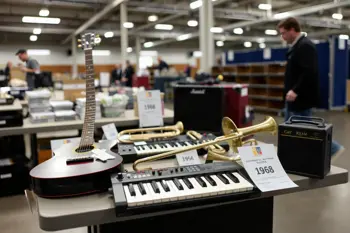
- Search by county, metropolitan area, ZIP code, and instrument-related category.
- Compare the directory entry with the agency’s own announcement.
- Be cautious when a listing lacks a government seller, physical address, or complete terms.
Evaluate an instrument listing before bidding
Photographs and descriptions should be examined for brand, model, serial number, visible damage, missing components, and signs of incomplete function. Auction guidance commonly emphasizes inspection, firm bidding limits, and the risk that items are sold “as is.” 1 Minneapolis states that auction items are sold as is and that sales are final. 11 For instruments, practical questions include whether a guitar has its case, whether a keyboard includes a power supply, whether an amplifier has cables, and whether a wind instrument shows dents or corrosion.
- Separate confirmed details from assumptions based only on photographs.
- Look for serial-number images and compare them with the written description.
- Ask whether preview appointments, testing, or hands-on inspection are permitted.
Account for legal, financial, and pickup constraints
Public auctions may impose specific identification, payment, pickup, and location requirements. Minneapolis requires photo identification for registration and lists cash or local-check conditions for certain in-person sales. 11 Knoxville states that impounded vehicles and surplus property may be sold through GovDeals and directs buyers to the city’s auction information for schedules and procedures. 13 These examples show why an instrument’s displayed bid is not the complete transaction calculation. Buyer premiums, sales tax, shipping, transportation, storage, and equipment replacement can materially affect the final cost.
- Confirm accepted payment types and whether identification must match the account.
- Check local pickup windows, shipping responsibility, and storage consequences.
- Set a maximum total cost before bidding, including fees and missing accessories.
Recognize maintenance and authenticity risks
Musical instruments recovered through impound or unclaimed-property systems may have unknown ownership, storage, repair, or usage histories. A seized or unclaimed item can be legally offered for sale after required procedures, but that does not establish its condition, authenticity, playability, or completeness. Government auction guidance distinguishes between agency surplus, impounded goods, seized property, and evidence-related items because each source creates different questions about history and documentation. 1 Buyers should also verify whether serial numbers, branded cases, removable electronics, or personal contents are subject to special restrictions.
- Budget for cleaning, tuning, inspection, repair, batteries, cables, or replacement parts.
- Do not treat a recognizable brand name as proof of working condition.
- Retain the invoice and lot description as records of the transaction terms.
Sources
- Government Auctions Blog
- USA.gov
- GSA Auctions
- GovDeals
- Public Surplus
- PropertyRoom.com
- Municibid
- HiBid
- AuctionZip
- City of Spokane Police Department
- City of Minneapolis Police Department
- GCSurplus
- City of Knoxville
Authored by MyTrendSpot team