Warning Signs of Thyroid Nodules: A Clinical Guide to Symptoms and Evaluation
Warning signs of thyroid nodules can include a new lump in the lower front of the neck, persistent hoarseness, difficulty swallowing, or breathing problems. Most nodules cause no symptoms and are discovered during a routine examination or imaging for another condition, so the presence of a nodule does not by itself indicate cancer. 1
How Common Thyroid Nodules Are
Thyroid nodules are growths within the thyroid, a butterfly-shaped gland at the front of the neck. They may be solid, fluid-filled cysts, or a mixture of both. Ultrasound and autopsy studies suggest that nodules occur in about 50% of older adults, while physical examination detects them less often because many are small or deep within the gland. 2
Johns Hopkins reports that about half of Americans may have a thyroid nodule by age 60, and more than 95% of nodules are benign. Cedars-Sinai describes most nodules as harmless and notes that many people do not know one is present until a clinician detects it or imaging reveals it. These figures explain why evaluation is important without assuming the worst outcome. 14
Visible or Palpable Neck Changes
A lump or swelling at the front of the neck is one of the clearest signs that a thyroid evaluation may be appropriate. The swelling can be noticed while looking in a mirror, during shaving, or when touching the area. Some nodules remain unnoticeable because they are small, while larger nodules may produce a visible enlargement of the thyroid, sometimes called a goiter. 35
Texture and mobility can also influence clinical concern. Penn Medicine identifies a hard nodule or one that appears fixed to nearby structures as features associated with a higher likelihood of cancer, although touch alone cannot establish a diagnosis. A new or enlarging lump should therefore be assessed through a physical examination and, when indicated, thyroid ultrasound rather than judged by appearance or firmness alone. 37
Swallowing, Breathing, and Voice Symptoms
As a nodule enlarges, it can press against nearby structures in the neck. Difficulty swallowing food, a persistent sensation of pressure, or trouble breathing, particularly when lying flat, can occur when the esophagus or airway is affected. These symptoms are not specific to cancer, but Merck Manual identifies compressive symptoms as a reason for careful evaluation and notes that they can increase concern about malignancy. 23
Persistent hoarseness or a noticeable change in voice is another warning sign, especially when it does not fit a recent respiratory infection. A thyroid mass can affect structures involved in voice production, including the laryngeal nerve. Johns Hopkins notes that nodules causing voice or swallowing problems may require treatment, while Penn Medicine lists hoarseness and voice changes among symptoms of larger nodules. 13
Symptoms of Excess Thyroid Hormone
Some nodules produce thyroid hormones independently of normal regulation. These hyperfunctioning nodules may be associated with symptoms of an overactive thyroid, including unexplained weight loss, a fast pulse or palpitations, nervousness, tremor, heat intolerance, sweating, restlessness, increased appetite, and more frequent bowel movements. Many nodules do not alter hormone levels, so normal blood tests do not by themselves exclude a nodule. 34
Hormone-related symptoms differ from pressure symptoms because they reflect thyroid activity rather than physical compression. A clinician may evaluate thyroid-stimulating hormone and other hormone levels to determine whether the nodule is functioning. Family Doctor lists blood testing, ultrasound, and fine-needle aspiration as parts of assessment when appropriate, while Cedars-Sinai notes that many people with nodules, including some with cancerous nodules, have normal laboratory results. 54
Risk Factors That Increase Concern
Symptoms are only one part of risk assessment. Penn Medicine lists several features associated with a greater likelihood of thyroid cancer: a hard nodule, fixation to nearby structures, a family history of thyroid cancer, a voice change, prior radiation exposure to the head or neck, male sex, and age younger than 20 or older than 70. These factors do not prove malignancy, but they can affect the recommended evaluation. 3
Rapid enlargement, enlarged lymph nodes in the neck, or a nodule that causes new compressive symptoms should be reported to a healthcare professional. Pain is less typical of an uncomplicated nodule and may reflect thyroid inflammation or bleeding into a cyst. Merck Manual states that pain can suggest thyroiditis or hemorrhage, while an otherwise asymptomatic nodule is usually benign even though malignancy can occasionally be present without symptoms. 26
How Doctors Investigate a Nodule
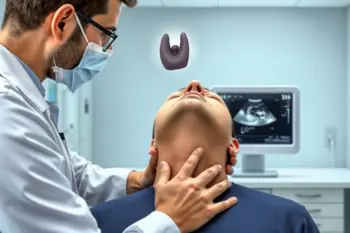
Assessment generally begins with a neck examination and a review of symptoms, family history, radiation exposure, and changes over time. Thyroid blood tests help determine whether the gland is producing an abnormal amount of hormone. Ultrasound then evaluates the nodule's size and internal characteristics and helps determine whether fine-needle aspiration biopsy should be considered. 57
Fine-needle aspiration collects cells for microscopic examination when the nodule's size or ultrasound appearance warrants it. Monitoring can be appropriate for nodules that appear low risk or are too small for biopsy. Memorial Sloan Kettering describes surveillance using repeated ultrasounds, with schedules that may become less frequent over time, demonstrating that observation is an established management approach rather than evidence that an evaluation was ignored. 16
When Medical Attention Is Important
A new, enlarging, hard, or fixed neck lump should be medically assessed even when it is painless. Persistent hoarseness, difficulty swallowing, breathing difficulty, or a sensation of neck pressure also merits evaluation. Breathing impairment or significant swallowing difficulty can reflect compression of the airway or esophagus and should be communicated promptly to a healthcare professional, particularly if symptoms are worsening. 23
Thyroid nodules cannot be classified reliably by symptoms alone. Most are benign and treatable, but ultrasound, laboratory testing, and sometimes biopsy provide the information needed to distinguish monitoring from treatment. Surgery may be considered when a nodule is cancerous, produces problematic hormone levels, or causes voice, swallowing, breathing, or other compressive symptoms. 15
Sources
- Johns Hopkins Medicine, Thyroid Nodules: When to Worry
- Merck Manual Professional Edition, Approach to the Patient With a Thyroid Nodule
- Penn Medicine, Thyroid Nodule
- Cedars-Sinai, When to Worry About Thyroid Nodules
- FamilyDoctor.org, Thyroid Nodules
- Memorial Sloan Kettering Cancer Center, Thyroid Nodule Assessment Program, Monitoring, and Biopsy
- Mayo Clinic, Thyroid Nodules: Symptoms and Causes
Authored by MyTrendSpot team