Public auction listings for seized police vehicles: A factual guide to dates, rules, and buyer risks
Public auction listings for seized police vehicles can include abandoned, forfeited, unclaimed, surplus, and impounded cars, trucks, vans, and motorcycles. The documented examples reviewed here show that sales may be conducted online, in person, or through a combination of online bidding and scheduled inspections, with each auction governed by its own terms.
What these auction listings generally include
Inventory is not limited to marked police cars. A Washington County Sheriff’s Office sale in Maryland listed Ford Interceptors and Explorers, Chevrolet Tahoes, trucks, vans, lawn equipment, tools, generators, and other property. The vehicles were described as abandoned, forfeited, or surplus, and the sale notice stated that some vehicles might not have titles. 1
Other listings focus specifically on impounded vehicles. Kansas City Police Tow Lot auctions describe the inventory as abandoned vehicles held at a municipal impound facility. The available stock can change from one sale to another, and the auction materials state that most vehicles may not run or drive and often do not have keys. 2
- Passenger cars, trucks, vans, SUVs, and motorcycles may appear.
- Police, sheriff, tow-lot, and government-surplus categories are not interchangeable.
- Equipment and personal property may be included in the same public sale.
Documented auction locations and schedules
Auction757 listed a Norfolk Police Auction for August 13, 2026, at 1188-A Lance Road in Norfolk, Virginia. The notice projected more than 87 cars, trucks, vans, and motorcycles, with online bidding and an onsite inspection scheduled for August 11. A separate May 7 Norfolk notice described a similar sale with more than 85 vehicles and an inspection two days before the auction. 3
A Hampton Police and GB’s Towing Auction was scheduled for September 17, 2026, at 723 Kentucky Avenue in Hampton, Virginia. Its announcement anticipated approximately 58 vehicles of various types and identified an onsite inspection period on September 15. These dated notices illustrate why location, inspection timing, and catalog details must be confirmed for each individual event. 4
| Location | Documented format | Vehicle information |
|---|---|---|
| Norfolk, Virginia | Online bidding with inspection | More than 87 vehicles in one notice |
| Hampton, Virginia | Online bidding with inspection | Approximately 58 vehicles |
| Kansas City, Missouri | Online-only tow-lot sale | Abandoned municipal-impound vehicles |
How bidding and registration work
Participation normally begins with registration on the auction platform or with the auction operator. The Kansas City terms identify each bid as a binding agreement and state that bids cannot be retracted because of a mistake, an unsuitable vehicle, or an unexpected condition. The same terms warn that nonpayment can lead to forfeiture, loss of a $300 deposit, and a permanent ban from that auction. 2
Government and police-related auctions can also be organized through centralized platforms. GovDeals and Public Surplus are identified as platforms used by government agencies to offer seized or surplus assets, while PropertyRoom is described as working with law-enforcement agencies on seized and unclaimed property. Platform availability does not replace the need to review the agency-specific conditions attached to each listing. 5
- Registration and identity verification may be required.
- Bid retraction rules differ, but some terms prohibit retraction entirely.
- Eligibility requirements can vary by state, agency, vehicle category, or platform.
Condition, title, and inspection risks
Police impound vehicles are commonly sold as-is, where-is, without an implied warranty. Kansas City’s terms state that bidders may not know whether a vehicle runs and drives until after purchase, while the Maryland sheriff’s sale notice states that vehicles are not Maryland inspected and may be sold without titles. These conditions create mechanical, legal, and registration risks that cannot be resolved by the listing title alone. 1
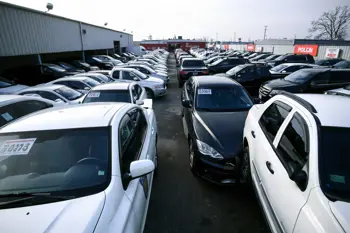
Inspection opportunities can be important but are not uniform. Norfolk and Hampton notices identified specific onsite inspection windows, while Kansas City’s online-only terms emphasize that the information supplied on the website is the information available for each vehicle. Buyers should examine photographs, vehicle identification numbers, title notes, damage disclosures, keys, and pickup instructions before placing a bid. 3
- Check whether the title is present, transferable, branded, or absent.
- Confirm whether the vehicle has keys and whether it can be moved.
- Account for towing, transportation, repairs, inspection, and registration.
Payment, pickup, and administrative obligations
Payment procedures are set by each auction. The Kansas City terms require full and timely payment, reject late or partial payment, and impose penalties for nonpayment. Powell Auction’s May 30, 2026 police seizure and equipment event stated that vehicle purchases required cash, cashier’s check, or wire transfer, while credit and debit cards were restricted for vehicles. 6
Pickup deadlines can be equally important. A San Antonio Police Department auction notice reported that winners had to pay on the sale day and collect vehicles during specified windows on the following Wednesday, Thursday, or Friday. The notice described seized and unclaimed vehicles at the city impound facility and required bidder registration before the sale began. 7
| Obligation | Potential issue |
|---|---|
| Payment | Restricted methods, deposits, deadlines, or penalties |
| Pickup | Short collection windows and possible towing requirements |
| Title and registration | Missing, branded, or jurisdiction-specific documents |
Where broader official auction information may appear
Federal and state channels add another layer to the landscape. GSA Auctions is identified as a federal portal for government property, while the U.S. Department of the Treasury manages auctions involving assets seized through federal investigations. The U.S. Marshals Service also conducts auctions for property seized during federal criminal investigations. These sources differ from municipal tow-lot sales and should not be treated as one unified inventory. 8
State and local agencies may maintain their own notices or contract with auction firms. Musick Auction describes police impound, government surplus, and seized-property sales across Idaho’s Treasure Valley, including property connected with local agencies and Idaho State Police surplus. Its stated process includes registration, preview, online bidding, payment, and pickup in Nampa or Meridian. 9
Private intermediaries can also appear in government-vehicle disposal. Copart is described as handling recovered, seized, and insurance-loss vehicles, while Insurance Auto Auctions lists vehicles sold on behalf of law-enforcement and government agencies. Such listings may involve additional licensing, title, damage, or transportation requirements, depending on the jurisdiction and sale terms. 10
Practical review checklist before bidding
A careful review should distinguish a current auction notice from an expired event, a police seizure sale from a general surplus sale, and a vehicle listing from an equipment listing. Powell Auction’s May 30, 2026 event is explicitly marked expired in the supplied material, demonstrating that date status matters. Historical notices can explain the process, but they should not be treated as confirmation of a current sale. 6
The central risk is that the final cost and legal usability of a vehicle may remain uncertain until after purchase. Review the complete terms, inspect when permitted, verify the vehicle identification number and title information, identify payment and pickup deadlines, and determine whether local rules impose licensing or registration conditions. These checks address the main friction points documented across the auction notices and platform descriptions.
- Confirm the auction date, location, operator, and whether bidding is online or onsite.
- Read all terms concerning deposits, bid retraction, taxes, buyer premiums, and nonpayment.
- Verify title status, inspection results, vehicle condition, and transport arrangements.
- Retain the official sale record and payment documentation for registration questions.
Sources
- Tri-State Alert, Washington County Sheriff’s Office sale report
- Fowler Auction and Woolsey Auction, Kansas City Police Tow Lot Auction terms
- Auction757, Norfolk Police Auction notices
- Auction757, Hampton Police and GB’s Towing Auction notice
- GovDeals, Public Surplus, and PropertyRoom
- Powell Auction and Realty, Police Seizure and Equipment Auction
- San Antonio Express-News, San Antonio police vehicle auction report
- GSA Auctions, U.S. Department of the Treasury, and U.S. Marshals Service
- Musick Auction, Police, Government and Impound Auctions in Idaho
- Copart and Insurance Auto Auctions
Authored by MyTrendSpot team