Best hospitals in the world for treating stroke: A clinical analysis of global care standards and certifications
When a stroke occurs, the difference between long-term independence and permanent disability often hinges on the speed and precision of medical intervention. Globally, top-tier stroke centers are characterized by their adherence to rigorous, evidence-based care pathways that minimize the loss of neural tissue through rapid diagnosis and advanced treatment modalities 12. Identifying institutions capable of providing this level of care requires an understanding of standardized certifications, such as those issued by the American Heart Association (AHA) and other international quality bodies, which evaluate a facility’s emergency readiness, multidisciplinary staffing, and rehabilitation infrastructure 2710.
The Role of Comprehensive Stroke Center Certification
Certification serves as a vital indicator of a hospital's capability to manage time-sensitive neurological emergencies. Comprehensive Stroke Center (CSC) status is awarded to institutions that demonstrate the ability to provide advanced interventional treatments, such as mechanical thrombectomy and intravenous thrombolysis, around the clock 128. In the global landscape, centers like the King Faisal Specialist Hospital and Research Center (KFSHRC) in Riyadh have earned such recognition, enabling them to integrate emergency response, acute specialized monitoring, and recovery programs under one unified system 29.
These certifications are not merely administrative labels but reflect a commitment to continuous quality improvement and adherence to clinical guidelines. For instance, the AHA’s "Get With The Guidelines" program helps institutions track metrics regarding the time from patient arrival to the administration of life-saving interventions 410. Hospitals that prioritize these measures, such as Apollo Hospitals in Bangalore, which recently achieved dual certification for stroke and chest pain, demonstrate the systemic preparedness required to manage the high burden of neurological and cardiovascular disease in their respective populations 78.
Evaluating Operational Quality Metrics
Performance in stroke care is often measured through standardized national and regional assessments. In South Korea, for example, the Health Insurance Review and Assessment Service (HIRA) conducts extensive evaluations of acute stroke care, focusing on indicators like the availability of dedicated stroke units, the timing of neurointerventional procedures, and early rehabilitation engagement 36. Institutions such as Inha University Hospital and Ilsan Hospital have consistently achieved perfect or near-perfect scores in these rigorous evaluations by maintaining zero-pneumonia rates and achieving near-total compliance with treatment timelines 36.
These assessments highlight the importance of internal hospital infrastructure. A high-functioning stroke unit requires specialized teams, including neurologists, neurosurgeons, and physical therapists, who begin rehabilitation while the patient is still in the acute phase 16. By monitoring vital signs around the clock and performing rapid imaging like CT or MRI, these top-rated centers reduce the risk of secondary complications and optimize the likelihood of patient survival and improved functional outcomes 13.
Technological Integration in Acute Stroke Response
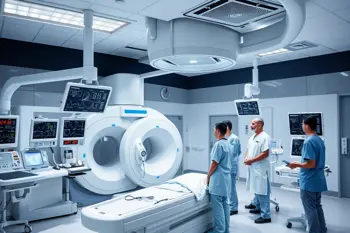
Innovative technology is increasingly defining the standard of care for modern stroke centers. The introduction of Mobile Stroke Units, which allow for a CT scanner and a specialized clinical team to provide diagnostics at the patient's location, represents a significant leap in reducing the time between symptom onset and definitive care 29. This is particularly critical because every minute of untreated ischemic stroke results in the loss of millions of neurons 4.
Advanced diagnostic procedures, including perfusion imaging and angiography, are standard in elite neurology departments to determine the viability of brain tissue and the nature of the blockage 1. At large academic institutions like the University Hospital of Zurich, the treatment pathway is structured to guide patients from emergency stabilization to comprehensive recovery, utilizing state-of-the-art procedures such as thrombolysis and mechanical thrombectomy as fundamental components of the acute intervention process 1.
Institutional Infrastructure and Care Coordination
Leading institutions, such as the Mayo Clinic, Cleveland Clinic, and Massachusetts General Hospital, are frequently cited for their robust cerebrovascular programs that encompass a 360-degree approach to stroke 13. These programs typically include specialized neurocritical care units, interventional radiology suites, and integrated secondary-prevention clinics that focus on identifying the root causes of the stroke to prevent recurrence 131415. The coordination between departments ensures that care is continuous, even as a patient transitions from the intensive care unit to a rehabilitation ward 417.
Patient experience and recovery outcomes are also heavily influenced by the presence of multidisciplinary teams. Johns Hopkins Medicine and UCSF Medical Center, for example, emphasize the inclusion of speech-language pathologists, occupational therapists, and physical therapists alongside neurologists to ensure that cognitive and physical deficits are addressed early in the treatment timeline 11618. This interdisciplinary model is a cornerstone of global best practices, reflecting the necessity of treating the patient as a whole rather than focusing solely on the arterial obstruction 1.
Market Trends and Regional Challenges
Despite the concentration of expertise in top-tier global hospitals, geographic and systemic gaps remain a persistent challenge. Data from the United States indicates that regional stroke networks often face difficulties with staffing and delays in critical imaging, highlighting the ongoing need for broader access to certified, high-standard stroke centers 4. As the burden of stroke rises globally, the standardization of care via international certifications is becoming an essential mechanism for ensuring that patients outside of major metropolitan hubs have access to equitable, high-quality interventions 711.
Hospitals are responding to these pressures by investing in remote consultation, data-sharing networks, and internal training programs to improve adherence to gold-standard protocols 410. The goal remains consistent across all leading regions: to lower 30-day mortality rates and minimize permanent deficits through the timely application of evidence-based medical interventions 311.
Clinical Considerations for Choosing Care
When evaluating facilities for stroke treatment, clinical outcomes are often correlated with the volume of cases treated and the sophistication of the facility’s neurovascular services 13. Proximity is perhaps the most significant factor, as the window for effective stroke intervention is narrow 412. Patients and families are encouraged to consider whether a facility holds recognized stroke certifications, such as those from The Joint Commission or regional equivalents, which signify that the hospital has met strict benchmarks for emergency neurology care 1419.
Ultimately, the best stroke hospital is one that balances rapid response capability with a comprehensive, long-term rehabilitation plan. By integrating acute mechanical procedures with structured, early-start rehabilitation, high-performing institutions worldwide continue to set the standard for neurological outcomes, ensuring that patients receive the most advanced care available from the moment of arrival through the final stages of recovery 13.
Sources
- University Hospital of Zurich (USZ): Treatment, Care, and Rehabilitation Following a Stroke
- Saudi Journal: KFSHRC Earns Comprehensive Stroke Center Certification
- Kormedi: Inha University Hospital Earns Perfect Score in Acute Stroke Evaluation
- News USA Today: World-Class Neurology Care at Houston Methodist Hospital
- Jornal da USP: Ribeirão Preto’s Emergency Unit Wins International Certification
- Seoul Economic Daily: Ilsan Hospital Earns Top Stroke Grade
- PNI News: Apollo Hospitals Bangalore Dual AHA Certification
- IndiaMedToday: Apollo Hospitals Bangalore Dual AHA Certification
- The Milli Chronicle: Riyadh’s King Faisal Hospital Stroke Care
- American Heart Association: Get With The Guidelines Stroke
- CDC: Stroke Facts and Research
- NINDS: Stroke Information and Prevention
- Mayo Clinic: Cerebrovascular Disease Center
- Cleveland Clinic: Stroke Program Services
- Massachusetts General Hospital: Stroke Service
- Johns Hopkins Medicine: Comprehensive Stroke Care
- UCSF: Stroke and Neurovascular Care
- Stanford Health Care: Stroke Center
- The Joint Commission: Hospital Stroke Certifications
Authored by MyTrendSpot team