Warning signs of cataracts: A clinical guide to gradual vision changes
Cataracts are a gradual clouding of the eye’s natural lens, and the earliest warning signs may be subtle rather than dramatic. Common changes include blurred or dim vision, increased glare, halos around lights, difficulty seeing at night, and colors that appear less vivid. Because cataracts typically progress slowly and painlessly, changes may be mistaken for ordinary aging or an outdated glasses prescription. 1
Cloudy, blurred, or dim vision
The most characteristic warning sign is progressive blurring that makes fine details less distinct. A person may describe the view as foggy, hazy, or similar to looking through a dirty windshield. Cataracts can affect distance vision as well as near vision, so road signs, faces across a room, and other vehicles may become harder to see. This differs from ordinary age-related farsightedness, which mainly affects close reading. 1
Vision may also appear dimmer or less sharp even when objects remain recognizable. The change can begin in one eye, occur in both eyes, or progress at different rates in each eye. Stronger glasses or brighter reading light may help temporarily in early stages, but a prescription change cannot remove clouding within the lens. An eye examination is needed to determine whether cataracts or another condition explains the decline. 5
Glare, halos, and night-vision problems
Light-related symptoms are another important warning sign. Cataract-clouded lenses scatter incoming light, which can produce glare, starbursts, or halos around headlights, streetlamps, and other bright sources. These effects are often most noticeable in low-light settings or while driving at night. Increased sensitivity to bright light can make familiar environments less comfortable and can reduce visual confidence even when daytime vision seems acceptable. 3
Night vision may worsen because cataracts reduce contrast, making it harder to distinguish objects from dark backgrounds. A person may have difficulty reading signs, identifying pedestrians, or judging details in poorly lit rooms. Night-driving difficulty has several possible causes, including refractive changes and other eye disorders, so glare alone does not establish a cataract diagnosis. A comprehensive eye examination can separate these possibilities. 2
Faded, yellowed, or altered colors
As lens clouding becomes denser, colors may look faded, muted, or yellowish instead of clear and vivid. This change can be gradual enough that it is noticed only when one eye is compared with the other, or when familiar clothing, artwork, screens, or household objects appear less intense. Altered color perception is a recognized cataract symptom, but it can also occur with other eye or neurological problems. 4
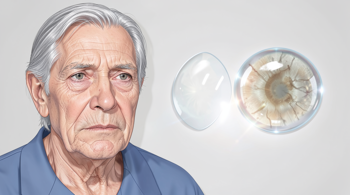
The lens is normally transparent and helps focus light onto the retina. When proteins within the lens break down and clump together, cloudy areas can interfere with the quality of light reaching the retina. The result is not simply reduced sharpness. It may also be a general dulling of the visual scene, with reduced contrast and less reliable detail. These changes should be assessed rather than attributed automatically to age. 3
Prescription changes and double vision
Frequent changes in eyeglass or contact-lens prescriptions can be a warning sign when they accompany gradually worsening clarity. Cataract-related changes in the lens can alter the eye’s focusing power, meaning a previously effective prescription may no longer provide the same correction. Repeated prescription changes are not specific to cataracts, however, and can result from normal refractive shifts or other eye conditions. 4
Cataracts may also cause double vision or multiple images in one eye. This symptom is possible but less specific than cloudy vision, glare, or faded colors. Double vision can have other causes involving the cornea, retina, eye muscles, nerves, or brain, so it should not be self-diagnosed as a cataract. Persistent or unexplained double vision warrants evaluation by an eye-care professional. 2
Risk factors and patterns of development
Age is the main association, although cataracts are not limited to very old age. They mostly develop after age 50, and approximately 20 out of 100 people aged 65 to 74 have a cataract, while more than 50 out of 100 people over age 74 have one. A global review cited by Merck reported cataracts in approximately 54% of people aged 60 or older. 1 6
Other reported risk factors include diabetes, smoking, prolonged ultraviolet or direct sunlight exposure, eye injury, inflammatory or infectious eye disease, radiation or X-ray exposure, poor nutrition, alcohol use, infrared heat, and prolonged use of corticosteroid medications. A cataract can develop years after trauma, and having one in one eye increases the likelihood of developing one in the other. Some cataracts are congenital or occur in children after injury or illness. 2
Diagnosis, monitoring, and treatment decisions
Cataracts are diagnosed by examining the eye, commonly with an ophthalmoscope or slit lamp. An eye examination also helps identify other explanations for vision changes, including glaucoma, macular degeneration, diabetic eye disease, or a change in refractive prescription. Regular examinations can monitor progression before symptoms become disruptive, particularly for people with diabetes, previous eye injury, or long-term steroid exposure. 5
Early cataracts do not always require treatment immediately. Brighter lighting, updated glasses, and managing glare may help with some activities while vision remains functional. Surgery is the definitive treatment when lens clouding interferes with reading, driving, recognizing faces, work, or other daily activities. The procedure removes the cloudy lens and replaces it with an artificial intraocular lens. Cataracts are usually painless, so sudden vision loss, severe pain, or marked redness should be assessed as a potentially different eye problem. 2
Sources
- NCBI Bookshelf, “Overview: Cataracts”
- Merck Manual Consumer Version, “Cataract”
- Cedars-Sinai, “Five Signs You May Have Cataracts”
- Healthline, “Cataracts: Symptoms and What to Do”
- Scripps Health, “Cataracts: Symptoms, Causes and When Surgery May Help”
- Merck Manual Professional Edition, “Cataract”
Authored by MyTrendSpot team