Most Effective Muscle Recovery Cream for Post-Workout Comfort: An Evidence-Based Consumer Guide
People searching for the most effective muscle recovery cream for post-workout comfort are generally looking for temporary relief from soreness, stiffness, or activity-related aches. Available creams and gels can change the sensation of discomfort, but research does not establish that any topical cream accelerates ordinary muscle recovery after exercise.
What “most effective” means after exercise
For routine post-workout soreness, effectiveness is primarily a comfort question rather than a tissue-repair question. Delayed-onset muscle soreness commonly follows unfamiliar or intense exercise and generally improves with time and conservative care, including normal movement and relative rest.1 A topical product may make movement more comfortable, but it should not be treated as proof that damaged muscle has healed.
Product choice depends on the type of discomfort and the active ingredient. Menthol, camphor, and methyl salicylate are counterirritants that create cooling or warming sensations, while topical diclofenac is an anti-inflammatory drug used for certain localized musculoskeletal conditions. These categories have different labeling, evidence, and safety considerations, so “strongest sensation” does not necessarily mean “most effective treatment.”2
Cooling, warming, and anti-inflammatory options
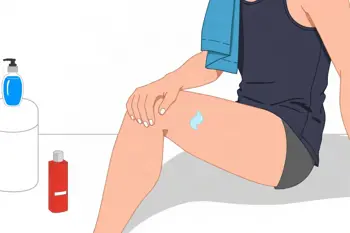
Menthol-based gels, including products marketed for temporary cooling relief, can reduce the perception of minor muscle and joint aches through a cooling sensation.3 Warming rubs use ingredients such as menthol and camphor to produce heat or tingling. Tiger Balm Muscle Rub is described as a non-greasy cream intended for use before, during, and after activity, with claims involving sore muscles, back pain, sprains, and strains.4
| Category | Typical purpose | Important limitation |
|---|---|---|
| Menthol gel | Cooling sensation and temporary symptom relief | Does not repair underlying muscle damage |
| Warming rub | Perceived warmth and short-term comfort | Heat and tight coverings can increase skin-injury risk |
| Topical diclofenac | Localized pain associated with certain musculoskeletal conditions | Not specifically labeled for ordinary delayed-onset soreness |
Topical NSAIDs have stronger clinical evidence than menthol-only products for several acute musculoskeletal pain conditions. A Cochrane review identified good pain-relief evidence for topical diclofenac, ibuprofen, and ketoprofen formulations, while the American Academy of Family Physicians describes topical NSAIDs as effective for selected acute conditions with generally fewer systemic adverse effects than oral NSAIDs.56
What current products contain
The supplied product information shows substantial variation within the recovery-cream category. Medterra’s heating-cooling CBD cream combines CBD, camphor, menthol, arnica, and aloe, while its cooling 2,000-milligram CBD cream lists CBD, arnica, menthol-related botanical ingredients, calendula, chamomile, panthenol, and hyaluronic acid. The company states that its healing and recovery claims have not been evaluated by the Food and Drug Administration.7
Other formulations emphasize skin conditioning alongside sensory relief. Dr. Frederick’s Original Recovery Cream lists menthol, aloe, shea butter, and rosehip oil, and describes use up to four times daily. CBDfx lists broad-spectrum CBD, menthol, white willow bark, and caffeine in a water-based cream. These descriptions explain formulation differences, but brand claims and customer ratings do not substitute for independent clinical evidence of faster muscle recovery.8
Evidence limits and regulatory context
Topical diclofenac has a clearer drug-evidence base for localized musculoskeletal pain, but Voltaren Arthritis Pain Gel is labeled for temporary relief of arthritis pain in certain joints rather than uncomplicated post-exercise soreness.9 Using a product outside its labeled purpose can create uncertainty about whether the ingredient is appropriate for the specific complaint, particularly when pain is diffuse, severe, or associated with an injury.
CBD creams are marketed for muscle and joint discomfort, yet product pages commonly include a disclaimer that their statements have not been evaluated by the Food and Drug Administration and that the products are not intended to diagnose, treat, cure, or prevent disease.7 The National Center for Complementary and Integrative Health notes that topical counterirritants such as menthol or capsaicin may provide temporary pain relief without addressing the cause of pain.10 This distinction is central when evaluating claims about recovery, healing, or tissue regeneration.
Safety considerations before application
Topical pain relievers should not be applied to broken or irritated skin, and users should follow the product label regarding frequency and application area. The FDA warns that topical pain relievers can cause skin injury when overused or used with external heat, tight coverings, or damaged skin.11 Warming products containing camphor or methyl salicylate may be especially unsuitable under heating pads or restrictive wraps unless the label specifically permits that use.
Topical diclofenac is an NSAID and can cause skin reactions. MedlinePlus advises attention to medication precautions, allergies, and relevant health conditions, while clinical guidance still recognizes that topical administration does not eliminate all systemic risk.12 A clinician or pharmacist should be consulted about topical NSAIDs when pregnancy, kidney disease, cardiovascular risk, medication interactions, or previous NSAID reactions are relevant.
When cream is optional and when evaluation matters
For uncomplicated soreness after exercise, evidence-based recovery measures include sleep, hydration, relative rest, normal movement, and a gradual return to activity. Cleveland Clinic describes delayed-onset muscle soreness as a condition that usually improves with time and conservative care, making a topical cream optional for symptom comfort rather than essential to recovery.13 A menthol gel may therefore be a practical sensory option when temporary cooling is preferred, while warming products may suit people who prefer heat or tingling.
Self-treatment is inappropriate when symptoms suggest a more serious problem. Mayo Clinic identifies severe or persistent muscle pain as a reason for medical assessment, and warning signs requiring prompt attention include severe swelling, weakness, dark urine, numbness, chest symptoms, worsening pain, or failure to improve.14 These symptoms cannot be safely explained by ordinary post-workout soreness based on a cream’s cooling or warming effect.
Sources
- Cleveland Clinic, Delayed-Onset Muscle Soreness
- CNN Underscored, Muscle and Joint Pain-Relief Creams
- Biofreeze, Cooling Relief Product Information
- Tiger Balm, Muscle Rub Product Information
- Cochrane Library, Topical NSAIDs for Acute Musculoskeletal Pain
- American Academy of Family Physicians, Topical NSAIDs
- Medterra, Heating-Cooling Rapid Recovery CBD Cream
- Dr. Frederick’s Original and CBDfx product information
- Voltaren, Arthritis Pain Gel Product Information
- National Center for Complementary and Integrative Health, Pain
- U.S. Food and Drug Administration, Use of Topical Pain Relievers
- MedlinePlus, Topical Diclofenac
- Cleveland Clinic, Delayed-Onset Muscle Soreness
- Mayo Clinic, Muscle Pain: Symptoms and Causes
Authored by MyTrendSpot team