A Guide to Identifying Pelvic Health Issues: Clinical Perspectives on Diagnosis and Management
Understanding the Pelvic Floor
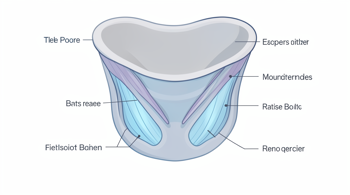
The pelvic floor consists of a complex network of muscles, ligaments, and connective tissues situated at the base of the pelvis 1. Acting as a hammock-like structure, these tissues provide essential support for the bladder, bowel, and reproductive organs while facilitating critical functions including urination, defecation, and sexual health 1, 8. Beyond localized support, this muscle group collaborates with the diaphragm, abdominal muscles, and back muscles to stabilize the core and maintain posture 1, 3. When these structures function correctly, their activity is often unnoticed, yet their role is vital to overall musculoskeletal wellness 8.
Pelvic floor health is frequently overlooked until dysfunction manifests, impacting daily quality of life 8. Conditions in this region are often under-reported due to the sensitive nature of the symptoms and the common misconception that discomfort following childbirth or aging is inevitable 2. Clinical data suggests that up to one in three women may experience pelvic floor dysfunction at some point in their lives, though estimates indicate that incidence rates may be higher, particularly in populations over the age of 80 2, 8. Recognizing that these symptoms are not normal is the first step toward effective clinical management 3, 9.
The Spectrum of Pelvic Floor Dysfunction
Pelvic floor dysfunction is not a single condition but an umbrella term encompassing various patterns of muscular or connective tissue impairment 5. Clinicians typically categorize these issues based on muscle tone and coordination, identifying three primary states of concern 5, 10:
| Condition | Primary Characteristic | Associated Symptoms |
|---|---|---|
| Hypotonia (Weakness) | Insufficient muscle tone | Leakage, prolapse, poor support |
| Hypertonia (Tightness) | Excessive tension | Pain, constipation, sexual discomfort |
| Mixed Dysfunction | Inconsistent coordination | Varying patterns of leakage and pain |
Hypotonic muscles lack the necessary contractile strength to maintain closure of the urethra or anus, often leading to involuntary leakage 10. Conversely, hypertonic muscles remain in a state of chronic contraction, preventing proper relaxation during necessary functions like bowel movements, which can lead to significant discomfort and pelvic pain 2, 10. Mixed patterns present a more complex clinical profile where certain muscles are overactive while others are weak, requiring precise assessment to develop an appropriate, individualized therapeutic plan 5, 10.
Common Indicators and Symptom Patterns
Identifying potential pelvic health issues requires an awareness of subtle symptoms that frequently affect daily activities 4. Urinary incontinence is perhaps the most widely recognized symptom, though it presents in distinct ways: stress incontinence occurs during physical exertion like sneezing or lifting, whereas urgency incontinence involves a sudden, uncontrollable need to void 3, 4. Other indicators include the sensation of a vaginal bulge or persistent pelvic pressure, which may intensify with prolonged standing or straining 2, 4. Chronic bowel dysfunction, characterized by persistent constipation or difficulty emptying, is also a frequent clinical finding 4, 5.
Pain serves as another critical indicator of pelvic floor distress 5. This may manifest as discomfort during sexual intercourse, persistent aching in the lower abdomen, or sharp pain that recurs over months 4, 6. Because the pelvis contains organs from the reproductive, urinary, and gastrointestinal systems, pain can arise from multiple sources simultaneously 6, 7. Keeping a detailed symptom diary-recording timing, triggers, and physical sensations-can assist clinicians in identifying patterns and differentiating between musculoskeletal, nerve-related, or organ-based causes 7, 9.
When to Seek Urgent Medical Evaluation
While many pelvic health conditions are chronic and manageable, certain symptoms indicate a need for immediate medical assessment to rule out acute pathology 7. Urgent care is typically required if pelvic pain is accompanied by fever, fainting, vomiting, or heavy, unexplained vaginal bleeding 7. Sudden, severe pain that deviates from established patterns or symptoms occurring during pregnancy should always be addressed promptly by a healthcare professional 7, 10. These signs can sometimes point to underlying infections, ectopic pregnancy, or other medical emergencies that require rapid diagnosis and intervention beyond standard physical therapy 7, 10.
The Role of Professional Assessment
Diagnosis begins with a comprehensive review of medical and menstrual history, often followed by a physical examination to evaluate muscle strength, tension, and structural support 1, 7. In some cases, clinicians may utilize imaging techniques, such as ultrasound or CT scans, to visualize the pelvic organs and rule out anatomical anomalies 7. Because pelvic health is deeply connected to neuromuscular function, a pelvic health physical therapist is often the primary specialist involved in the evaluation process 9, 11.
These specialists use specific assessment tools to determine whether the patient requires strengthening exercises, relaxation techniques, or manual therapy to restore coordination 5, 11. The goal of an assessment-driven approach is to create a personalized recovery plan that moves away from generic, one-size-fits-all exercises-such as basic Kegels-which may actually worsen symptoms if the pelvic floor is hypertonic 5, 9. By targeting the specific muscular dysfunction, therapists can help patients regain control over bladder, bowel, and sexual function, significantly improving their quality of life 3, 11.
Integrated Care Approaches
Effective management of pelvic health often requires a multi-disciplinary approach, particularly for chronic pain conditions like endometriosis, which may involve gynecologists, pain management specialists, and pelvic floor therapists 6, 7. Research indicates that for many patients, coordination between these specialties is necessary to address the complex layers of symptoms that affect physical, emotional, and social well-being 6. When musculoskeletal, nutritional, and mental health factors are treated in tandem, patients often experience better outcomes than through isolated medical treatments alone 6.
Ultimately, restoring pelvic health is a process that relies on accurate identification and evidence-based interventions 2. Rather than relying on non-clinical sources for solutions, patients are encouraged to seek professional support from established medical centers or physical therapy clinics 6, 9. With proper guidance, most pelvic floor disorders are highly treatable, and the earlier an issue is evaluated, the greater the potential for long-term resolution of symptoms 3, 5.
Sources
- Acibadem Hospitals Group: Pelvic Floor: Symptoms, Causes, And Treatment
- PureInti: Pelvic Floor Dysfunction: Symptoms, Exercises & Treatment
- ATI Physical Therapy: Pelvic Health for Women
- Good Housekeeping: Sneaky Signs You Need Pelvic Floor Therapy
- PhysioFit: Common Pelvic Floor Problems: What They Are And Their Causes
- Cedars-Sinai: Pelvic Pain in Women: Why Effective Treatment Can Be Elusive
- Acibadem Hospitals Group: Pelvic Pain: Possible Causes and When to Seek Care
- Lotze MD: Pelvic Floor Health: A Complete Guide for Women
- Therapeutic Streams: 7 Signs You Need Pelvic Floor Rehab
- ImmerHealth: How to Tell if Your Pelvic Floor Needs Strengthening, Relaxation, or Both
- Stanford Health Care: Pelvic Floor Disorders Overview
- American Physical Therapy Association: Pelvic Floor Dysfunction Guide
Authored by MyTrendSpot team