10-Day Tour to Italy: A Data-Driven Planning Guide for First-Time Visitors
Planning a 10-day tour to Italy involves far more than selecting cities on a map. The country's density of major attractions, complex train network, and high-demand entry ticketing at landmarks like the Vatican Museums and the Colosseum require careful sequencing. Research from multiple itinerary sources and travel specialists consistently points to a core hub-and-spoke model: Rome as the entry anchor, Florence as the cultural midpoint, and Venice as the northern conclusion, with regional extensions determined by personal interest and available travel days. 1
The Classic Route: Rome, Florence, and Venice in Ten Days
The most frequently documented 10-day Italy structure allocates approximately three nights in Rome, three nights in Florence (with at least one day trip into Tuscany), and two to three nights in Venice. Travel planning resources note that this configuration allows meaningful time at major landmarks without constant hotel transitions. Flying into Rome Fiumicino (FCO) and departing from Venice Marco Polo (VCE) is a widely recommended open-jaw flight strategy that eliminates backtracking and maximizes usable days. 2
Itinerary planners consistently warn against visiting four or more cities in ten days. One Italy-based travel analyst breaks down the math clearly: four cities generate approximately three travel days, reducing ten total days to roughly 8.5 usable days, leaving just over two real days per destination. 3 Three well-paced bases deliver a more substantive experience than four rushed stops. The Rome-Florence-Venice spine covers ancient Roman history, Renaissance art and architecture, and Venice's unique canal city environment across three geographically distinct zones.
Day-by-Day Route Structure and Key Destinations
A representative 10-day structure documented by multiple sources distributes destinations as follows:
| Days | Destination | Nights | Notable Stops |
|---|---|---|---|
| 1-3 | Rome | 3 | Colosseum, Roman Forum, Vatican Museums, Sistine Chapel, Trevi Fountain, Pantheon, Spanish Steps |
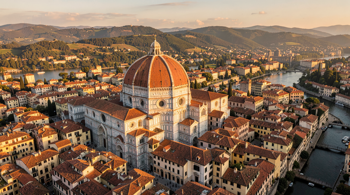
| 4-5 | Florence | 2 | Duomo, Uffizi Gallery, Accademia (Michelangelo's David), Ponte Vecchio, Piazzale Michelangelo |
| 6 | Tuscany Day Trip | 0 | Siena, San Gimignano, Chianti wine estates, hilltop villages |
| 7-8 | Venice | 2 | St. Mark's Basilica, Doge's Palace, Grand Canal, Murano, Burano |
| 9 | Naples or Pisa | 1 | Pompeii archaeological site, Leaning Tower of Pisa |
| 10 | Departure | 0 | Return transfer to departure airport |
Alternative 10-day configurations documented by tour operators substitute Venice for the Amalfi Coast, routing travelers south from Rome to Naples, Pompeii, Positano, and Ravello before looping back north through Florence. This southern variant prioritizes coastal scenery and volcanic history over lagoon-city architecture. Some private tour operators offer a structure using only two hotel bases, four nights in Rome and six nights in Florence, with Venice and other destinations handled as day trips or overnight excursions, minimizing the time and energy lost to repeated check-ins and check-outs. 4
Rail Connections and Internal Transportation
Italy's high-speed rail network operated by Trenitalia (Frecciarossa service) and the private operator Italo connects all major cities on a typical 10-day itinerary efficiently. Published advance fares and journey times on standard routes provide a useful planning baseline: 5
| Route | Service | Duration | Advance Fare (approx.) |
|---|---|---|---|
| Rome to Naples | Frecciarossa | 1h 10min | From EUR 19 |
| Naples to Salerno | Regionale | 40min | EUR 4.60 |
| Salerno to Florence | Frecciarossa | 3h | From EUR 29 |
| Florence to Venice | Frecciarossa | 2h 5min | From EUR 19 |
| Rome to Florence | Frecciarossa | 1h 30min | From EUR 19 |
Tickets should be purchased at least two weeks in advance on trenitalia.com or italotreno.it for the most favorable fares, as prices increase significantly closer to travel dates. Private tour operators offering 10-day Italy packages often include first-class high-speed rail tickets as part of bundled pricing, which can simplify logistics but typically represents a premium over self-booked regional fares. Travelers using the Amalfi Coast extension should note that rail access ends at Salerno, with the final leg to the coast requiring a private vehicle or ferry transfer. 5
Accommodation Categories and Cost Expectations
Accommodation options for a 10-day Italy tour span a wide range. In Rome, budget-oriented hotels near the Colosseum have been documented at approximately EUR 90 per night as of 2026, while mid-range options in the historic center range significantly higher. Florence offers boutique five-star properties concentrated in the Oltrarno and Santa Croce districts, while Venice pricing reflects the logistical constraints of the island setting, where properties on or near the Grand Canal command substantial premiums. 6
Organized group tour packages for 10 days in Italy have been documented at a range of published starting prices: one Rome-Tuscany-Venice structured tour begins at USD 1,200 to 1,700 for self-planned travelers covering their own accommodation, while fully guided group packages with accommodation start from approximately CAD 2,749 and extend to CAD 5,949 depending on service level, included meals, and private guide access. 7 Luxury private tour packages with five-star hotels, private licensed guides in each destination, dedicated drivers, and concierge coordination represent the upper tier of the market. Budget travelers using hostel accommodation have been quoted from GBP 939 for structured 10-day southern Italy routes including Rome, Sorrento, and Naples. 8
Advance Ticketing, Seasonal Timing, and Entry Requirements
Visitor management systems at Italy's most visited sites require advance ticket reservations that can run four to six weeks ahead during peak season. The Vatican Museums and Sistine Chapel, the Colosseum, and Florence's Uffizi Gallery and Accademia all operate timed-entry systems. Skip-the-line access, offered by many organized tour operators, is one of the primary functional justifications for guided tour packages over fully independent travel. Failure to pre-book at these sites can result in multi-hour queues or complete unavailability on popular dates. 1
Spring (April through June) and autumn (September through October) are consistently identified as the optimal windows for a 10-day Italy tour, offering milder temperatures, lower crowd density relative to peak summer months, and more predictable weather across both northern and southern Italy regions. July and August bring extreme heat in Rome and Florence and very heavy tourist volumes across all major sites and transport corridors. U.S. citizens traveling to Italy for tourism purposes do not currently require a visa for stays of up to 90 days within the Schengen Area, though travelers should verify current entry requirements and any pending ETIAS authorization requirements before travel. 9
Itinerary Variants, Risks, and Planning Friction Points
Beyond the classic three-city structure, documented 10-day Italy variants include: the Rome and Amalfi Coast focus (three days in Rome, four days on the coast, two nights back in Rome before departure); the Cinque Terre extension from Florence; the Tuscany and Umbria deep-dive covering Siena, Montepulciano, San Gimignano, Assisi, and Orvieto with minimal time in major cities; and the southern Italy route from Rome to Palermo through Naples, Pompeii, and Sicily. Each variant involves genuine trade-offs in city coverage, travel complexity, and physical stamina. 3
Common planning errors identified by experienced Italy travelers and guides include: overloading the itinerary with four or more cities, underestimating half-day losses on each travel day, neglecting to pre-book museum tickets weeks in advance, selecting accommodation far from city centers to reduce nightly costs without accounting for added transit time, and failing to research dress code requirements for religious sites including the Vatican and Assisi basilicas. Budget estimations that account only for flights and hotels frequently underestimate total trip cost by excluding rail tickets, museum admission fees, guided tour premiums, and meal costs, which for 10 days in Italy can range from approximately USD 1,200 on the lower end to over USD 13,000 for luxury private itineraries. 7
Sources
- Zicasso - 10-Day Italy Rome Florence Venice Itinerary (zicasso.com)
- The Italy Guides - 10 Days Italy Itinerary: The Classic Grand Tour (theitalyguides.com)
- Anthony in Italy - 10 Days in Italy Itinerary and Why Most People Try to Do Too Much (anthonyinitaly.com)
- Europe Private Tours - 10 Day Private Italy Tour Itinerary (europeprivatetours.com)
- Trenitalia - Official High-Speed Rail Schedules and Fares (trenitalia.com)
- Destination.com - 10 Days in Italy: The Rome, Florence and Amalfi Itinerary (destination.com)
- nxVoyTrips - Italy 10-Day Travel Itinerary Complete Trip Plan 2026 (nxvoytrips.ai)
- Euroventure - The Neapolitan 10-Day Tour (euroventure.com)
- U.S. Department of State - Italy Country Information Page (travel.state.gov)
Authored by MyTrendSpot team