Evaluating quality in bulk ex-military uniform lots
Why Grading Systems Are the Starting Point
Bulk ex-military uniform lots are typically assessed using a tiered condition scale. Grade 1 represents near-new or lightly used condition, Grade 2 denotes visible wear but functional integrity, and Grade 3 covers items requiring repair or presenting significant defects. 1 Industry practice recognizes that grading is not perfectly standardized across all retailers or surplus dealers, meaning a Grade 1 designation at one supplier may not carry the same meaning as at another. 2 Buyers should always request the specific grading definitions a seller uses before accepting condition descriptions at face value. Misaligned grade expectations are one of the most common sources of commercial disputes in the surplus textile market.
Additional condition terminology frequently encountered includes "unissued" or "new old stock" (NOS), which indicates items that left military inventory without being formally worn, and "serviceable," which signals that an item has passed a functional check despite cosmetic wear. 3 Each category carries a different risk profile. Unissued lots stored in non-climate-controlled warehouses may carry degradation risks from humidity and temperature cycling even though they were never deployed. The grade assigned on paper should always be cross-referenced against the physical evidence during inspection.
Fabric and Material Indicators of Lot Quality
Textile composition is one of the most reliable quality signals in any ex-military uniform lot. Military-specification garments commonly utilize ripstop nylon, high-tensile poly-cotton blends, and heavyweight cotton constructions engineered to withstand demanding operational environments. 4 When inspecting fabric, the evaluator should assess thickness and weight consistency across multiple pieces in the lot, check for uneven texture or color patches that indicate irregular dyeing or material substitution, and test stretch recovery by slightly deforming the fabric and observing how quickly it returns to its original shape. 5 Pilling or surface fuzzing across large portions of a lot is a strong indicator of fiber degradation from heavy washing cycles or extended storage under friction.
Colorfastness is a measurable parameter that directly affects resale value, particularly for camouflage-pattern uniforms where pattern fidelity matters to the end user. BDU and ACU lots should be assessed for consistent shade across pieces within the same nominal colorway, as fading variability within a single lot reduces sorting efficiency and increases rejection rates. 6 Buyers contracting larger institutional lots should consider requesting independent lab testing using standardized textile methods, such as wash-and-rub colorfastness assessments, to establish an objective evidence base before finalizing a procurement quantity.
Construction and Hardware Inspection Protocol
The structural integrity of a military uniform depends heavily on its construction details rather than its surface appearance alone. Key inspection points include double-stitched seams, reinforced stress points at elbows and shoulders, and consistent bartack placement at pocket corners and attachment points. 7 Loose threads, skipped stitches, and seam separation are classified as major defects under standard bulk inspection plans, and any lot presenting these issues across more than a threshold percentage of sampled units should be reclassified downward in grade accordingly. The difference between a well-sorted lot and a poorly sorted one often comes down to a range of several to over a dozen percent in the reject rate. 8
Hardware components require separate functional testing. Zippers must be pulled through their full range of motion to identify snagging, missing slider teeth, or broken end stops. Buttons should be checked for secure attachment and absence of cracking. Snap closures, Velcro panels, and adjustment straps must each be operated under representative tension to confirm they perform to their designed function. 9 For large uniform packs and load-bearing items, frame components and buckle attachment points demand particular attention, as cracking around structural stress points is a known failure mode that disqualifies an item from further use regardless of fabric condition. 10
Authentication and Label Verification
Distinguishing genuine military-issue garments from commercial reproductions is a critical step in evaluating any bulk lot, because the two categories carry substantially different functional specifications and resale values. Authentic military garments typically carry a contract number on the interior label that can be cross-referenced against Defense Logistics Agency (DLA) procurement databases to verify specification compliance. 11 Lots sourced directly from official DLA disposition channels or recognized government surplus auctions are generally considered more reliably authentic than secondary market lots that have passed through multiple intermediaries, where label integrity and provenance are harder to verify. 12
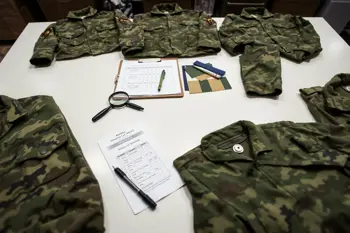
For historical or collectible uniform lots, such as those from dissolved armed forces like the East German Nationale Volksarmee, authenticity markers take on additional significance. The NVA dissolved on October 2, 1990, meaning every piece in circulation today came from that single historical dissolution event, with no ongoing production replenishing the supply. 13 Collectors and resellers evaluating such lots must examine construction methods, label typography, and material composition against documented period examples to distinguish authentic pieces from later reproductions, which can differ sharply even when surface appearances are similar.
Hygiene, Storage History, and Contamination Risk
Hygiene evaluation is a non-negotiable component of bulk lot inspection that is often underweighted by first-time buyers. Military uniforms stored in non-climate-controlled facilities are susceptible to mold growth, biological contamination, and insect damage including moth deterioration of wool-blend items. 14 Any lot arriving with musty odors, visible staining in concentrated patterns, or irregular surface discoloration in areas associated with biological activity should be quarantined and tested before the rest of the consignment is processed. The financial impact of discovering contamination after full intake can be significant, particularly if the lot was intended for resale or reissuance.
Proper sorting facility practice requires that each garment passing through a quality control station be evaluated not only for structural condition but also for cleanliness and wearability, as items failing hygiene thresholds represent a distinct defect category separate from construction defects. 8 Buyers receiving sealed bales or compressed lots face particular challenges because compression conceals internal items from visual review. Remote inspection protocols, including video bale-opening demonstrations from the seller and independent third-party inspection for first-time supplier relationships, represent practical risk mitigation steps that experienced importers use to reduce uncertainty before committing to a shipment. 15
Lot Consistency, Sizing, and Commercial Viability Risks
The commercial value of a bulk ex-military uniform lot is heavily influenced by internal consistency across three dimensions: size distribution, condition uniformity, and completeness. A lot with a coherent and documented size ratio commands stronger resale economics than a mixed or undocumented lot, because downstream buyers and resellers can plan inventory positioning without absorbing the labor cost of re-sorting. Lot pricing in the surplus segment is strongly tied to these variables, with inconsistency in sizes, missing components such as buttons or attachment hardware, and physical condition variation all reducing achievable resale margins. 16
Category-specific and grade-specific lots in the broader surplus clothing market carry a premium of approximately 15 to 25 percent over equivalent mixed-grade lots, reflecting the market's recognition that sorting labor has already been performed and quality is more predictable. 17 For institutional buyers or resellers operating at scale, the true cost per unit in any bulk lot must account for expected rejection rates, re-sorting labor, and remediation of repairable items, not only the headline per-unit or per-kilogram cost. A lot priced attractively at the intake stage can produce a poor outcome if the internal defect rate, size scatter, or hygiene rejection rate is higher than anticipated. Establishing a sampling plan before accepting full delivery, with defined acceptance criteria for critical, major, and minor defects, is the most reliable framework for protecting lot value. 18
Sources
- Army Surplus World - armysurplusworld.com
- Surplus Cases UK - surpluscases.co.uk/army-surplus-grades-explained
- Global Garments Stock - globalgarmentsstock.com/how-to-choose-the-best-quality-surplus-shirts
- Global Garments Stock - globalgarmentsstock.com/ways-to-check-quality-before-buying-surplus-clothes
- Indetexx - indetexx.com/identify-quality-second-hand-clothing-in-bulk-orders
- Lisenxinghua - lisenxinghua.com/blog/control-bdu-shrinkage-colorfastness
- Lisenxinghua - lisenxinghua.com/blog/army-combat-uniform-quality-inspection-checklist
- A&E Clothing Poland - aeclothingpoland.com/blog/news/what-does-quality-control-of-used-clothing-in-a-sorting-facility-involve
- Global Garments Stock - globalgarmentsstock.com/how-to-choose-the-best-quality-surplus-shirts
- Smiths Surplus and Supply - smithssurplusandsupply.com/how-we-grade-military-surplus-gear
- Defense Logistics Agency - dla.mil
- GovPlanet - govplanet.com
- Keep Shooting - keepshooting.com/blog/east-german-army-surplus-101
- U.S. Army Publishing Directorate - armypubs.army.mil
- Indetexx - indetexx.com/how-to-inspect-used-clothing-bales-remotely-before-buying
- Defense Logistics Agency - dla.mil/Troop-Support
- Vintage Supplier - vintagesupplier.com/branded-clothing-bales-types-grades-specifications
- Lisenxinghua - lisenxinghua.com/blog/bdu-pre-shipment-inspection-plan
Authored by MyTrendSpot team