Understanding assisted living facility cost structures: A journalistic breakdown of base rates, care levels, and recurring add-on fees
Assisted living costs go beyond a single headline rate, and that layered structure is exactly what readers are looking for when evaluating “base rates and care level pricing,” “what you are actually paying for,” and how families see the bill change after move-in. Assisted living communities typically price housing and meals separately from care tiers and from individual services such as medication management, so the advertised base rate rarely equals the final monthly invoice.
How assisted living cost structures are layered
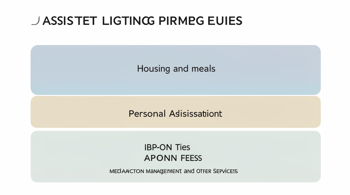
Across the provided sources, assisted living cost structures are consistently described as multi-layer pricing. One layer covers room and board, often described as the base rate. A second layer ties the resident’s monthly charge to assessed care needs, commonly described as care levels or tiers. A third layer consists of itemized service fees that can be triggered as needs change, such as medication management or other care-related supports.
LegalClarity frames this as three separate layers: base rate for housing and meals, a care-level charge tied to how much personal help is required, and additional fees for services like medication management. The pricing mechanics can be transparent in contract language yet still complex in practice because facilities may calculate each layer independently rather than bundling everything into one flat rate.
- Base rate is often compared to an apartment lease with extras, covering living space, utilities, meals, and standard upkeep.
- Care levels are assessed before move-in and re-assessed as conditions change, then priced as a tiered add-on.
- Individual fees can be charged for services outside the baseline scope, including episodic or service-specific care.
Base rates: what they usually include and why advertised numbers differ
Base rates typically function as the predictable portion of the bill because they cover core “room-and-board” components that do not necessarily change day-to-day. One provided breakdown describes base rates covering physical living space, utilities, meals, and basic upkeep. The space can range from shared rooms to one-bedroom suites, which is directly tied to price variation over geography and unit type.
In the LegalClarity source, base rates nationally are described as typically falling between $3,500 and $7,000 per month, with variation driven mostly by apartment size, geographic market, and whether the community sits in an urban or rural area. Utilities such as electricity, water, heating, and sewer are bundled into that category, as are weekly housekeeping and linen service, access to amenities, and the general operating costs like property taxes and building insurance that are embedded into the base.
| Base-rate component | How it is described in the sources |
|---|---|
| Housing and utilities | Living space plus bundled utilities (electricity, water, heating, sewer) are included in the base rate in the LegalClarity description. |
| Meals | A meal plan is included, usually two or three meals daily served in communal dining, with a noted “flex dining” option in the LegalClarity description. |
| Housekeeping and linens | Weekly housekeeping and linen service are described as standard within the base rate. |
| Amenities and programming | Access to shared amenities and activity programming is described as part of the base category. |
| Predictability | Everything in this category is characterized as the “predictable” part of the bill that stays the same regardless of health changes. |
The pricing friction point is that families often anchor on the base figure and then encounter separate charges once care needs are assessed. Budget Seniors also notes that families most often pay between $5,400 and $6,300 per month, while the “advertised base rate” is rarely the final bill. This aligns with the layered model described across multiple sources.
Care levels and tier logic: the charge that moves the total
Care levels are presented in the sources as the central driver of change in the monthly total. Assisted living pricing is not standardized federally in the same way across all states and facilities, so the mechanism for moving from one care level to another can differ. However, the economic logic is consistent: higher levels of assistance increase staffing needs and therefore increase the monthly charge.
LegalClarity emphasizes that before move-in, facilities assess how much personal help a resident needs, then apply a care-level charge accordingly. Assisted Living Authority describes the overall system as layered billing architecture, comparing it to a mobile plan where the advertised number rarely reflects the final invoice because multiple layers are evaluated and billed. CarePriced also stresses that the total depends on where someone lives and what level of care is needed, with extra charges commonly adding $500 to $1,500 per month on top of the base in its overview.
- Care-tier changes can occur as needs increase after admission, not only at move-in.
- Residents may be categorized into levels such as “minimal assistance” through extensive assistance, with higher tiers priced higher.
- Facilities often add charges for services that fall beyond what the base rate defines as included.
One additional nuance is the point-system approach described in the Caily source. It explains that some communities convert independence and care needs into points that determine monthly cost, rather than relying purely on fixed tiers. The practical implication is that families should not assume the naming convention of “levels” will translate across facilities.
Memory care as a specialized component within pricing
Memory care is repeatedly characterized as a specialized program within the broader senior living ecosystem and typically costs more than standard assisted living. The Budget Seniors source notes that memory care has pushed past $6,690 per month in its discussion of recent trackers. CarePriced similarly notes that specialty memory care wings and related programming are often extra beyond standard assisted living pricing.
LegalClarity explicitly lists memory care and extra fees as elements that add up beyond the base rate. This matters for cost structure analysis because memory care is not merely an add-on in a conceptual sense; it can alter staffing patterns, staff training requirements, and the scope of care delivered. For families, the challenge is to understand whether a facility’s quoted “assisted living” pricing includes memory care services or whether memory care is billed separately as a different service package.
| Pricing question | Why it affects the monthly bill |
|---|---|
| Is memory care included in the standard assisted living rate? | If memory care is separate, the care-level add-ons may change once a resident moves into a specialized program. |
| Are memory care supports priced as a separate tier or a distinct program fee? | Distinct program pricing can introduce new line items and staffing-related charges that families did not see in the base-rate estimate. |
| How is medication management handled in each program? | Medication management is explicitly mentioned as a service that can be billed separately, and approaches may differ between assisted living and memory care. |
Because federal oversight of assisted living pricing is described as indirect rather than direct in the sources, rules about bundling and what is considered standard can differ by facility and state. Assisted Living Authority notes that licensing and pricing bundling can vary as state frameworks differ, affecting what appears in base rate versus separate charges. That variability increases the importance of reviewing the fee schedule for the specific program under consideration.
What national median and range figures can and cannot tell
Several sources provide national medians and ranges, but the layered model limits how much those figures clarify for individual families. The LegalClarity source describes a national median monthly cost for assisted living of roughly $6,200 and explains that the real payment depends on base rate, care levels, and individual fees. Budget Seniors similarly discusses a median true cost closer to $6,200 to $6,300 when care-level fees are included in its framing.
CarePriced states a national median cost in 2026 of approximately $5,200 per month with an increase from $4,995 in 2024, while other sources describe different median ranges. Medicarepriceguide states assisted living costs range from $3,500 to $7,500 per month nationally in 2026, with a median near $5,100 and notes that Medicare does not cover assisted living. These differences highlight a key limitation: “median” depends on whether costs include care-tier fees and whether figures represent base-only pricing or broader all-in amounts.
- Advertised base rates often fall in a broad band, while all-in totals depend on assessed care level and additional services.
- Ranges can reflect different definitions of what is included (room-and-board only versus room-and-board plus care-tier and service fees).
- Medicare coverage status affects affordability calculations but not the private-pay fee schedule itself.
Geography and room type further shift totals. LegalClarity describes base rates commonly between $3,500 and $7,000 per month nationally. ZipDo provides a different lens by describing a $5,500 national median monthly cost for private rooms and $4,500 for semi-private rooms, with costs ranging from $3,000 rural to $8,000 urban. Even when the numeric value differs by source, the structural theme stays consistent: room type and market location materially influence pricing.
Add-on fees: how common “extras” appear in the monthly total
Extra fees are a repeated theme across the provided research. The LegalClarity source lists services like medication management as individual fees that add to the base rate plus care tiers. CarePriced notes that average add-on costs can add $500 to $1,500 per month on top of the base and identifies categories such as higher tiers of ADL assistance, specialty memory care wings, prescription medication management, and on-site therapy.
From LegalClarity’s “What the Base Rate Covers” section, many amenities appear included in the base category, such as housekeeping and linens, communal dining, activity programming, and shared amenities. That means additional fees typically emerge for services not fully defined as standard, such as transportation beyond scheduled routes or premium versions of certain amenities. This creates a situation where the base rate feels comprehensive until a resident needs services outside the baseline scope.
| Service category | How it is described in the research data | Cost-structure impact |
|---|---|---|
| Medication management | Listed as an extra fee beyond the base rate in the LegalClarity description. | Can add a separate line item after care assessment and service plan decisions. |
| Higher ADL assistance tiers | Described as often extra beyond the base level in CarePriced. | Increases monthly totals as care needs intensify. |
| Specialty memory care wings | Described as an extra category in CarePriced and discussed as a specialized component in multiple sources. | May shift the resident into a higher-cost program structure. |
| Additional transportation | Transportation is described as included as a base component in CarePriced, while transportation beyond scheduled routes is described as premium and potentially extra. | Creates predictable and variable portions of cost depending on needs. |
| Ancillary services | Assisted Living Authority describes episodic charges for anything outside defined scope. | Introduces variability across residents and time. |
A key risk point is contract complexity. Medicarepriceguide notes that assisted living contracts contain rate increase provisions, discharge clauses, and sometimes mandatory arbitration, and states these are negotiable before signing and nearly impossible to renegotiate after. From a cost-structure perspective, rate increase provisions can compound the base-and-tier math over time.
Payment sources, regulatory oversight, and eligibility constraints
Cost structures intersect with payment eligibility, which adds another layer of risk and uncertainty for families. Medicarepriceguide states that Medicare covers zero dollars of assisted living room and board and frames this as a common costly misunderstanding. Sunriseseniorliving describes payment options that include personal savings and income, personal assets, home equity solutions like bridge loans and reverse mortgages, and pathways such as Medicaid and long-term care insurance where eligible.
Regulatory oversight is primarily state-based in the provided research. Assisted Living Authority notes there is no federal direct regulation of assisted living pricing and that authority rests with individual states, which license facilities under their own codes. Because licensing standards differ across states, what is bundled in a base rate in one place may appear as a separate line item elsewhere. That state-by-state variation is also reflected in the Caily and other sources’ descriptions of non-uniform pricing models.
- Medicaid coverage depends on state options and program structures and is not uniform across all assisted living bills (as reflected in the Medicaid.gov general framing of long-term services and supports).
- Private pay remains the most common coverage route in many discussions, with additional pathways such as long-term care insurance mentioned as secondary options.
- Because state licensing defines scope and service categories, contracts can differ substantially in how they separate base rate, care tier, and add-on fees.
Market friction points extend beyond payment eligibility. Assisted Living Authority describes how advertised base rates rarely reflect final invoices due to tiering and episodic charges. This means families must evaluate both the initial rate and the mechanism by which care assessments can change future charges. Where feasible, reviewing the complete fee schedule rather than only the base rate is repeatedly implied by the layered architecture described in multiple sources.
Sources
- https://legalclarity.org/assisted-living-costs-base-rates-and-care-level-pricing/
- https://assistedlivingauthority.com/assisted-living-cost-breakdown
- https://www.budgetseniors.com/nearby/assisted-living-cost-per-month/
- https://carepriced.com/blog/how-much-does-assisted-living-cost-in-2026
- https://medicarepriceguide.com/assisted-living-facility-cost/
- https://www.aplaceformom.com/caregiver-resources/articles/cost-of-assisted-living
- https://www.caily.com/blog/how-assisted-living-communities-determine-pricing-point-system-explained
- https://zipdo.co/assisted-living-statistics/
- https://www.sunriseseniorliving.com/resources/finance-and-planning/how-to-pay-for-assisted-living
- https://www.medicaid.gov/medicaid/long-term-services-supports/index.html
Authored by MyTrendSpot team