Government surplus military storage containers and cargo trailers for sale: An objective market and due-diligence report
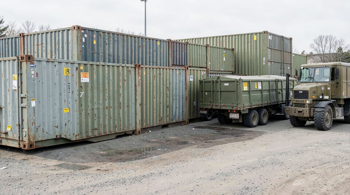
Government surplus military storage containers and cargo trailers for sale are typically connected to public-auction systems, federal excess-property programs, state surplus channels, and specialist marketplaces. The category includes shipping and storage containers, Conex-style units, platform trailers, tactical cargo trailers, and related equipment, but availability, condition, location, and sale terms vary substantially between listings. 1
How government surplus enters the public market
GSA Auctions is an official federal portal through which registered participants can bid electronically on government personal property. GSA describes surplus personal property as assets no longer needed by the government, ranging from equipment and heavy machinery to aircraft, vessels, and vehicles. Items may be offered individually or as multiple-item lots within specified bidding periods. 2
USAGov explains that government auctions may occur online, in person, or through mailed bids, and that the owning federal agency may conduct the auction itself or use an auction company. Government auction inventories can include military surplus, vehicles, mobile homes, industrial equipment, and other excess property. This means a container or trailer listing is not guaranteed to appear in one permanent catalog. 3
Where containers and trailers may be listed
Federal surplus can be encountered through GSA Auctions and through third-party auction operators handling military assets. Research information identifies GovPlanet, a Ritchie Bros. subsidiary, as a marketplace associated with decommissioned military assets, including cargo trailers and shipping containers. IronPlanet and Ritchie Bros. also operate industrial-equipment auction services, while Public Surplus and state surplus agencies can carry government-owned property transferred into local or state control. 4
Specialist military-surplus retailers represent a separate channel from government auctions. Coleman’s Military Surplus identifies trucks, trailers, forklifts, and related equipment among its inventory categories, with some items requiring telephone ordering rather than a standard online process. Such retailer inventory should not be confused with direct federal disposition, because ownership history, inspection standards, return policies, and sale conditions can differ. 5
Container types and relevant specifications
Military shipping and storage containers commonly use corrugated steel construction and may be designed around ISO intermodal dimensions. Research on military container systems describes the 20-foot container as a central standardized footprint, with specialized variants developed for logistics, field storage, refrigerated medical supplies, ammunition, or helicopter-slingable equipment. MILSPEC requirements may add tighter weld inspection, corrosion protection, and drawing-specific component requirements beyond ordinary commercial container standards. 6
Not every container described with military terminology has the same technical purpose. A general storage unit, an aluminum shipping container, a climate-controlled container, and an ammunition-related unit can have materially different construction, markings, fittings, and handling requirements. A DLA Aviation opportunity, for example, specified aluminum containers built to a particular Container Research Corporation drawing, with zinc-nickel finishing, UID marking, and first-article testing requirements. Procurement specifications do not automatically describe surplus inventory, so listing documentation must be read carefully. 7
Cargo-trailer models and documentation
Military cargo trailers can include platform, warehouse, utility, and tactical configurations. Research information identifies M101 and M1101/M1102 as common military cargo-trailer model series, recognized for rugged suspension and substantial load capability. A trailer’s model name alone does not establish its current roadworthiness, payload, title status, or compatibility with a particular tow vehicle. Those questions depend on the data plate, inspection records, mechanical condition, and applicable jurisdictional requirements.
Government procurement notices illustrate how precise trailer descriptions can become. One Department of Defense notice concerned a Horizon 30-foot dual-axle bumper-pull trailer with a steel frame, a 21,000-pound gross vehicle weight rating, and a 15,455-pound payload capacity. Another DLA notice concerned 24 platform warehouse trailers identified by a National Stock Number. These procurement specifications describe requested equipment and should not be treated as evidence that identical surplus units are currently available. 8
Condition, inspection, and ownership risks
Surplus assets are commonly sold under “as-is, where-is” conditions, making the purchaser responsible for inspection, cleaning, repairs, and post-sale costs. Visible rust, roof leaks, damaged doors, missing hardware, worn tires, brake problems, electrical faults, and structural deformation can materially change the practical value of a container or trailer. Photographs and brief descriptions may not reveal corrosion beneath flooring, seals, coatings, or chassis components.
Inspection should focus on the identification plate, VIN or serial number, manufacture date, load rating, axle condition, suspension, tires, lights, brakes, coupler, doors, hinges, flooring, roof, welds, and evidence of water intrusion. Auction lots may require specialized loading equipment, and the buyer is often responsible for arranging removal and transportation. Location, loading hours, lifting points, permits, escorts, and carrier capability therefore create logistical friction even after a winning bid. 1
Payment, compliance, and total acquisition exposure
GSA’s stated payment methods include wire transfers, certain government checks, and major credit cards processed through Treasury payment systems. Credit-card purchases through GSA Auctions are restricted to a maximum of $24,999.99, with one card per transaction. Each invitation for bid contains its own terms and conditions, and special notices may alter inspection, removal, payment, or documentation obligations. 2
Regulatory oversight does not eliminate buyer-side responsibility. Federal surplus transactions may involve removal of government identification from rejected supplies, while trailers may require title, registration, lighting, braking, weight, or highway-use compliance under state law. Storage containers can also raise site-planning questions involving foundations, access, zoning, security, and handling. State surplus programs provide additional distribution channels, but eligibility, bidding procedures, and transfer rules can differ by jurisdiction. 9
Practical evaluation framework
A disciplined review begins with the official lot description, photographs, inspection appointment information, sale terms, and removal deadline. The lot should be compared against the intended use rather than judged solely by military branding. A container intended for stationary storage may not be suitable for intermodal transport, and a tactical trailer may require extensive refurbishment before public-road use.
Key questions include whether the asset has a readable identification plate, whether ownership documents are supplied, whether government markings must be removed, whether loading equipment is available, and whether transportation can be arranged from the stated location. The highest uncertainty generally concerns hidden damage, incomplete accessories, and post-sale compliance. A realistic assessment therefore includes inspection, repairs, tires, transport, lifting, registration, site preparation, and continuing maintenance rather than focusing only on the auction result.
Sources
- GSA Auctions, Auctions Home
- GSA, How to purchase surplus property
- USAGov, Government auctions of seized and surplus property
- GovPlanet, as identified in the supplied research sources
- Coleman’s Military Surplus, Military Vehicles and Equipment
- Mobile Modular Containers, Military Shipping Container buyer’s guide
- Govly, DLA Aviation Philadelphia container procurement notice
- SweetSpotGov, Department of Defense trailer procurement notice
- NASASP, state surplus property information
Authored by MyTrendSpot team