Early symptoms of vaginal atrophy: Clinical signs and evaluation
Early symptoms of vaginal atrophy often begin subtly rather than as severe dryness. Reduced natural moisture, less lubrication with arousal, friction or tightness during penetration, mild burning, and temporary soreness can be among the first noticeable changes. The condition is now more broadly described as genitourinary syndrome of menopause, or GSM, because estrogen-related changes can involve the vagina, vulva, urethra, and bladder. 1
What the earliest changes can feel like
The first indication may be that sexual activity feels different. Penetration that was previously comfortable may cause friction, tightness, stinging, or pain because lower estrogen levels can reduce lubrication and make vaginal tissue thinner and less elastic. Some people notice discomfort mainly during arousal or intercourse, while others develop persistent vulvar or vaginal burning, itching, soreness, or a raw sensation. 5 6
Early symptoms may also appear after activities that cause contact or pressure. Tampon insertion can become uncomfortable, and mild itching or soreness may occur after exercise. Fragile tissue can sometimes produce small tears and light spotting after sex. However, bleeding after menopause is not automatically attributable to vaginal atrophy and should be assessed by a healthcare professional. 5 6
Dryness, irritation, and discharge
Vaginal dryness is a central symptom of GSM, but it does not always mean a complete absence of moisture. A person may notice less baseline lubrication, slower lubrication during arousal, or a new sensation of friction. Burning and itching can accompany dryness, and irritation may be felt at the vaginal opening or on the external vulvar skin. These symptoms can develop gradually during perimenopause, after menopause, or during other periods when estrogen levels decline. 1 4
Changes in vaginal fluid can also occur. Mayo Clinic describes fluid associated with GSM as potentially thin, watery, sticky, yellow, or gray. Discharge that is unusual for an individual, especially when accompanied by odor, soreness, or other symptoms, should not be presumed to represent atrophy because infections and other gynecologic conditions can produce overlapping findings. Clinical evaluation helps distinguish these causes. 1 3
Sexual symptoms and tissue sensitivity
Pain during sex may be an early warning sign when it reflects reduced lubrication or increased tissue sensitivity. Discomfort can occur at the vaginal entrance, deeper in the canal, or afterward as burning and soreness. Some people respond by avoiding penetration or experiencing reduced interest in sex, but that response does not establish the diagnosis. Sexual symptoms should be considered alongside dryness, irritation, menstrual and menopause history, medication exposure, and urinary changes. 1 4
Over time, estrogen-related tissue changes may include shortening and tightening of the vaginal canal. These physical changes are part of the broader GSM pattern rather than an isolated vaginal problem. A healthcare professional may evaluate the vulva, vagina, and cervix during a pelvic examination and consider whether pain is better explained by infection, skin irritation, pelvic-floor problems, or another condition. 1 3
Urinary symptoms can appear early
GSM can affect the lower urinary tract as well as vaginal tissues. Early urinary clues may include a frequent or urgent need to urinate, burning during urination, worsening leakage, or discomfort that resembles a urinary tract infection. Recurrent urinary tract or vaginal infections are also reported within the GSM symptom group. These symptoms can occur with or without prominent vaginal dryness, so their absence does not rule out GSM. 1 4
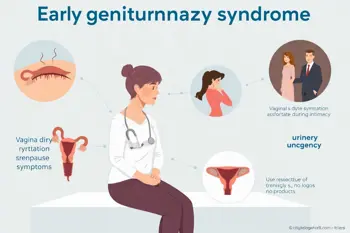
Urinary burning and urgency have several possible causes, including infection. A urine test may be used when urinary symptoms are present, while a pelvic examination and vaginal acid-balance assessment may be part of a broader evaluation. The distinction matters because symptoms that mimic infection may persist when the underlying problem is estrogen-related tissue change, while an actual infection requires appropriate medical management. 3
When symptoms are more likely to occur
GSM is most commonly associated with the menopausal transition and the period after menopause, when estrogen levels fall. Symptoms may begin during perimenopause, before menstrual periods have fully stopped. Similar changes can occur during breastfeeding, after removal of the ovaries, or during cancer treatments and other therapies that suppress estrogen. The timing of symptoms therefore provides useful context but cannot confirm the diagnosis by itself. 4 6
Unlike some menopausal symptoms that may become less noticeable over time, GSM symptoms can persist or progress without management. Harvard Health reports that symptoms may affect up to 85% of women in midlife and beyond, while also noting that GSM is frequently under-discussed. The reported range of symptoms includes genital discomfort, painful sex, and urinary problems, making a complete history more informative than focusing on dryness alone. 2
When medical evaluation is important
Medical assessment is warranted for unexplained spotting or bleeding, unusual vaginal fluid, burning, soreness, or painful sex that does not improve with a vaginal moisturizer or lubricant. Bleeding after menopause, including bleeding after sex, requires evaluation because fragile tissue is only one possible explanation. Persistent symptoms also deserve assessment when they interfere with daily activity, intimacy, sleep, or urination. 1 6
- Symptoms that may fit GSM include dryness, burning, itching, painful sex, urinary urgency, painful urination, leakage, and recurrent urinary infections. 1
- Symptoms that should not be self-attributed to atrophy include unexplained bleeding, unusual discharge, severe soreness, or changes that continue despite basic symptom measures. 1 3
- Assessment may involve a pelvic examination, urine testing for urinary complaints, and testing of vaginal acidity when clinically appropriate. 3
How early symptoms are assessed and interpreted
Diagnosis is based on the pattern of symptoms, relevant reproductive or treatment history, and examination findings. A clinician may inspect the vulva, vagina, and cervix, assess pelvic organs, and investigate urinary symptoms separately. GSM can resemble yeast infection, other forms of vaginitis, contact irritation, or urinary tract disease, so symptom duration, triggers, discharge characteristics, bleeding, and response to previous measures are clinically relevant details. 3 4
Initial symptom management may include vaginal moisturizers used at intervals and water-based or silicone-based lubricants before sex. These measures address moisture and friction but do not replace evaluation of bleeding, unusual discharge, or suspected infection. If symptoms persist, prescription approaches or other treatments may be discussed according to medical history, symptom severity, preferences, and conditions such as a history of breast cancer. 3 4
Sources
- Mayo Clinic, Vaginal atrophy: Symptoms and causes
- Harvard Health, A new name for vaginal atrophy: Genitourinary syndrome of menopause
- Mayo Clinic, Vaginal atrophy: Diagnosis and treatment
- Breastcancer.org, Genitourinary Syndrome of Menopause
- The Womens Health Clinic, What are the earliest signs of vaginal dryness?
- JumpstartMD, Vaginal Dryness in Perimenopause and Menopause
Authored by MyTrendSpot team