Unsold Metal Roofing Panels on Sale in the United States
Unsold metal roofing panels on sale in the United States surface through several distinct channels: manufacturer surplus programs, distributor clearance lots, industrial asset auctions, and secondary marketplaces. Understanding how these inventories are generated, what specifications they carry, and what due-diligence steps are required helps buyers make informed decisions when evaluating available material.
How Surplus Metal Roofing Inventory Is Generated
The most common origin point for unsold metal roofing panels is project cancellation. When a construction program is halted mid-procurement, professionally wrapped and palletized coil and sheet stock becomes available for immediate resale. One documented example involves approximately 1,009,799 lbs of prime surplus pre-painted aluminum and Galvalume material spread across seven U.S. locations, arising directly from a cancelled program with no known structural defects. 1 This type of inventory is typically prime mill-coated material that was never installed, meaning its structural integrity is equivalent to standard new stock.
Beyond project cancellations, surplus also emerges when distributors carry more inventory than regional demand supports. Manufacturers produce coils and sheets in standard color runs, and when a color or gauge is phased out, remaining stock enters clearance status. Industry data also confirms that manufacturing culls, which may include minor surface scratches or off-spec panel sizing, are regularly categorized separately and sold through regional surplus warehouses at reduced rates relative to A-grade inventory. 2
Material Types and Panel Specifications Found in the Surplus Market
Surplus metal roofing panels in the United States span a wide range of substrates, gauges, and profiles. Galvalume, which combines an aluminum-zinc coating for corrosion resistance, is among the most commonly traded surplus materials. Documented clearance coil lots include 26-gauge Galvalume bare coil in widths of 48.375 inches with lineal footage ranging from 260 ft to over 3,050 ft per lot, located at branches in Texas, Colorado, and other states. 3 Galvanized bare coil in 24-gauge and 26-gauge configurations also appears frequently in clearance inventories at the same branch locations. 4
Pre-painted coil and sheet stock in the surplus market carries architectural finishes including PVDF, Polyester, and Tedlar films. Color options documented in active surplus programs include Regal White, Charcoal, Matte Black, Medium Bronze, Sierra Tan, Dove Grey, Slate Grey, Dark Bronze, and Bone White, among others. Metal grades in these programs commonly include aluminum alloys 3003-H14, 3005-H14, 3105-H14, 3105-H24, and 5052-H32, as well as steel grades GR33, GR50, and GR80 in commercial gauges from 0.0142 digital print to 0.063 aluminum and 22- to 26-gauge Galvalume or galvanized material. 1
Clearance Coil Channels: Distributor Branch Programs
One of the most structured channels for surplus metal roofing material is the clearance coil program maintained by regional standing seam distributors. These programs list specific lot numbers, thicknesses, widths, lineal footage, and branch locations, allowing buyers to assess available inventory before contacting sales teams. Documented lot examples include a Vintage-color 24-gauge coil at 40.375 inches wide with 791 lineal feet available in La Mirada, California, and an Aged Copper 24-gauge coil at 48.375 inches wide with 1,315 lineal feet in Plant City, Florida. 5 A Rawhide Steel Gray 24-gauge lot of 621 lineal feet and a Vintage-color lot of 610 lineal feet were documented at the Denver, Colorado branch. 6
Clearance coil programs at distributors operate under specific terms that buyers must understand before purchasing. Inventory is sold on an as-is basis, all sales are final, and items are not warrantable or subject to claims. Aged clearance coils may qualify for additional percentage reductions below standard advertised pricing, with some documented lots offering up to 10% off standard rates. 7 Final pricing, availability, and eligibility are confirmed directly by the branch, and lot availability can change rapidly given that each clearance listing represents a single lot at a single location.
Auction and Bulk Liquidation Channels
Industrial asset auction firms represent another established channel for bulk unsold metal roofing panels. These events consolidate large-volume material from liquidated construction supply operations or manufacturers exiting a product line. An auction example from the U.S. market documented 200 sheets of 29-gauge off-white D-Rib panels measuring 12 feet 2 inches by 36 inches, sold through competitive bidding in North Dakota. 8 In a separate development reported in July 2026, U.S. Customs announced plans to auction approximately 12,000 tonnes of seized aluminum imported from China, which may include extruded and flat-rolled aluminum products relevant to the roofing supply chain. 9
Bulk surplus programs handled by asset sale firms can involve material spanning multiple warehouse locations simultaneously, requiring buyers to coordinate logistics independently. The Tiger Capital Group surplus program for Titan pre-painted coil and sheet, for instance, listed six warehouse locations across Maryland, West Virginia, Florida, Alabama, Indiana, and Illinois, with the total inventory approximating 17 truckloads of pre-painted coil and approximately 4 truckloads of pre-painted sheet. 1 Transportation coordination is the buyer's responsibility in most such programs, though loading assistance is commonly provided on-site.
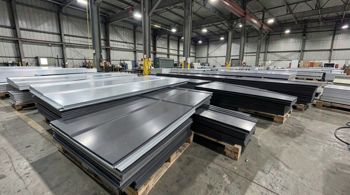
Panel Pricing: Historical Market Averages by Material Type
Understanding historical price ranges by material helps buyers contextualize what clearance or surplus pricing represents relative to standard market rates. The table below summarizes documented average price ranges for standard 12-foot metal roofing panels across substrate categories, based on market research data.
| Material Type | Price per Panel (Avg.) | Price per Square Foot (Avg.) | Expected Lifespan |
|---|---|---|---|
| Galvanized Steel | $45 to $75 | $1.50 to $2.50 | 30 to 50 years |
| Galvalume Steel | $60 to $95 | $2.00 to $3.20 | 40 to 60 years |
| Aluminum | $85 to $130 | $2.80 to $4.30 | 50 or more years |
| Copper | $250 to $400 | $8.00 to $13.00 | 100 or more years |
Standing seam metal roofing systems typically carry installed costs of $8 to $15 per square foot, while corrugated and exposed fastener panels range from $3 to $8 per square foot for materials only. 10 Installation labor generally adds $10 to $15 per square foot to total project cost, making material sourcing a meaningful variable in overall budget planning. 10 Energy efficiency data indicates that reflective metal roofing coatings can reduce cooling costs by 10 to 25% in applicable climates, a factor that influences long-term return calculations beyond initial material cost. 11
Risk Factors and Limitations When Purchasing Clearance Metal Panels
Buyers pursuing unsold or clearance metal roofing panels should understand several material and procedural risks inherent to this channel. Clearance and surplus inventory is almost universally sold as-is with no manufacturer warranty coverage, meaning defects discovered post-purchase cannot be returned or claimed against. Certain paint colors, including Champagne Metallic, Copper Metallic, Pre-Weathered Galvalume, Silver Metallic, Hartford Green, Matte Black, and Regal Red, carry documented batch-to-batch variability in appearance, which creates visible inconsistency if panels from different lots are combined on the same roof plane. 3
Paint system compatibility is a separate technical risk. Mixing SMP and PVDF paint system panels on a single installation is explicitly flagged as problematic by distributors, as the two systems have differing thermal and chemical characteristics that affect long-term adhesion and color consistency. 5 Cull or seconds-grade material may also present minor surface scratches, factory-cut sizing irregularities, or non-standard coil widths that complicate rollforming or field installation. Secondary market platforms such as online classifieds and regional auctions rarely provide material certifications or mill test reports, so buyers sourcing from these channels should request documentation where possible and inspect material before committing to bulk quantities.
What Buyers Should Verify Before Purchasing Surplus Roofing Panels
Before acquiring unsold metal roofing panels from any channel, buyers benefit from confirming several key parameters. Gauge verification is essential, as 29-gauge panels are structurally lighter than 26-gauge or 24-gauge material and carry different load and spanning capabilities depending on framing configuration. Panel profile compatibility with existing trim components, underlayment systems, and fastener patterns should be confirmed, particularly for standing seam systems where clip dimensions and seam height must match precisely. 12
- Confirm the lot's gauge, alloy grade, and paint system (PVDF vs. SMP vs. polyester) before purchasing
- Verify that all panels in a given lot share the same batch and color production run to avoid visible mismatches
- Request material certifications or mill documentation where available, especially for bulk purchases
- Assess transportation logistics independently, as most surplus programs require buyer-arranged freight
- Confirm local building code requirements for minimum gauge and panel profile before selecting material
- Understand that as-is clearance stock typically carries no warranty and cannot be returned once purchased
A new metal roof can increase residential property value and reduce buyer hesitation at the point of sale, according to real estate market analysis, which suggests that material quality and visual consistency remain relevant even when sourcing from surplus channels. 13 Buyers who prioritize verified gauge, compatible panel profiles, and paint system consistency are best positioned to translate surplus material into a durable and marketable final installation.
Sources
- Tiger Capital Group - tigerassetsales.com (Titan Pre-Painted Coils and Sheets)
- Metal Roofing Alliance - metalroofing.com
- Sheffield Metals International - sheffieldmetals.com (Clearance Coil Listings: Galvalume, Bare, Galvanized Bare)
- Sheffield Metals International - sheffieldmetals.com (Galvanized Bare Clearance Coil Listings, Denver CO)
- Sheffield Metals International - sheffieldmetals.com (Vintage and Aged Copper Clearance Coil Listings)
- Sheffield Metals International - sheffieldmetals.com (Rawhide Steel Gray and Vintage Clearance Coil Listings, Denver CO)
- Sheffield Metals International - sheffieldmetals.com (Bare-3050 and Bare-1954 Aged Clearance Coil Listings)
- Global Auction Guide - globalauctionguide.com (200 Sheets Metal Siding/Roofing, North Dakota)
- Al Circle - alcircle.com (US Customs to auction 12,000 tonnes of seized aluminium, July 2026)
- AL Roofing Sheet - alroofingsheet.com (Metal Roof Panels 12 ft: Price Ranges and Cost Factors)
- Energy.gov - energy.gov/energysaver/metal-roofs
- USA Metal Sales - usametalsales.com (26 Gauge Galvalume Standing Seam and 5V Crimp Panel Specifications)
- Redfin - redfin.com (Does a New Roof Increase Home Value, 2025)
Authored by MyTrendSpot team