How to find affordable government surplus vehicles: A Consumer Research Report
How to find affordable government surplus vehicles requires more than locating an auction listing. Federal, state, county, and municipal agencies dispose of retired fleet vehicles, seized property, and other assets through public auction systems, usually on an as-is basis. Vehicle categories include sedans, police cruisers, pickup trucks, SUVs, vans, buses, ambulances, fire trucks, and utility equipment. The winning bid is only one part of the transaction because fees, taxes, transportation, registration, and repairs can materially change the final cost. 1410
What Government Surplus Vehicles Include
Government surplus is not a single class of vehicle. Federal fleet units may include cars, trucks, vans, and buses retired after scheduled agency use, while state and local governments commonly sell police cruisers, utility trucks, maintenance vehicles, and emergency equipment. Seized or forfeited vehicles may also be sold through Treasury, U.S. Marshals Service, or Internal Revenue Service processes. Former patrol vehicles can have heavy operating demands even when maintenance was performed on schedule, so the agency background matters as much as the model and mileage. 2567
| Category | Common examples | Primary concern |
|---|---|---|
| Fleet vehicles | Sedans, pickups, SUVs, vans | Service history and operating hours |
| Law-enforcement vehicles | Police sedans and pursuit SUVs | Hard use, idle time, and equipment removal |
| Specialty equipment | Ambulances, buses, fire and utility trucks | Condition, transport, and maintenance complexity |
Where the Vehicles Are Listed
USA.gov provides a central starting point for identifying federal, state, and local government auction programs. GSA Auctions is the federal platform for surplus personal property, including vehicle listings. State and municipal agencies also use marketplaces such as GovDeals and Public Surplus, while local governments may publish auction notices on official city or county websites or use contracted auction companies. Treasury and the U.S. Marshals Service operate separate channels for some seized and forfeited property, so inventory is distributed rather than concentrated in one national marketplace. 123456
Federal surplus: GSA Auctions and federal fleet sale programs.
State and local surplus: GovDeals, Public Surplus, municipal websites, and contracted auction houses.
Seized or forfeited property: Treasury, U.S. Marshals Service, and applicable IRS sale procedures.
How to Calculate the Actual Cost
An auction bid should be treated as a preliminary figure, not the vehicle's complete cost. Depending on the marketplace and listing, the buyer may owe a buyer's premium, sales or use tax, title and registration charges, transportation expenses, storage charges, and repair costs. Reported platform comparisons show premiums ranging from none on some government marketplaces to double-digit percentages on others, including examples of 12.5% on GovDeals and 10% on GovPlanet. Each listing's payment and removal terms control the final obligation. 1214
| Cost category | Why it matters |
|---|---|
| Winning bid | The amount accepted by the auction process |
| Buyer premium | Platform-specific percentage or fee added to the bid |
| Taxes and paperwork | Sales, use, title, registration, and possible inspection charges |
| Post-sale expenses | Transport, storage, tires, mechanical work, and equipment removal |
Inspection and Vehicle History
Inspection is especially important because government auction vehicles are generally sold as-is, and online photographs cannot establish mechanical condition. The Federal Trade Commission advises used-vehicle buyers to obtain history information, inspect the vehicle, and understand warranty terms. A VIN-based report from an approved NMVTIS provider can identify title brands, salvage history, and reported odometer problems. NHTSA's VIN lookup can identify open safety recalls, but a recall search does not replace a mechanical inspection or title review. 8910
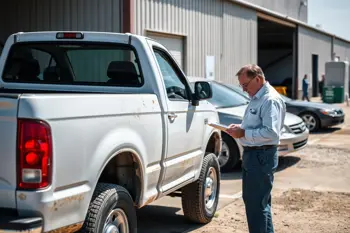
Compare the VIN on the vehicle, listing, and paperwork.
Review title brands, odometer records, and reported damage.
Check fluids, warning lights, tires, body panels, glass, and signs of water intrusion.
Determine whether the vehicle runs, drives, starts, or is being sold in non-operational condition.
Titles, Registration, and Eligibility
Title documentation varies by agency and state. Federal transactions may provide a Standard Form 97, or SF-97, rather than a conventional state title, and acceptance procedures differ among motor-vehicle departments. Some buyers may face additional verification, inspections, or delays before registration. California DMV guidance illustrates that title and registration requirements must be completed after acquisition and that state rules govern the process. Auction eligibility also varies: some programs require account registration, bidder identification, or special credentials, while others impose buyer-specific payment and removal rules. 111213
| Document issue | Question to resolve before bidding |
|---|---|
| SF-97 or state title | Will the destination state's DMV accept the document? |
| Title brand | Does the record show salvage, rebuilt, or other restrictions? |
| Registration | Are inspections, taxes, insurance, or additional forms required? |
Bidding Risks and Practical Limits
The principal risk is paying for an apparently inexpensive vehicle without accounting for uncertainty. Former police and utility vehicles may have higher mileage or harder use, and specialty vehicles can require expensive maintenance, licensing, storage, or transport. Online auctions also create competitive bidding, binding sale terms, fixed pickup windows, and limited opportunities to reject a winning purchase. A disciplined ceiling should incorporate the bid, platform charges, taxes, transportation, immediate repairs, and paperwork costs. If those figures cannot be established from the listing and agency terms, the vehicle's apparent affordability is difficult to evaluate responsibly. 121310
Read the complete lot description, condition statement, and payment terms.
Confirm inspection access, pickup location, storage deadlines, and transport requirements.
Verify title documents and registration requirements with the relevant state authority.
Compare total projected ownership cost rather than bid amounts alone.
Sources
- USA.gov, Auctions and Sales
- GSA Auctions
- GovDeals
- Public Surplus
- U.S. Department of the Treasury, Auctions
- U.S. Marshals Service, Asset Forfeiture
- Internal Revenue Service, Collection Procedures
- National Motor Vehicle Title Information System, Consumer Access
- National Highway Traffic Safety Administration, Recalls
- Federal Trade Commission, Used Cars
- California Department of Motor Vehicles, Titles
- GovAuctions.app, Government Surplus Vehicle and Auction Platform Guides
- LegalClarity, Public Vehicle Auctions
- BidProwl, Government Auction Site Comparison
Authored by MyTrendSpot team