5-day getaway to the Grand Canyon: A Comprehensive Analysis of Park Exploration and Logistical Planning
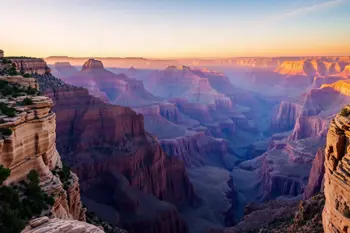
A five-day duration at the Grand Canyon National Park provides a framework for both primary rim-based exploration and secondary regional activities, allowing travelers to move beyond brief photo stops. Spanning 1.2 million acres, the park contains a 1.8-billion-year geological narrative carved by the Colorado River, creating a depth of 5,280 feet from rim to river 1. Because the South Rim attracts over four million annual visitors, successful five-day trips rely on strategic site selection, early-morning movement to avoid peak congestion, and a balanced itinerary between high-elevation rim walking and strenuous inner-canyon hiking 1, 8. This objective guide outlines the structural considerations for planning such a multi-day immersion.
South Rim Orientation and Logistical Framework
The South Rim represents the most accessible and heavily serviced entry point, remaining open to the public year-round 1, 7. A five-day stay typically begins with an arrival in Grand Canyon Village, which serves as a central hub for transportation shuttles, visitor center information, and historic lodges like El Tovar and Bright Angel Lodge 1. Establishing a base within or near the park is essential for maximizing time; travelers are advised to reserve lodging well in advance due to high demand and limited availability within the park boundaries 4.
Upon arrival, the standard orientation involves visiting the Yavapai Geology Museum to study the park’s Precambrian and Paleozoic rock layers, followed by sunset viewing at Mather Point 1. Mather Point offers panoramic views extending over 30 miles on clear days, serving as the primary introduction for most visitors 3, 8. Visitors typically use this first day to establish a rhythm for the week, utilizing the free park shuttle systems that connect the visitor center to the majority of major viewpoints and trailheads 8.
Inner-Canyon Hiking and Safety Protocols
Engaging in hiking below the rim is a defining activity for a five-day itinerary, though it requires specific physical preparation and awareness of extreme environmental changes 1. The Bright Angel Trail is frequently cited as the most accessible maintained path for descending into the inner canyon, often with water access points available seasonally between May and October at locations like Pipe Creek 1. Because temperatures increase significantly as elevation decreases, hikers are warned that the return ascent is strenuous, and physical conditioning is necessary for long-distance excursions 4, 6.
Safety remains the primary concern for park management regarding inner-canyon travel, as the atmospheric pressure and heat index in the gorge differ substantially from the rim climate 9, 10. Visitors are generally encouraged to limit their hiking to the cool morning hours and dedicate their afternoons to less strenuous activities, such as exploring the Rim Trail or visiting cultural sites like the Kolb Studio and Hopi House, which provide historical context on the human presence in the canyon over the last century 3.
Regional Expansion: North Rim and Tribal Lands
While the South Rim is the standard focal point, a five-day trip allows for a broader perspective through regional expansion. The North Rim, characterized by higher elevations and a quieter environment, offers a distinct experience compared to the South Rim, though it is seasonally restricted to mid-May through mid-October 4. For those interested in alternative viewpoints, the Grand Canyon West area, located on land managed by the Hualapai Tribe, provides access to the Skywalk and operates under separate management from the National Park Service 2, 4.
| Region | Management | Operational Note |
|---|---|---|
| South Rim | National Park Service | Open year-round |
| North Rim | National Park Service | Mid-May to mid-October |
| Grand Canyon West | Hualapai Tribe | Site of the Skywalk |
Transportation and Access Metrics
Logistics for a five-day getaway typically involve regional road travel. Major entry points include Phoenix Sky Harbor International Airport and Las Vegas Harry Reid International Airport, both of which are situated roughly four to five hours by road from the South Rim 4, 5. The route from Las Vegas provides a path through the Mojave Desert and red rock country, while the route from Phoenix offers a scenic ascent through the Sedona area and Oak Creek Canyon, adding cultural and geological diversity to the overall travel experience 4, 5.
Entry into the park is facilitated by a vehicle pass, which remains valid for seven consecutive days, covering multiple entries during a single stay 4. Given the high volume of traffic, particularly in summer months, travelers often optimize their commute by arriving at park entrances before 8 a.m. on weekends or 9 a.m. on weekdays to secure parking at the main visitor center complex 8.
Aerial and Specialized Perspectives
Beyond land-based exploration, aerial perspectives are frequently integrated into multi-day itineraries. Helicopter and fixed-wing tours operate primarily out of the airport in Tusayan, Arizona, just outside the park gates 4, 10. These excursions provide a view of the gorge's scale and inaccessible inner reaches that cannot be achieved through ground-based viewpoints or hiking alone 4. Such activities are often scheduled for the final days of a trip once the visitor has gained a fundamental understanding of the canyon's surface-level geography.
Environmental Stewardship and Maintenance
The Grand Canyon experience requires awareness of the fragility of the ecosystem. The park acts as a protected, quiet sanctuary where visitors are encouraged to prioritize low-impact interaction with the natural environment 7. Wildlife encounters, such as elk roaming through campground and lodge areas, are common, and guests are instructed to maintain respectful distances to preserve both human and animal safety 7. Maintaining the integrity of the rim and canyon requires strict adherence to designated trails and waste management policies, which are reinforced throughout the visitor education programs conducted by park rangers 2, 9.
Sources
- Your National Park Guide, 5 Days at Grand Canyon National Park.
- Visit Grand Canyon, Family Friendly Summer Itinerary.
- The Traveler, Grand Canyon Itinerary For Two To Five Days.
- National Park Service, Plan Your Visit - Grand Canyon.
- Visit Arizona, Grand Canyon National Park Travel Resources.
- AllTrails, Grand Canyon National Park Trail Data.
- Grand Canyon Conservancy, North Rim Operational Guidelines.
- Tripadvisor, Grand Canyon National Park Multi-Day Itineraries.
- Arizona State Parks, Hiking Safety and Environmental Regulations.
- Grand Canyon Chamber of Commerce, Aerial Tour Information.
Authored by MyTrendSpot team