Top rated HVAC installation services in 2026: A data-based consumer guide
Top rated HVAC installation services in 2026 are being evaluated through customer ratings, installation controls, technical qualifications, regional experience, and pricing transparency rather than name recognition alone. Available research shows that installation quality, system sizing, duct performance, refrigerant compliance, and documented commissioning can influence comfort, operating costs, and equipment life.
How the 2026 rankings should be interpreted
Publicly available comparisons use different methods. A Tampa directory identified 20 providers matching installation-related categories, with a median ServiceAgent Score of 8.3 out of 10; its leading listed provider scored 8.5, while several others shared that score. The directory also reported that none of the listings were owner-verified, which limits how independently the results can be treated. 1
A separate Seattle comparison combined Google, Angi, BBB, and independent reporting. Product Air was described with a 4.9-star Google rating across more than 760 reviews, BelRed with 2,941 Google reviews at 4.8 stars, and Brennan with 1,834 Google reviews. These figures indicate review visibility, not a guarantee of installation outcomes, because review platforms measure customer experience differently. 2
Regional providers appearing in the research
Regional specialization is a recurring feature among highly rated installation businesses. Wolfgangs Cooling, Heating & Plumbing reports a 4.9 rating from 1,792 reviews and describes installations designed for Phoenix conditions, where summer temperatures regularly exceed 110 degrees Fahrenheit. Its material emphasizes airflow, duct sealing, equipment sizing, dust exposure, and long cooling periods as local installation concerns. 3
Franklin, serving Northwest Arkansas, reports a 5.0 rating from 1,223 Google reviews and describes a process involving more than 30 commissioning checks, including refrigerant charge, airflow, static pressure, electrical systems, and condensate management. Conejo Services reports a 4.9 rating, service experience dating to 1979, and coverage across Santa Clarita Valley communities. These claims are provider-reported and should be verified independently. 4
Heat-pump installation as a major 2026 category
Heat-pump installations appear prominently in 2026 service research because a single system can provide heating and cooling, although suitability depends on climate, electrical capacity, duct design, and backup requirements. Skyline Thermal Labs describes Los Angeles projects ranging from $7,800 to $24,500, with engineer-led load reviews, equipment matching, and documentation related to local utility incentives. 5
Utah presents a different design environment. Ninja HVAC describes dual-fuel systems for Wasatch Front temperature swings, Manual J load calculations, elevation considerations, permits, and utility-program paperwork. These regional differences show why an installation copied from an old equipment nameplate may not be appropriate. Coastal corrosion, attic heat, hillside access, cold snaps, and existing furnace compatibility can materially change system selection. 6
Equipment, refrigerants, and technical compliance
Carrier, Trane, and Lennox remain frequently recognized manufacturers of high-efficiency HVAC equipment, while American Standard is identified by Franklin as the principal equipment line used in its installations. Manufacturer reputation alone does not establish system performance. The equipment must be matched to the home, installed according to specifications, and commissioned so airflow, refrigerant, electrical operation, and controls function together. 7
New 2026 installations also face the United States transition toward lower-global-warming-potential refrigerants, including R-454B. The Environmental Protection Agency oversees the federal hydrofluorocarbon phasedown and related restrictions. Contractors therefore need appropriate training, tools, recovery procedures, and compliance knowledge for equipment using A2L refrigerants. Regulatory compliance is a practical selection criterion, not merely a manufacturer specification. 8
Cost ranges and what estimates should explain
General 2026 research places standard central-air HVAC installation costs around $5,000 to $12,000, with variation tied to system efficiency and building size. Franklin reports that Northwest Arkansas AC replacement projects commonly reach $7,000 to $15,000 or more, while Skyline reports a broader $7,800 to $24,500 range for Los Angeles heat-pump projects. These figures are market context, not individualized quotations. 9
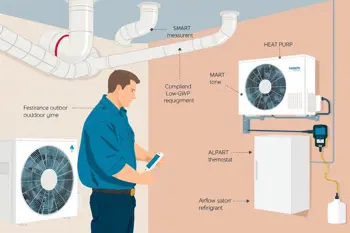
Price differences can result from more than equipment. A complete estimate may need to account for duct modifications, electrical upgrades, permits, condensate drainage, equipment removal, thermostat controls, refrigerant-line work, and commissioning. Written estimates are more informative when they identify model numbers, efficiency ratings, labor coverage, exclusions, payment terms, and conditions that could change the final amount. A low initial figure may omit necessary scope.
Review signals, warranties, and service realities
Customer satisfaction data increasingly emphasizes transparent pricing and long-term labor warranties. The Seattle research identifies Evergreen State Heat & AC with a three-year parts-and-labor warranty, while Skyline reports a two-year workmanship guarantee. Warranty length should be examined alongside registration requirements, labor exclusions, maintenance conditions, manufacturer coverage, and the process for handling a disputed claim. 10
Ongoing maintenance remains necessary after installation. Filters, condensate systems, electrical connections, airflow, outdoor coils, duct conditions, and controls can require periodic attention, particularly in climates with heavy cooling demand or dust. A highly rated installer can still produce an unsatisfactory result if the design is unsuitable, the system is not commissioned, or maintenance responsibilities are misunderstood. Review volume is useful context, but it is not a technical inspection.
Questions that reduce installation risk
Before comparing providers, a homeowner can document the existing system's age, recurring comfort problems, utility concerns, duct limitations, electrical-panel capacity, and preferred heating fuel. Useful technical questions include whether a load calculation will be performed, how airflow will be measured, which permits are required, how refrigerant compliance will be addressed, and whether startup readings will be supplied in writing.
- Does the proposal identify matched indoor and outdoor equipment?
- Are efficiency ratings, warranty terms, and labor coverage stated clearly?
- Does the scope include duct, electrical, condensate, thermostat, and permit work?
- Will commissioning verify refrigerant, static pressure, airflow, and temperature performance?
- Are maintenance intervals and homeowner responsibilities explained?
Local licensing and insurance should also be confirmed through the relevant authority, because provider pages may contain outdated or self-reported information. Public directories can help identify service areas, but geographic coverage, emergency availability, ownership status, review authenticity, and technical credentials require separate verification. The most reliable comparison is therefore a documented process review, not a ranking based solely on stars or review count.
Market outlook for HVAC installations
The global HVAC market was estimated in the supplied research at approximately $240 billion in 2025, with forecasts exceeding $370 billion by 2032. Growth drivers include urbanization, tighter efficiency standards, smart-building adoption, and indoor-air-quality concerns. In the United States, HVAC services account for nearly 48% of residential energy consumption, making installation accuracy financially and environmentally significant. 11
Smart thermostats, indoor-air-quality diagnostics, heat pumps, inverter systems, and low-GWP refrigerants are increasingly connected parts of the installation decision. Federal tax-credit eligibility and energy-efficiency programs can change by equipment type, household circumstances, installation date, and governing rules, so current requirements should be confirmed through official sources. The central consumer issue in 2026 is not simply selecting a highly rated company, but verifying whether the proposed system, installation method, and continuing service plan fit the building.
Sources
- ServiceAgent, Tampa HVAC installation directory: https://serviceagent.ai/directory/florida/tampa/hvac/install/
- Sip the Style, Seattle residential HVAC contractor comparison: https://www.sipthestyle.com/top-5-residential-hvac-contractors-in-seattle-2026-ratings-reviews
- Wolfgangs Cooling, Heating & Plumbing, Phoenix HVAC installation: https://wolfgangscooling.com/hvac/installation/
- Franklin, Northwest Arkansas AC installation: https://www.getfranklin.com/services/ac-install
- Skyline Thermal Labs, Los Angeles heat-pump installation: https://skylinethermallabs.com/services/heat-pump-installation/
- Ninja HVAC Utah, heat-pump installation: https://ninjahvac.com/heat-pump-installation/
- Forbes Home, HVAC system manufacturer overview: https://www.forbes.com/home-improvement/hvac/best-hvac-systems/
- U.S. Environmental Protection Agency, hydrofluorocarbon phasedown: https://www.epa.gov/snap/phasedown-hydrofluorocarbons
- HomeGuide, HVAC installation cost research: https://homeguide.com/costs/hvac-installation-cost
- Sip the Style, Seattle warranty and review information: https://www.sipthestyle.com/top-5-residential-hvac-contractors-in-seattle-2026-ratings-reviews
- Kinross Research, comparative HVAC company analysis: https://kinrossresearch.com/best-hvac-company/
Authored by MyTrendSpot team