Foreclosed homes for sale by state: A data-based guide to inventory, process, and risk
Foreclosed homes for sale by state vary substantially because foreclosure laws, court procedures, inventory duration, and local housing conditions differ across the country. A nationwide platform reports more than 1.1 million foreclosure, pre-foreclosure, auction, and bank-owned properties across all 50 states, with records updated daily, although counts and statuses should be independently verified before relying on them. 1
How state-by-state foreclosure inventory is measured
Foreclosure inventory can refer to several distinct stages rather than one uniform category. Pre-foreclosures involve public notices filed before a sale, auction properties are scheduled for a courthouse or trustee sale, and bank-owned properties are held by lenders after an unsuccessful auction. PropertyRadar describes nationwide coverage of pre-foreclosures, auctions, and REO properties, including both residential and commercial records. 2 These categories should not be added together without checking for duplicate records or changes in status.
Reported inventory also depends on the source, update cycle, and definition of an active listing. A platform may count a public notice even though the homeowner later cures the default, while a real estate marketplace may show only properties being marketed for purchase. The practical meaning of a state total therefore depends on whether it measures filings, notices, scheduled sales, repossessions, or listed properties.
| Category | General meaning | Key uncertainty |
|---|---|---|
| Pre-foreclosure | Default notice or court filing before sale | Status may change before auction |
| Auction | Property scheduled for public sale | Terms, postponements, and occupancy vary |
| REO | Lender-owned property after foreclosure | Condition and title require review |
States reporting elevated foreclosure activity
June 2026 data reported 39,327 U.S. properties with default notices, scheduled auctions, or bank repossessions. That total was 3 percent below May and 21 percent above June 2025, while the national rate was one filing for every 3,656 housing units. Florida, South Carolina, Indiana, Nevada, and Illinois were identified as the states with the highest rates in that monthly report. 4 These figures measure foreclosure filings, not necessarily homes currently marketed for purchase.
Another May 2026 analysis measured foreclosure-flagged listings as a share of active listings, producing a different ranking: Maryland at 1.77 percent, Pennsylvania at 1.63 percent, Illinois at 1.47 percent, Louisiana at 1.40 percent, and Alabama at 0.90 percent, compared with approximately 0.5 percent nationally. 5 The difference between these rankings illustrates why state comparisons require attention to the underlying denominator and property definition.
| Measure | Highest reported states or examples | What it indicates |
|---|---|---|
| June filing rate | Florida, South Carolina, Indiana, Nevada, Illinois | Default, auction, or repossession activity |
| Active-listing share | Maryland, Pennsylvania, Illinois, Louisiana, Alabama | Foreclosure flags among marketed listings |
Judicial and non-judicial foreclosure systems
State procedure strongly affects how long distressed properties remain visible. Judicial foreclosure requires a lender to proceed through court, and the reported process commonly takes 12 to 24 months. Non-judicial foreclosure generally uses notices and a power-of-sale process outside the courts, with reported timelines ranging from approximately 21 to 120 days in some states. 3 Florida, Illinois, New York, and New Jersey are cited as judicial examples, while Texas, Georgia, Arizona, and Virginia are cited as non-judicial examples.
A longer judicial timeline can create a larger visible pre-foreclosure pipeline because cases remain unresolved for extended periods. A faster non-judicial process may produce fewer simultaneously visible records even when lender activity is substantial. The classification is not a complete description of local law, since some states permit more than one procedure and county practices can affect notices, postponements, sale confirmation, and possession.
| Process type | Typical feature reported in the research | Practical concern |
|---|---|---|
| Judicial | Court supervision and longer case timelines | Litigation, delays, and carrying costs |
| Non-judicial | Notice-driven sale outside ordinary court supervision | Compressed review and bidding timelines |
Where foreclosure records and listings appear
Potential sources include county clerk or recorder records, court filings, sheriff and trustee sale notices, government-owned property portals, bank REO departments, multiple-listing-service records, and specialized data platforms. The research identifies HUD Home Store for FHA-insured properties, Zillow and Realtor.com for foreclosure and REO filters, Redfin for distressed listings, and Auction.com for auction listings. 9 Each source may publish a different subset of the foreclosure process.
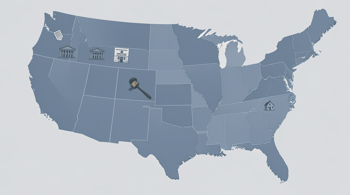
Aggregation services can combine pre-foreclosure, auction, REO, HUD, and other distressed-property records, but aggregation does not replace verification. Foreclosure Flips describes these categories as separate search types and emphasizes checking liens, tax debts, judgments, title problems, occupancy, repairs, and after-repair value. 7 Official county and agency records remain important for confirming whether a notice, sale, or ownership transfer is current.
What buyers should expect from each property stage
Pre-foreclosure occurs while the borrower generally retains title and a public notice has been filed, creating a period in which the loan may be reinstated, modified, resolved through a sale, or proceed toward auction. 3 An auction involves formal sale rules, limited inspection opportunities, strict payment requirements, and possible occupancy complications. An REO property is lender-owned after foreclosure, but ownership does not automatically mean that condition, title, code compliance, or possession issues have been resolved.
Government-owned inventory is a separate subset. A July 2026 mapping project reported 334 HUD, Fannie Mae, and Freddie Mac homes listed under $100,000 across 38 states, drawn from a larger group of 2,074 government-owned homes. 8 Those figures describe asking-price categories at a specific time, not a permanent statewide supply, and they exclude many privately held, auction, or pre-foreclosure properties.
| Stage | Ownership position | Common information needed |
|---|---|---|
| Pre-foreclosure | Usually borrower-owned | Notice, loan status, liens, and owner circumstances |
| Auction | Sale process underway | Terms, deposit, title, occupancy, and sale confirmation |
| REO or government-owned | Lender or agency-owned | Condition, disclosures, title, repairs, and agency rules |
Risks, qualifications, and due diligence
Foreclosure purchases can involve title defects, unpaid taxes, municipal claims, association assessments, occupants, property damage, insurance constraints, and repair obligations. Foreclosure Flips specifically identifies judicial or non-judicial procedure, carrying-cost exposure, redemption rights, lien priority, taxes, HOA claims, municipal issues, occupancy, and sale-confirmation rules as matters requiring review. 7 A foreclosure label alone does not establish clear title, vacant possession, financing eligibility, or a favorable financial outcome.
Public auctions commonly require proof of funds or other payment evidence, while marketed REO and government properties may have distinct bid, inspection, financing, and occupancy rules. The research also notes that foreclosed homes are frequently sold as-is and that buyers should understand title issues, competitive bidding, and property condition before proceeding. 9 Legal requirements vary by state and county, so current notices, statutes, agency instructions, and professional title or legal review are necessary safeguards.
- Confirm the foreclosure stage, sale date, postponement history, and current owner.
- Review title priority, taxes, judgments, liens, association claims, and municipal records.
- Determine occupancy status and the legal process for obtaining possession.
- Estimate repairs, insurance, utilities, maintenance, financing, and carrying costs.
- Verify eligibility, deposit rules, inspection limits, and sale-confirmation requirements.
Sources
- Boundless Estates, Foreclosure Listings Nationwide
- PropertyRadar, Foreclosure Platform and Nationwide Data
- DealMachine, Pre-Foreclosure Properties by State
- Safeguard Properties, U.S. Foreclosure Rates by State, June 2026
- Bounti, U.S. Foreclosure Hotspots 2026
- ForeclosureWebsitesComparisons, States for Foreclosure Buying
- Foreclosure Flips, Foreclosure Laws and Due Diligence
- GoKawiil, Government-Owned Homes Under $100,000
- Gerald, How to Find Foreclosures
Authored by MyTrendSpot team