Affordable homes in affordable retirement states: A data-driven review of where housing and fixed incomes can align in 2026
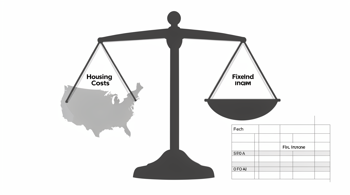
Affordable homes in affordable retirement states are increasingly discussed in the same terms as “retirement affordability,” meaning a fixed or carefully planned retirement income must cover housing, taxes, utilities, and everyday living. Reporting from Retirement Living frames retirement affordability as balancing housing costs with everyday expenses and tax-friendliness for retirees, and it identifies West Virginia as the most affordable state for retirees in a 2026 update 1. This page consolidates those affordability criteria and then maps them to additional 2026 research on home-buying costs, retirement income feasibility, and the role of federal rental assistance and senior housing programs 12311.
How “affordable retirement” is measured in current 2026 reporting
Retirement Living’s 2026 methodology is explicitly tied to retirement budgets, stating that affordability is evaluated using “costs associated with housing and living” combined with “overall tax-friendliness for retirees” 1. In that framing, housing affordability is not a single variable. It is evaluated alongside taxes and broader living costs, because retirees typically operate on fixed or carefully planned income structures 1.
Other 2026 research adopts a more ownership-specific lens when comparing state “housing value.” Wealth Enhancement argues that the “most holistically affordable option isn’t always” the place with the cheapest home price tags, and it defines affordability using home prices, property taxes, insurance, utilities, and other ongoing ownership expenses 2. The same logic implies that retirement affordability depends on whether a state’s housing cost components fit a retiree’s income stream, not merely the purchase price.
State affordability signals: what 2026 rankings highlight and what they omit
WalletHub’s 2026 “Best and Worst States to Retire” uses 46 indicators across taxes, cost of living, access to quality medical care, and “fun activities,” and it reports a top five list with Wyoming, Florida, South Dakota, Colorado, and Minnesota 4. The presence of an “Affordability Rank” inside its table illustrates that affordability is measured within a multi-domain score rather than as a standalone housing-only metric 4.
However, a multi-domain ranking can still omit details that drive housing stress for older adults, such as the interaction between housing costs and rent affordability for seniors on fixed income. For example, a FinanceBuzz analysis discussed by LiveNOW from FOX uses 2024 American Community Survey data to compare median gross rent with median income for Americans aged 65 and older, estimating the share of income spent on housing 13. That kind of rent-to-income approach can differ from rankings that emphasize broader affordability indices.
Housing affordability for retirees: ownership costs versus rental affordability
For ownership, Wealth Enhancement’s 2026 state comparison includes purchase affordability elements like median home price, cost per square foot, median household income, and price-to-income ratio, plus tax burden and electricity costs 2. In retirement planning terms, such a framework helps clarify why two states with similar home sticker prices can diverge sharply once property taxes, insurance, and utilities are added.
For rental affordability, the same affordability logic becomes a rent burden problem. LiveNOW from FOX summarizes a FinanceBuzz analysis indicating that retirees may spend close to or more than 30% of income on rent in some states, using 2024 ACS data as the basis for that comparison 13. This distinction matters for “affordable homes” narratives because many seniors can only access market-rate housing if rent fits a fixed income, or if assistance is available.
Affordability narratives by income feasibility: “comfortably under” thresholds and portfolio constraints
An AOL report lists states where “a comfortable retirement” can cost less than $50,000 per year, citing Council for Community and Economic Research data and using median home price data from Redfin 3. It provides specific examples including Arkansas with a median home price of $273,996 and Indiana with a median home price of $271,106, and it frames low housing costs as an affordability lever for retirees on limited budgets 3. While this approach is useful for budget targeting, it relies on broader retirement comfort modeling rather than a single housing-only metric 3.
Other 2026 retirement-feasibility reporting demonstrates how taxes and housing carrying costs can determine whether relocation works. A 24/7 Wall St. article about Mississippi, for instance, states that Mississippi taxes neither Social Security benefits, pension income, nor qualified retirement account withdrawals, which is described as improving cash flow relative to states that tax those income types 5. The same piece warns that affordability can be erased by location-specific insurance premiums tied to wind, hail, and flood exposure 5. This illustrates the risk side of affordable retirement state selection.
Federal and regulatory factors that shape senior housing access
Housing affordability for seniors is not only a state-level variable. Federal programs influence whether an older adult can afford housing in the private market, particularly when fixed income cannot cover rent. HUD’s Housing Choice Voucher (Section 8) is described as rental assistance that helps eligible low-income households afford rental housing in the private market 14. Eligibility and assistance availability therefore affect real-world affordability outcomes, which can differ from rankings built only on cost-of-living or home-price data 14.
Construction and preservation of affordable rental units also depends on financing incentives. HUD explains the Low Income Housing Tax Credit (LIHTC) as a primary federal tool used to incentivize the construction and rehabilitation of affordable rental housing units 15. The IRS provides guidance on LIHTC structure and purpose 16, while federal Treasury materials describe LIHTC as a key source of financing for affordable rental housing 17. For “affordable retirement states” narratives, these mechanisms explain why some areas may have more rental stock that is priced for lower-income households and seniors.
Eligibility constraints and maintenance realities: where affordability narratives can break
Affordable housing for retirees can encounter friction points related to eligibility categories and program rules. The nj.com coverage of a New Jersey 55-plus community notes that rentals were priced at $1,438 and $1,666 per month and that availability depended on whether households met very-low-income, low-income, or moderate-income definitions, with age requirements for at least one resident who is 55 or older 14. In that account, affordability is contingent on income qualification and household composition, not only on state cost conditions 14.
Maintenance realities also matter for long-term cost stability. A 24/7 Wall St. analysis on Oklahoma highlights that homeowners insurance can add thousands annually, and it frames hail corridor risk as driving premiums into the $3,500 to $4,500 annual range, with a compounding effect over a multi-decade horizon 6. This aligns with the broader ownership-cost framework emphasized in state housing value comparisons, where insurance is part of the actual ownership cost set rather than an afterthought 2. For retirees, insurance and eligibility constraints can be the decisive variables that determine whether “affordable states” remain affordable.
Putting it together: a checklist for interpreting “affordable homes in affordable retirement states” research
Because different studies measure different slices of affordability, a consistent evaluation approach is needed. Retirement Living emphasizes balancing housing and living costs with tax-friendliness for retirees and identifies West Virginia as the most affordable state for retirees in its 2026 update 1. WalletHub embeds affordability inside a broader score that includes health care and quality-of-life access and publishes top retiree states like Wyoming and Florida 4. Wealth Enhancement focuses on ownership affordability components like price-to-income and ongoing cost categories such as property taxes and insurance 2. Matching the study type to the decision type reduces mismatch.
To operationalize those differences without assuming every state is equally workable, the following information targets recur across the research: compare housing costs to fixed incomes using rent burden or affordability-basket methods; confirm tax treatment of Social Security, pensions, and retirement withdrawals where reported; stress-test insurance and flood or weather-related risk; and account for the availability and eligibility rules of assistance programs such as Housing Choice Vouchers and the supportive senior housing pathways funded through federal mechanisms 135141511. This checklist approach addresses the complete affordability picture, including the regulatory and maintenance-side constraints.
| Research lens | What it measures | Primary limitation for retirees |
|---|---|---|
| Retirement Living “affordable states to retire” | Housing and living costs plus tax-friendliness for retirees 1 | May not show rent-to-income stress for seniors who rent 13 |
| WalletHub retiree rankings | Affordability, health care access, and quality-of-life indicators 4 | May not isolate housing carrying costs like insurance-driven premium changes 6 |
| Wealth Enhancement state “housing value” | Home price, taxes, insurance, utilities, and ownership affordability factors 2 | May not reflect eligibility constraints for income-restricted or subsidized senior housing 14 |
| FinanceBuzz rent affordability analysis (via LiveNOW from FOX) | Median gross rent versus median income for age 65+ using 2024 ACS data 13 | Does not automatically translate to ownership affordability decisions 2 |
Sources
- https://www.retirementliving.com/most-affordable-states-to-retire
- https://www.wealthenhancement.com/blog/most-affordable-states-to-buy-a-house
- https://www.aol.com/articles/10-states-where-comfortable-retirement-120000000.html
- https://wallethub.com/edu/best-and-worst-states-to-retire/18592
- https://247wallst.com/personal-finance/2026/06/07/make-your-retirement-budget-go-almost-50-further-in-this-underrated-state/
- https://247wallst.com/personal-finance/2026/07/17/nobody-wants-to-retire-in-oklahoma-maybe-thats-exactly-why-you-should/
- https://www.livenowfox.com/money/financebuzz-retiree-rent-affordability-by-state
- https://www.nj.com/ocean/2026/04/affordable-homes-at-nj-55-community-renting-from-1438-a-month.html
- https://www.hud.gov/topics/housing_choice_voucher_program
- https://www.hud.gov/program_offices/comm_planning/lihtc
- https://acl.gov/programs/health-wellness/aging-and-disability-resource-centers
- https://www.irs.gov/credits-deductions/individuals/low-income-housing-credit
- https://home.treasury.gov/policy-issues/financial-markets-financial-institutions-and-financial-literacy/community-development-programs/low-income-housing-tax-credit
- https://www.hud.gov/program_offices/comm_planning/communitydevelopment/programs
Authored by MyTrendSpot team