Low-cost real estate options in retirement destinations: A data-driven review of housing price expectations, visa and tax frictions, and where market friction can change affordability
Retirement affordability often hinges on housing purchase or rental costs rather than headline cost-of-living numbers, echoing the context in the acquisition creative about “most affordable places to retire” and quantified housing and expense expectations. The following sections use reported benchmarks for destinations discussed in the provided research, then add the compliance and market-friction factors that can change whether a low-cost housing plan stays realistic over time.
Retirement housing cost signals: how affordability is being measured in reported destination benchmarks
Multiple provided sources frame housing affordability as part of an all-in monthly lifestyle budget and, in several cases, include explicit housing price ranges. For example, Roatán, Honduras is described as a Caribbean island where retirees could buy a two-bedroom home with water views for less than $175,000 and where a couple’s monthly expenses are estimated at $2,000 to $2,500. 1
In the Mexican retirement context, a separate retirement guide frames San Miguel de Allende budgets with monthly ranges and ties them to housing neighborhoods and healthcare access. Reported expectations for “modest” and “comfortable” couple budgets are $1,800 to $2,400 and $2,800 to $3,800, respectively, with neighborhood choice noted as an affordability lever. 2
These measurement approaches matter because low-cost headlines can mask housing friction, including local rent variation, availability of long-term rentals, and non-housing monthly costs that can expand after residency approval. This is also why affordability should be assessed using multiple data points, such as purchase price estimates, rental ranges, and stated monthly expense bands rather than a single “average.” 1 2
Benchmarks included in the provided research set
- Roatán purchase benchmark: two-bedroom water-view home “less than $175,000.” 1
- Roatán expense benchmark: couple monthly costs estimated at $2,000 to $2,500. 1
- San Miguel de Allende budget framing: modest single $1,200 to $1,600 and modest couple $1,800 to $2,400; comfortable couple $2,800 to $3,800. 2
- Isla Mujeres expense framing: couple living costs estimated $2,500 to $3,000 including rent, with a grocery benchmark of about $300 per month and electricity about $175 per month. 6
Caribbean island markets with reported low-cost entry points: Roatán, Isla Mujeres, and affordability constraints on island living
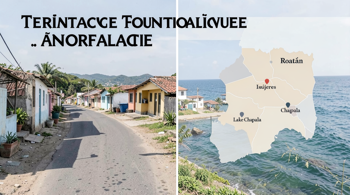
Roatán is presented as a low-cost Caribbean retirement corridor where affordability is tied to both purchase price expectations and day-to-day expense projections. The research summary reports International Living ranking it as the second most affordable Caribbean island to live on, with an estimate that retirees could purchase a two-bedroom home with water views for less than $175,000. 1
Isla Mujeres is described in a parallel affordability framing, where International Living is cited as estimating that a couple needs about $2,500 to $3,000 per month including rent, plus grocery spending around $300 per month and electricity around $175 per month. Housing availability is also described through a starting point for a one-bedroom, two-bathroom apartment at $230,000 and rentals as low as $700 to $1,000. 6
Island markets can show affordability, but liquidity and long-term availability can be uneven. The Isla Mujeres framing also notes that island life can reduce the need for a car because hop-on, hop-off buses are widely available, but this does not automatically guarantee that long-term housing at the cited rent levels will remain accessible in every year or neighborhood. 6
Reported housing and expense snapshots
| Destination | Reported housing benchmark | Reported expense benchmark |
|---|---|---|
| Roatán, Honduras | Two-bedroom water-view home estimated “less than $175,000” 1 | Couple monthly expenses estimated at $2,000 to $2,500 1 |
| Isla Mujeres, Mexico | One-bedroom, two-bathroom apartment starting around $230,000; rentals $700 to $1,000 6 | Couple living costs estimated $2,500 to $3,000 including rent 6 |
Mexico’s varied retirement cost structure: separating inland affordability from coastal and expat-hub pricing
Mexico is presented as a destination where affordability varies significantly by city and lifestyle, which directly impacts low-cost real estate expectations. One source provides a city-by-city comparison for 2026 with couple monthly budgets, listing Mérida at $1,800 to $2,800, Lake Chapala at $1,800 to $2,800, Mazatlán at $2,000 to $3,000, Puerto Vallarta at $2,200 to $3,400, and San Miguel de Allende at $2,500 to $3,800 for “comfortable” ranges. 15
Another provided retirement guide for San Miguel de Allende emphasizes neighborhood selection as a cost factor and frames modest and comfortable budget bands along with private healthcare access. It notes modest budgets from about $1,200 to $1,800 per month for a single living simply and comfortable two-person budgets typically between $2,800 and $3,800, with best-fit neighborhoods including Centro, Guadalupe, and areas near cultural hubs for comfortable budgets. 2
Yet Mexico’s expat-hub demand can inflate housing costs, even when broader national cost-of-living metrics remain favorable. A Lake Chapala budgeting guide emphasizes “gringo premium” dynamics, stating that finding a “cheap” rental in Ajijic is described as difficult, and it provides a 2026 range for renting a modern furnished two-bedroom home in the village center of Ajijic between $1,400 and $2,200 per month. 14
Practical implication for low-cost home searches
- Budget bands can shift with neighborhood choice in San Miguel de Allende, not only with the country-level cost of living. 2
- Expats’ demand concentration can create a “premium hub” effect, as described for Ajijic rentals. 14
- City-level comparisons show multiple “modest” couple budget ranges, including Mérida and Lake Chapala at $1,800 to $2,800. 15
Visa and tax eligibility can gate “affordability”: Costa Rica Pensionado, Mexico solvency thresholds, and territorial tax framing in Caribbean options
Low-cost real estate plans often depend on residency eligibility, and some provided sources quantify visa or residency income thresholds. A Costa Rica guide states residency via the Pensionado visa can be based on a $1,000 monthly pension, with Rentista eligibility at $2,500 per month in passive income. It also describes tax advantages under a territorial tax system, stating that US Social Security, pensions, and foreign investments remain untaxed locally. 16
Mexico’s retirement residency framework is described as not having a dedicated “Pensionado” visa. One provided residency guide states that a temporary income requirement is approximately $4,400 per month net income and about $74,000 savings maintained for 12 months, with direct permanent residency described at approximately $7,400 per month or about $298,000 in savings. It also notes the property route at about $598,000 Mexican property value. 17
In Caribbean options, territorial tax framing appears in some research summaries but comes with interpretive and compliance realities. A Dominican Republic retirement pathway overview states the territorial tax system means US Social Security and pensions are not subject to Dominican Republic tax, and it highlights a Pensionado residency at $1,500 per month as a lowest among major Caribbean programs. 5
Eligibility and tax rules affect affordability because they can determine whether a retiree can legally reside and therefore whether housing plans are operational. Where income or savings thresholds apply, the “low-cost home” may still be functionally unreachable for someone who cannot meet residency requirements. 17 16 5
Residency thresholds and tax context referenced in the research set
| Destination | Residency or visa framing in provided research | Tax context described |
|---|---|---|
| Costa Rica | Pensionado residency with $1,000 monthly pension; Rentista passive income $2,500 per month 16 | Territorial tax system described as leaving US Social Security, pensions, and foreign investments untaxed locally 16 |
| Mexico | Temporary solvency income about $4,400/month net income and savings about $74,000 maintained for 12 months 17 | Worldwide income taxation described for Mexico’s framework 17 |
| Dominican Republic | Pensionado residency threshold $1,500/month; $2,000 Rentista alternative 5 | Territorial tax system described as US Social Security and pensions not subject to DR tax 5 |
Low-cost within the United States: how secondary markets and expense add-ons shape real housing affordability
Within the U.S., the affordability signal in the provided general research points to a pattern: secondary markets and certain regions can offer lower housing costs than coastal retirement hubs. One synthesized research set states that many low-cost retirement destinations are in the U.S. Midwest and South, where property taxes and median home prices are historically lower than the national median. 9
Specific local market examples in the general research set include Ocala, Florida as a popular retirement option because of relatively low cost of living and the absence of state income tax, and Decatur, Illinois as consistently ranking among the most affordable places for retirees looking for small-city living. 7 10
Another provided U.S.-oriented retirement guide focuses on Southwest Florida markets for fixed-income retirees, emphasizing that home sticker prices are only half the budget because property taxes, homeowners insurance, HOA dues, and flood zone requirements can change monthly affordability by hundreds of dollars. It also identifies communities including Port Charlotte, North Port, Englewood, and Deep Creek as areas that consistently offer the lowest carrying costs in the region, with entry-level condos and homes priced well below the area’s overall median. 4
Why “low-cost listings” can diverge from “low-cost ownership”
- Fixed-income planning can be distorted by recurring costs not visible in listing photos, including property taxes, insurance, HOA dues, and flood-zone requirements. 4
- Regional affordability trends described in the research set link lower costs to U.S. Midwest and South geography. 9
- State income tax context is highlighted for Ocala, Florida, pointing to tax policy as part of affordability. 7
Affordability risks and friction points: healthcare access, exchange rates, and housing availability under demand pressure
Even when rent or purchase price benchmarks appear favorable, risks can concentrate in healthcare access, currency exposure, and housing availability. In Mexico’s context, a research summary addressing retirements on limited income notes that affordability depends on building plans that account for healthcare coverage gaps and currency exposure, with an explicit warning that peso strengthening can spike monthly costs. 13
Healthcare cost and coverage assumptions are also central when comparing regions. For the Dominican Republic, one provided article emphasizes that Medicare does not apply outside the U.S. and that dual private health coverage can cost between $700 and $900 per month, nearly wiping out monthly cushions when budgets are built tightly around Social Security. 19
Housing availability friction appears in multiple provided sources. Isla Mujeres affordability reporting includes apartment and rental starting points but also notes that island living can mean limited or pricey housing. 6 Lake Chapala reporting describes how Ajijic rentals can become difficult to find at “cheap” levels due to demand concentration among English-speaking retirees. 14
Eligibility and maintenance realities for lower-cost housing strategies
- Residency thresholds for Mexico can require substantial income or savings, affecting whether “low-cost” housing is accessible. 17
- Non-housing monthly costs can be large in some U.S. markets, shifting affordability away from sticker price. 4
- Currency movements can increase real spending needs, including for retirement budgets tied to USD converted to local currencies. 13
Sources
- https://www.aol.com/articles/quiet-caribbean-island-one-most-125300846.html
- https://fallinginlovewithsanmiguel.com/retirement-guide-to-san-miguel-de-allende-key-insights/
- https://moveinmexico.com/best-places-to-retire-in-mexico/
- https://www.discoverfloridahouses.com/blog/best-places-retire-southwest-florida-fixed-income-2026/
- https://getwherenext.com/retire-abroad/us-to-dominican-republic
- https://www.travelandleisure.com/isla-mujeres-named-top-affordable-caribbean-retirement-spot-11874235
- https://realestate.usnews.com/places/florida/ocala
- https://realestate.usnews.com/places/florida/ocala
- https://smartasset.com/retirement/best-places-to-retire
- https://www.bankrate.com/retirement/best-places-to-retire/
- https://taxfoundation.org/data/all/state/state-property-tax-rates-2023/
- https://www.investopedia.com/articles/personal-finance/071316/8-most-affordable-cities-retire.asp
- https://247wallst.com/personal-finance/2026/06/18/heres-how-you-can-retire-to-a-pacific-beach-town-in-mexico-at-60-on-2500-a-month/
- https://themexicohandbook.com/cost-of-living-in-lake-chapala-budgeting-in-a-retirement-haven/
- https://moveinmexico.com/cost-of-living-mexico-2026/
- https://www.taxesforexpats.com/country-guides/costa-rica/retire-in-costa-rica.html
- https://goresident.com/residency/retire-in-mexico
- https://247wallst.com/personal-finance/2026/06/02/want-to-retire-in-a-tropical-caribbean-paradise-on-social-security-only-heres-how/
Authored by MyTrendSpot team