How to stretch a pulled muscle safely: Clinical guidance for gradual recovery
How to stretch a pulled muscle safely depends on the injury’s severity and timing. A pulled muscle, also called a muscle strain, may involve fibers that were overstretched or partially torn, so aggressive stretching immediately after the injury can increase discomfort or worsen tissue damage. Early care generally emphasizes protection, relative rest, symptom control, and gentle movement that does not make symptoms worse. 1
Identify the injury before stretching
A muscle strain can range from a mild injury with tenderness and nearly normal strength to a more serious tear involving swelling, bruising, weakness, or major loss of function. Harvard Health describes Grade I strains as involving a small number of fibers, Grade II strains as partial tears with more pain and weakness, and Grade III strains as complete tears that may cause a popping sensation. The grade affects whether home stretching is appropriate. 2
Common symptoms include localized pain, tightness, tenderness, and pain when the muscle is stretched or contracted. A visible change in muscle shape, substantial swelling or bruising, significant weakness, or inability to bear weight can indicate an injury that requires assessment rather than self-directed stretching. These signs may also involve a tendon, joint, or another structure that cannot be evaluated reliably through stretching alone. 3
Protect the muscle during the acute phase
During the first day or two, stop the activity that caused the injury and avoid positions or movements that produce pain. Mayo Clinic recommends the P.R.I.C.E. approach: protect the area, rest from aggravating activity, apply ice, use suitable compression, and elevate an injured limb when swelling is present. Ice may be applied for 15 to 20 minutes at a time every two to three hours while awake during the first few days, with a thin cloth between the cold pack and skin. 1
Stretching is generally not the priority while pain, swelling, or acute tenderness is prominent. A physical therapy source specifically advises avoiding aggressive stretching and massage immediately after an injury, while still allowing gentle movement when it does not significantly increase pain. This distinction is important: protecting the muscle does not necessarily mean keeping the entire body motionless, but it does mean avoiding forceful lengthening of the injured tissue. 5
Begin with comfortable range of motion
Once sharp pain begins to settle, use active range-of-motion movements before attempting a sustained stretch. Move the nearby joint slowly through a comfortable portion of its normal motion, then return to the starting position. The movement should remain controlled, with no bouncing, forced end position, or sharp sensation. Mayo Clinic notes that light movement is acceptable when it does not worsen symptoms, making comfort and symptom response practical limits during this stage. 1
Examples depend on the muscle involved. For a calf strain, gentle ankle flexing may be more suitable initially than leaning deeply into a wall stretch. For a hamstring strain, slow, comfortable leg movement may be preferable to pulling the knee toward the chest. For a shoulder or back strain, small pain-free movements may help limit stiffness. These examples are not a diagnosis or individualized rehabilitation plan, and a clinician can adjust movement for the injured location and severity.
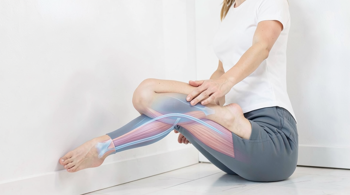
Progress to gentle static stretching
Static stretching may be introduced only when ordinary movement is comfortable and the muscle no longer reacts with sharp pain. Move slowly into a mild sensation of tension, not pain, and hold the position without bouncing. The research summary supplied for this topic identifies 15 to 30 seconds as a typical holding period once the muscle can tolerate stretching without pain. A sharp, pinching, or increasing sensation is a reason to stop rather than a signal to stretch farther. 4
Stretching should not be used to test whether the injury has healed. After each session, symptoms should remain stable or return quickly to their previous level. Increased swelling, renewed bruising, limping, reduced strength, or pain that lasts longer after exercise suggests that progression has been too rapid. Ballistic stretching, bouncing, and forceful partner-assisted stretching are particularly unsuitable during recovery because they apply sudden loads to tissue that may still be healing.
Use heat and loading appropriately
Heat can be useful later when stiffness is the main problem, but it should not be applied to a fresh injury that remains swollen. A warm shower or gentle heat before movement may make a settled muscle feel less stiff, yet heat does not establish that a strain is ready for deeper stretching. Ice remains a symptom-control option during the early period, with skin protection and limited application time as described by Mayo Clinic. 9
Recovery should progress from comfortable movement to light strengthening and then to normal activity. A rehabilitation guide describes mild strains as often improving with conservative care, while moderate and severe injuries take longer and may require guided treatment. Strengthening matters because returning to activity based only on flexibility can leave the muscle unable to tolerate its previous workload. Load, range, and intensity should increase gradually, with pain and function monitored between sessions. 7
Know when professional assessment is needed
Medical or physical therapy assessment is appropriate when pain is severe, the limb cannot bear weight or function normally, swelling or bruising is substantial, or symptoms fail to improve after several days. Recurrent strains also warrant evaluation because the original injury, weakness, movement pattern, or training load may not have been fully addressed. A clinician can examine strength and tenderness and may use ultrasound when distinguishing soft-tissue injuries is necessary. 1
A return to activity is safer when daily movement is comfortable, strength is returning, and the muscle tolerates gradual loading without a symptom flare. Prevention focuses on a progressive warm-up using dynamic movements, conditioning, hydration, and controlled increases in exercise demand. PhysioExtra lists examples such as light jogging, bodyweight squats, calf raises, and leg swings before activity, while also identifying strength training two to three times weekly as a preventive component. 6
Sources
- Mayo Clinic, “Muscle strains: Diagnosis and treatment”
- Harvard Health, “Muscle Strain: A to Z”
- Acibadem Hospitals Group, “What Does a Pulled Muscle Feel Like?”
- Holland & Barrett, “How to support a pulled muscle without making it worse”
- Transitions Physical Therapy, “Pulled a Muscle? Here’s What to Do in the First 48 Hours”
- PhysioExtra, “Muscle Stretching and Tears: What Should You Do?”
- MedAmerica Rehabilitation, “Muscle Strain Recovery: A Practical Step-by-Step Guide”
- Acibadem Hospitals Group, “Muscle Strain Recovery: Safe Ways To Heal Faster”
- Medical News Today, “How to Treat a Pulled Muscle”
Authored by MyTrendSpot team