Luxury Scented Candles: Materials, Fragrance Design, Craftsmanship, and Safety
Luxury scented candles are increasingly presented as complete interior experiences rather than simple sources of fragrance. Documented collections emphasize natural wax blends, artisanal vessels, perfumer-developed compositions, reusable containers, and carefully specified burn times. The category spans accessible small formats, substantial home-fragrance vessels, and numbered crystal objects, creating significant differences in use, maintenance, and environmental considerations.
How the luxury candle category is defined
Luxury positioning commonly combines four elements: a deliberately developed fragrance, a wax formulation intended to burn consistently, a vessel with decorative or reusable value, and brand heritage. Miller Harris describes a move to a natural soy and rapeseed wax blend, refreshed formulations, and scent diffusion intended to continue for up to 50 hours. 1 LAFCO similarly describes hand-poured candles, a natural wax blend, lead-free cotton wicks, master-perfumer fragrances, and artisan or hand-blown glass vessels. 4
Price alone does not establish performance or quality. The documented examples range from a 70-gram Diptyque candle with an approximately 20-hour burn to Lalique’s 750-gram crystal formats, which specify 80 hours in one case. 28 This spread indicates that comparisons should consider wax weight, vessel construction, fragrance character, burn duration, and after-use utility rather than retail positioning alone.
Wax, wicks, and combustion characteristics
Vegetable wax is a recurring feature in the supplied material. Miller Harris identifies soy and rapeseed, while Michael Aram specifies soy wax and a 60-hour burn for its 13.5-ounce Butterfly Ginkgo candle. 13 LAFCO reports a proprietary natural wax blend and lead-free cotton wicks designed for an even burn. 4 These descriptions establish formulation and wick choices as central technical differentiators, although they do not create a universal performance standard across brands.
Maintenance affects how a candle burns. Diptyque advises an initial two- or three-hour burn until the surface becomes liquid, regular wick trimming to 3 to 5 millimetres, and repositioning the wick centrally after use. 2 Michael Aram gives a separate trimming instruction of one-quarter inch before each relighting. 3 Different measurements reflect brand-specific guidance, so the label supplied with the individual candle remains the controlling reference for routine care.
Fragrance construction and scent families
Luxury candle fragrance is often built around layered compositions rather than a single easily identifiable note. Michael Aram’s Butterfly Ginkgo profile combines sparkling grapefruit and spicy black pepper with royal vetiver, tonka beans, and cedar wood. 3 Diptyque’s Tubéreuse description presents tuberose as heady, green, and fresh, while linking the scent to cultivated flowers in Southern India. 2 These examples show how products may combine olfactory description with geographic or botanical narrative.
LAFCO states that its scents are developed by master perfumers and designed to evolve gradually while maintaining clarity in a room. 4 Yankee Candle describes its YC Collection as using essential oils and hand-blended fragrances intended to produce a balanced scent throw. 5 Scent perception remains dependent on room size, ventilation, personal sensitivity, and burn duration, so a written note profile cannot guarantee an identical experience in every interior.
Vessels, craftsmanship, and after-use value
The container is a major part of the documented luxury proposition. Michael Aram describes a hand-forged, acid-etched bronze vessel surrounding glass, inspired by ginkgo leaves and made through artisanal Indian craftsmanship. 3 LAFCO refers to artisan and hand-blown glass vessels that can remain useful after the wax has been consumed. 4 Diptyque identifies its small candle as made in France with a reusable jar. 2
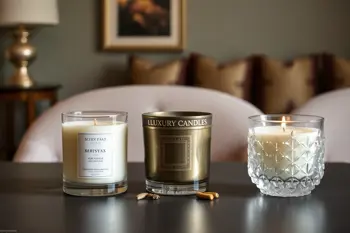
Lalique illustrates the upper end of vessel-led design. Its Jungle candle uses a numbered, amber-toned crystal container weighing 750 grams, with tiger-stripe motifs and a stated price of £2,190 on the supplied UK page. 6 Its Alizé format also uses clear crystal and beige wax, with a documented 80-hour burn and French manufacture. 8 Such objects require attention to handling, residual wax removal, and whether decorative value justifies the material and financial commitment.
Formats, burn times, and room suitability
Candle size directly affects likely placement and duration. Diptyque identifies its 70-gram Tubéreuse candle as suitable for small rooms, measuring 7 centimetres high by 6 centimetres in diameter and burning for around 20 hours. 2 Lalique’s 220-gram L’Atelier and La Verrerie candles specify 40 to 50 hours and are handcrafted in France. 79 These published figures provide useful comparison points, but actual results depend on wick care and burning conditions.
Large vessels can support longer use while imposing stricter operating requirements. Michael Aram lists a 60-hour burn for its 13.5-ounce candle, while Lalique lists an 80-hour burn for the 750-gram Alizé. 38 Lalique’s product guidance states that its candles should never burn for more than four hours at a time. 6 A longer total burn therefore does not mean a candle should remain lit continuously.
Safety, regulation, and market friction
Safety instructions supplied with the products consistently emphasize supervision and separation from combustible materials. Michael Aram states that candles should burn within sight, remain out of reach of children and pets, and stay away from anything that can catch fire. 3 Diptyque recommends airing the interior after burning. 2 These requirements are practical responsibilities, not optional accessories to the luxury presentation.
Fragrance ingredients can also create regulatory and personal-use considerations. Lalique lists substances such as linalool, benzyl salicylate, cinnamaldehyde, and limonene in its regulatory information, with warnings concerning allergic reactions and aquatic toxicity. 68 Product composition may change, so the packaging should be checked before use. Market friction also includes pre-order timing, regional delivery conditions, sold-out status, and differing currency or shipping arrangements shown across the supplied brand pages. 19
What to assess before choosing a candle
A neutral evaluation begins with measurable specifications rather than branding language. Useful comparison criteria include wax type, wick material, wax weight, stated burn time, vessel material, room guidance, fragrance notes, country of manufacture, and after-use instructions. The supplied examples show why these fields matter: a 70-gram small-room candle, a 220-gram French-made candle, and a 750-gram crystal object represent materially different uses and ownership obligations. 278
Consumers should also distinguish documented claims from interpretation. Terms such as natural, artisanal, refined, and elevated describe positioning, but published specifications provide stronger grounds for comparison. Checking the current ingredient label, following the stated maximum burn period, trimming the wick, and considering ventilation address the main practical risks identified in the research. Reusable glass or crystal vessels may extend the object’s usefulness, but cleaning and safe repurposing remain necessary after the wax is removed. 236
Sources
- Miller Harris, Luxury Scented Candles
- Diptyque, Tubéreuse Small Candle
- Michael Aram, Butterfly Ginkgo Scented Candle
- LAFCO New York, Scented Candles
- Yankee Candle, YC Collection
- Lalique UK, Jungle Limited Edition Crystal Scented Candle
- Lalique North America, L’Atelier Scented Candle
- Lalique France, Alizé Crystal Scented Candle
- Lalique North America, La Verrerie Scented Candle
- Miller Harris, Candles Collection
Authored by MyTrendSpot team