How to use essential oils for anxiety safely: Evidence, precautions, and practical guidance
Essential oils for anxiety safely means treating aromatherapy as a complementary relaxation practice rather than a cure. Research suggests that inhaled lavender, bergamot, bitter orange, and related aromas may provide modest short-term relief, particularly during situational stress, but safe use depends on exposure limits, dilution, ventilation, and individual health circumstances. 1 2
What the research shows about anxiety
Clinical evidence is promising but not definitive. Reviews of randomized trials have reported reductions in anxiety across several settings, including pre-surgical care, while a 2023 network meta-analysis identified benefits for both state anxiety, meaning an immediate reaction, and trait anxiety, meaning a more persistent tendency. One pre-surgery meta-analysis reported a standardized mean difference of -0.57, with a 95% confidence interval from -0.75 to -0.39. 3
The strongest evidence should not be interpreted as proof that every diffuser or topical blend treats an anxiety disorder. Lavender has been studied most often, and the research base includes different oils, doses, delivery methods, populations, and outcome measures. Aromatherapy may be more relevant for temporary nervousness than for severe, persistent, or disabling symptoms that require assessment and established treatment. 4 2
Oils most often studied for calming effects
Lavender is frequently recommended because studies have associated it with improved mood and reduced anxiety symptoms. Bergamot, bitter orange or neroli, ylang-ylang, lemongrass, and frankincense also appear in stress-relief discussions, although the amount and quality of supporting evidence varies. A pleasant scent can also become personally associated with relaxation, so individual response matters as much as a general popularity ranking. 1 3
| Oil | Evidence or practical note |
|---|---|
| Lavender | Among the most studied for anxiety and mood support. 4 |
| Bergamot | Commonly used for stress, but some forms can increase sun sensitivity on skin. 7 |
| Neroli or bitter orange | Included in research and reviews of situational anxiety. 3 |
| Ylang-ylang | Often discussed for stress and possible sedative effects. 13 |
Safer inhalation methods
Inhalation is generally the simplest way to evaluate an aroma without placing concentrated oil directly on the skin. A person can smell a small amount from a vial or tissue, or use a diffuser in a ventilated room. Diffusion should be limited to short sessions of about 30 to 60 minutes rather than continuous exposure, because concentrated fragrance may irritate the airways or cause headache, nausea, or discomfort. 1 8
- Start with a small amount and stop if coughing, wheezing, dizziness, headache, nausea, or skin irritation develops. 8
- Keep the room ventilated and avoid directing concentrated vapor toward the face.
- Do not assume that a stronger smell produces a stronger calming effect.
- Allow other people in the space to avoid exposure if they are sensitive to fragrance.
Topical use, dilution, and skin precautions
Undiluted essential oil should not be treated like ordinary moisturizer. Guidance summarized from Johns Hopkins Medicine commonly places topical dilution in the 1% to 3% range using a carrier oil such as jojoba or almond oil. A patch test on a small area about 24 hours before wider use can help identify a possible reaction, although a negative test does not eliminate all risk. 5 12
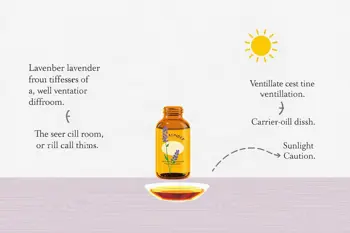
Citrus oils require particular attention because bergamot and related oils may cause photosensitivity, increasing the chance of irritation or a sunburn-like reaction after ultraviolet exposure. Avoid applying such oils to skin that will be exposed to sunlight unless product-specific safety guidance confirms otherwise. Essential oils should also be kept away from eyes, broken skin, and mucous membranes, where concentrated compounds can cause injury. 7 6
Who should seek advice before using them
Aromatherapy is not equally suitable for everyone. People with asthma or other respiratory conditions may react to inhaled fragrance, and the American Lung Association advises particular caution. Pregnancy, epilepsy, medication use, allergies, and other medical conditions can also change the risk profile. Consultation with a primary care provider or qualified clinician is appropriate when symptoms are significant or when there is uncertainty about interactions. 9 11
- Stop exposure if breathing difficulty, swelling, rash, or severe discomfort occurs and seek appropriate medical help.
- Keep oils away from children and pets, who may be more vulnerable to concentrated substances.
- Do not use aromatherapy as a substitute for prescribed anxiety treatment or urgent mental-health support.
- Ask a clinician or pharmacist about possible interactions before combining aromatherapy with prescriptions. 11
Ingestion, quality, and storage concerns
Ingesting essential oils is strongly discouraged without direct professional guidance. These products are concentrated plant extracts, and swallowing them can create toxicity risks and damage the mouth, throat, stomach, or other tissues. “Natural” does not mean harmless, and an oil intended for diffusion or topical use is not automatically suitable for internal use. 6
Product labeling can help with basic quality screening, although it cannot prove that an oil will relieve anxiety. Common indicators include a clear botanical identity, a statement that the contents are pure essential oil without synthetic fragrance or additives, and packaging in dark glass. Storage away from heat and light helps preserve chemical integrity. 10
A practical, measured approach
A cautious routine begins with one familiar aroma, a low exposure level, and a short observation period. Pairing a scent with slow breathing, a quiet setting, movement, sleep, or other established stress-management habits may make the routine more useful than relying on fragrance alone. The response should be judged by comfort and function, not by claims that an oil directly corrects the underlying cause of anxiety. 1 5
Persistent worry, panic, sleep disruption, avoidance, or interference with work and relationships deserves professional evaluation. Aromatherapy can be considered a supplementary comfort measure when tolerated, but evidence does not support presenting it as a standalone treatment for anxiety disorders. A clinician can help distinguish temporary stress from a condition requiring therapy, medication, or urgent support. 2 4
Sources
- Verywell Mind, Essential Oils for Stress Relief
- MDPI, Aromatherapy in Women’s Mental Health
- AromaTalking, Essential Oils for Anxiety: What the Evidence Actually Shows
- National Center for Complementary and Integrative Health, Lavender
- Johns Hopkins Medicine, Aromatherapy: Do Essential Oils Really Work?
- Cleveland Clinic, Essential Oils 101
- Mount Sinai Health System, Bergamot
- Mayo Clinic, Aromatherapy
- American Lung Association, Essential Oils
- National Association for Holistic Aromatherapy, Safety Information
- Harvard Health Publishing, Aromatherapy
- Healthline, Essential Oils for Anxiety
- WebMD, Ylang-Ylang
Authored by MyTrendSpot team