Warning signs of polycystic ovary syndrome: A clinical guide to symptoms and evaluation
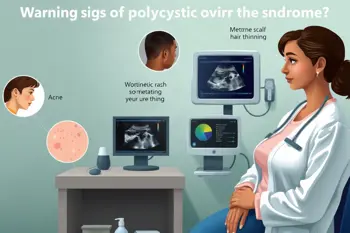
Warning signs of polycystic ovary syndrome include irregular or absent periods, persistent acne, excess facial or body hair, scalp hair thinning, unexplained weight changes, and difficulty becoming pregnant. Symptoms can be mild or severe, and some people are not evaluated until infertility or metabolic concerns arise. 1
Menstrual changes are a central warning sign
Infrequent, prolonged, or absent menstrual cycles are among the most recognizable signs associated with PCOS. The underlying issue is often ovulatory dysfunction, meaning the ovaries do not consistently release a mature egg. Some people experience cycles that are widely spaced, while others may have no periods for extended intervals. Irregular bleeding should be considered in context because cycle patterns can also change for reasons unrelated to PCOS. 2
Menstrual irregularity is especially important when it persists beyond the early period of reproductive development. Clinical guidance cautions against automatically diagnosing PCOS in adolescents because irregular cycles can be normal during the first year after the first period and may take several years to settle. Ultrasound and anti-Müllerian hormone testing are not advised for PCOS assessment during the first eight years after menstruation begins. 5
Skin and hair changes may reflect androgen activity
Higher-than-usual androgen activity can produce visible changes in the skin and hair. Common patterns include acne that continues beyond the teenage years, oily skin, unwanted dark or coarse hair on the face or body, and thinning hair on the scalp. These symptoms may appear together or separately, and their severity does not establish a diagnosis on its own. 4
Excess facial or body hair is known clinically as hirsutism, while scalp thinning may resemble a widening part or male-pattern hair loss. Acne can affect the face, chest, or back and may be persistent despite age-related changes that typically reduce teenage acne. Because androgen-related symptoms can also occur with other hormonal conditions, clinicians generally assess the timing, rate of progression, examination findings, and laboratory results rather than relying on appearance alone. 3
Metabolic signs can accompany reproductive symptoms
PCOS is not limited to the ovaries. Insulin resistance and elevated insulin levels are frequently associated with the syndrome and may contribute to weight gain, difficulty managing weight, type 2 diabetes, high cholesterol, high blood pressure, fatty liver disease, and sleep apnea. A person does not need to have every metabolic feature, and body size alone neither confirms nor excludes PCOS. 3
Dark, velvety skin in body creases, particularly around the neck, armpits, groin, or beneath the breasts, may indicate acanthosis nigricans, a skin change associated with metabolic problems. Skin tags can also occur in areas such as the neck and armpits. These findings are warning signals for broader metabolic assessment rather than proof of PCOS, since similar skin changes may have other explanations. 1
Fertility difficulties may reveal irregular ovulation
Difficulty becoming pregnant can be a presenting sign when irregular ovulation reduces the number of opportunities for conception. Penn Medicine identifies problems getting pregnant as a typical symptom, while clinical references describe PCOS as a major cause of infertility in the United States. The connection is generally related to disrupted egg maturation and ovulation, not simply the presence of cyst-like structures in the ovaries. 1
Ultrasound may show multiple small fluid-filled follicles, but the appearance can be misunderstood. These structures are often immature follicles containing eggs, rather than dangerous cysts in the usual sense. A person can have PCOS without this ultrasound appearance, and an ultrasound finding by itself does not establish the syndrome. Fertility evaluation therefore considers menstrual history, androgen-related signs, hormone testing, and other possible causes. 4
What clinicians use to evaluate possible PCOS
Professional guidance describes PCOS using two of three broad findings: evidence of hyperandrogenism, ovulatory dysfunction, or polycystic ovarian morphology. Hyperandrogenism may be shown through signs such as hirsutism or acne, or through hormone testing. The assessment typically combines medical history, physical examination, blood tests, and ultrasound when appropriate. The purpose is to identify a consistent pattern instead of treating one isolated symptom as definitive. 3
Other disorders can resemble PCOS, so evaluation may include testing to exclude alternative hormonal causes. Rapid or marked androgen-related changes require particular attention because clinicians may need to rule out a virilizing tumor or another significant condition. Diagnosis also varies by age and reproductive stage, making the timing of symptoms relevant. A healthcare professional can interpret results alongside medications, pregnancy status, weight changes, and menstrual history. 5
Risks, follow-up, and when symptoms merit assessment
Persistent symptoms merit medical assessment when periods are very irregular, symptoms are worsening, or pregnancy is desired. PCOS is associated with longer-term risks that include type 2 diabetes, elevated cholesterol, high blood pressure, obesity, fatty liver disease, and obstructive sleep apnea. The syndrome can also affect mental health, with mood changes, depression, and anxiety increasingly recognized among associated concerns. 2
Ongoing care is based on symptoms, insulin resistance, and fertility goals rather than on ovarian imaging alone. Management may address cycle regulation, acne, excess hair, metabolic risk, or ovulation, with treatment individualized to the person’s circumstances. Regular clinical follow-up is important because symptoms and health risks can change over time, including beyond the reproductive years. PCOS should therefore be understood as a complex hormonal and metabolic condition, not merely an ovarian ultrasound result. 3
Sources
- Penn Medicine, “Polyendocrine Metabolic Ovarian Syndrome, Symptoms and Causes”
- MSD Manual Consumer Version, “Polyendocrine Metabolic Ovarian Syndrome”
- Merck Manual Professional Edition, “Polyendocrine Metabolic Ovarian Syndrome”
- Acibadem Hospitals Group, “Polycystic Ovary Syndrome: Symptoms, Diagnosis, and Management”
- Pulse Today, “Key Questions on Polycystic Ovary Syndrome”
Authored by MyTrendSpot team