Warning signs of appendicitis: A clinical overview of symptoms and urgent diagnostic indicators
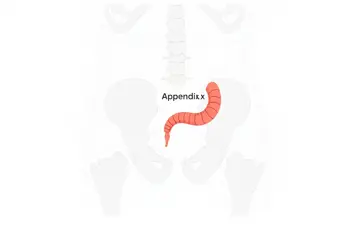
Appendicitis is a common cause of sudden abdominal pain requiring emergency surgical intervention in the United States, impacting approximately 5% to 9% of the population at some point during their lives 3, 6. As an inflammatory condition of the appendix-a small, finger-like organ extending from the large intestine-it can progress rapidly from initial discomfort to a life-threatening rupture 2, 3. Recognizing the clinical presentation and the speed at which symptoms evolve is essential for ensuring timely medical intervention and preventing serious complications like peritonitis 2, 7.
Typical Symptom Progression
The clinical trajectory of appendicitis often begins with a vague, dull ache located near the belly button or in the upper abdomen 1, 9. Over a period of several hours, this discomfort typically migrates toward the lower-right quadrant of the abdomen, where it becomes more sharp, localized, and severe 1, 3. This migration of pain is widely considered one of the classic diagnostic indicators, though individual experiences may vary 9. Many patients describe the pain as distinct from any previous abdominal distress they have encountered 1, 7.
Accompanying this pain, patients frequently experience a cluster of secondary symptoms. Loss of appetite is a common early sign, often preceding the onset of more severe abdominal pain by several hours 8, 9. Nausea and vomiting are also highly prevalent, which occasionally leads to the incorrect assumption that the patient is suffering from food poisoning or a viral gastrointestinal bug 1, 8. Additionally, the pain often intensifies with physical movement, such as walking, coughing, sneezing, or taking deep breaths, as the inflammation irritates the surrounding abdominal lining 1, 9.
Demographic Variations in Presentation
Appendicitis does not present identically in every patient, and clinical awareness is required for specific populations where symptoms may be atypical. In young children, older adults, and pregnant individuals, the classic signs of lower-right quadrant pain may be muted or altogether absent 1, 9. Children may exhibit vague signs such as generalized irritability, poor appetite, or difficulty pinpointing the source of their discomfort 9. Consequently, any persistent, unexplained abdominal distress in these groups warrants a low threshold for seeking professional medical evaluation 1.
During pregnancy, the physical displacement of internal organs can alter the location of the pain, potentially causing it to manifest higher in the abdomen than in non-pregnant patients 9. Furthermore, older adults may present with less intense tenderness, which can lead to delayed diagnoses and a higher rate of complications 9. Because symptom patterns are so variable, clinicians emphasize that a physical examination, combined with laboratory tests and diagnostic imaging-such as ultrasound or computed tomography-is necessary to confirm an appendicitis diagnosis 7, 9.
The Physiological Basis and Risks
The underlying cause of appendicitis is generally attributed to an obstruction of the appendix's lumen, which is the internal opening of the organ 2, 5. This blockage is often caused by hardened stool, enlarged lymphoid tissue, or even tumors 1, 2. Once blocked, the appendix continues to produce mucus, leading to a rapid buildup of pressure and inflammation 5, 6. As the organ swells, the blood supply to its walls may become compromised, causing tissue damage and the proliferation of bacteria trapped inside 2, 3.
If the condition remains untreated, the appendix can rupture, typically within 48 to 72 hours after the onset of symptoms 2. A rupture allows infected contents-including fecal matter, pus, and bacteria-to leak into the abdominal cavity 2, 6. This leads to peritonitis, an inflammatory and infectious state of the peritoneum, the membrane lining the abdominal cavity, which is a life-threatening medical emergency 2. Surgical removal of the appendix, or appendectomy, remains the standard treatment for this condition 4.
Differentiating Appendicitis from Other Conditions
Differential diagnosis is a significant challenge because many other health conditions can mirror the symptoms of appendicitis. Conditions such as gastroenteritis, kidney stones, urinary tract infections, and various gynecological issues often present with abdominal pain, nausea, and fever 9. The lack of diarrhea in typical appendicitis cases can serve as a distinguishing feature, as food poisoning frequently involves significant diarrheal symptoms while appendicitis generally does not 8.
Despite these general clinical differences, the subjective nature of pain makes self-diagnosis unreliable. Medical professionals utilize structured diagnostic tools to assess the probability of appendicitis, including scoring systems like the Appendicitis Inflammatory Response score and blood work monitoring indicators such as white blood cell counts and C-reactive protein levels 7. These laboratory metrics, when combined with imaging, allow physicians to navigate the diagnostic uncertainty inherent in acute abdominal pain syndromes 7.
Urgency and Medical Response
Because the potential for a rupture is high, appendicitis is categorized as an emergency that requires immediate medical assessment 1, 2. Individuals experiencing severe, worsening abdominal pain, especially if accompanied by fever, vomiting, or an inability to pass gas, should seek medical care promptly rather than waiting to see if symptoms improve 1, 9. Seeking medical help within the first 12 to 24 hours of symptom onset is associated with better outcomes and often allows for a more straightforward recovery 3, 7.
Patients are advised to avoid certain home remedies, such as the use of laxatives or heating pads, as these can be hazardous if the appendix is already inflamed or nearing perforation 9. The priority is to avoid any action that increases intra-abdominal pressure or interferes with the natural inflammatory response. Standard practice dictates that patients suspected of having appendicitis should refrain from eating or drinking until a physician has completed a formal assessment to determine the necessity of surgical intervention 2, 7.
Epidemiological Insights
Appendicitis affects approximately 280,000 people annually in the United States, with a lifetime risk distributed across both sexes 4, 8. While it can occur at any age, the highest frequency of cases is found in children, teenagers, and young adults, specifically between the ages of 10 and 35 3, 8. Research has identified slightly higher incidence rates in males compared to females, with historical data suggesting a lifetime risk of approximately 8.6% for men and 6.7% for women 3, 8.
There is no known way to prevent appendicitis, as the condition is not hereditary and remains largely driven by unpredictable physiological obstructions within the appendix 7. While hydration and a balanced diet are recommended for general digestive health, they do not offer a significant protective effect against the development of this condition 5. Consequently, public health education focuses on the rapid recognition of warning signs rather than prevention strategies, emphasizing that early intervention is the most effective approach to clinical management 5, 7.
Sources
- National Institute of Diabetes and Digestive and Kidney Diseases: Symptoms & Causes of Appendicitis
- Johns Hopkins Medicine: Appendicitis Overview
- Yale Medicine: Appendicitis Fact Sheet
- American Medical Association: What Doctors Want Patients to Know About Appendicitis
- UAB Medicine: Appendicitis Symptoms and Serious Stomach Pain
- Cedars-Sinai: Appendicitis Symptoms and Identification
- Ohio State Health & Discovery: Signs of Appendicitis
- American Academy of Family Physicians: Acute Appendicitis and Abdominal Pain
- WRAL/UNC Health: Understanding Appendix Rupture Signs
- Acibadem Hospitals Group: Symptoms of Appendicitis and Red Flags
Authored by MyTrendSpot team