5 Effortless Hairstyles for Women Over 50: A Practical Style Analysis
5 Effortless Hairstyles for Women Over 50: A Practical Style Analysis
“5 Effortless Hairstyles for Women Over 50” describes a practical approach to polished hair that does not require a lengthy morning routine. The most suitable choice depends on hair density, texture, face shape, preferred length, and how much styling is realistic on ordinary days. Hairstylists cited by Prevention and other beauty publications note that hair may become finer, drier, less elastic, or less shiny with age, making shape and texture important considerations. 1
Effortless does not mean identical for every person. A bob can provide a strong outline, layers can create movement, and shorter cuts can simplify styling, but each option has trade-offs involving trimming, product use, air-drying, and control of frizz or natural curl. The following five styles represent adaptable categories rather than rigid rules, and each can be adjusted by a professional to suit the wearer’s hair and facial features. 3
How Hair Needs Can Change After 50
Hair commonly changes in thickness, elasticity, shine, dryness, and texture over time. Carrie Butterworth, cited by Prevention, says women over 50 often encounter thinning hair, reduced elasticity, and less shine, while Michelle Cleveland notes that facial proportions can also appear more elongated with age. These changes can affect how long, straight, blunt, or heavily styled hair appears around the face. A strategic cut can therefore emphasize fullness, movement, or soft framing instead of simply repeating a style worn decades earlier. 1
Low-maintenance design usually comes from a haircut that cooperates with natural movement. John Frieda’s guidance identifies chin-to-shoulder-length cuts, face-framing fringe, layers, and waves as useful directions for people concerned about thinning or reduced volume. Texture also matters: a slightly tousled finish can require less precision than a perfectly smooth result, while a blunt outline may make fine ends appear denser. The most practical consultation should address hair behavior, maintenance frequency, and styling time together. 3
1. Chin-Length Bob
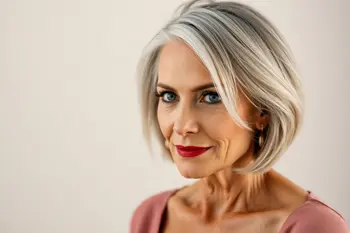
A chin-length bob is a compact, polished shape that can work with straight, wavy, or lightly curly hair when its graduation and layering are carefully adjusted. SheFinds describes the classic bob as easy to manage because an even length can make hair look healthier and fuller while framing the face. The outline can be worn smooth, slightly tousled, or tucked behind the ears, giving the same cut several distinct finishes without requiring a complicated routine. 2
The principal maintenance issue is shape retention. A chin-length bob may need regular trimming to preserve its clean perimeter, particularly when the ends are blunt or graduated. Fine hair can benefit from a strong outline, while thicker or wavier hair may require internal shaping to prevent excessive bulk. Face-framing pieces or a side-swept fringe can soften the front and customize the cut around the cheekbones, forehead, or jawline. 6
2. Layered Shoulder-Length Cut
A layered shoulder-length cut, often described as a lob or layered midi, preserves more length while adding movement around the face and ends. John Frieda places the classic lob between the chin and collarbone and describes it as simple to style, with options for smoothing, round-brush volume, or a more natural finish. The length can also remain long enough for a ponytail, twist, or low bun, which increases its usefulness across work, casual, and formal settings. 3
Layers can help fine or thinning hair appear more dynamic, but their placement should be deliberate. Excessive layering may reduce the appearance of density at the ends, while carefully spaced layers can provide physical and visual movement. Prevention’s cited stylist guidance favors shorter or strategically layered shapes when hair appears thinner, because movement can give the face a lifted impression and keep shoulder-length hair from looking flat. 1
3. Textured Pixie
A textured pixie reduces the amount of hair that must be managed each morning and uses short layers to create shape. SheFinds identifies the soft pixie as particularly suitable for thinning hair because shorter lengths can create the appearance of volume, while soft layers keep the result from looking severe. Southern Living also includes curly pixies among low-maintenance choices, showing that the category can accommodate natural curl rather than requiring every strand to be straightened. 24
The pixie’s main advantage is speed, but it is not maintenance-free. Short hair reveals growth quickly, so the silhouette may require more frequent salon shaping than a shoulder-length cut. Daily styling can remain simple: a small amount of cream, mousse, or pomade can separate the layers and define texture. A longer top, soft side fringe, or gently tapered neckline can make the cut less severe and offer additional control over the forehead and face. 1
4. Soft Shag or Feathered Cut
A soft shag uses graduated layers and feathered sections to create lift, movement, and an intentionally relaxed finish. The style is compatible with waves and curls because natural texture contributes to the overall shape instead of being treated as a problem to eliminate. Southern Living lists textured shags and layered shoulder-length styles among options that can provide volume, while research supplied from SheFinds emphasizes that strategic layers can support fuller-looking, more animated hair. 43
The cut is most effortless when the layers match the hair’s natural behavior. On fine hair, too many short layers may make the perimeter appear sparse, so a stylist may concentrate texture near the crown and face. On thick or curly hair, internal shaping can reduce weight without removing the movement that defines the style. A soft fringe or face-framing section may also blend a changing hairline into the haircut rather than creating a hard visual boundary. 1
5. Low Ponytail, Chignon, or Twist
A low ponytail, chignon, or twist is an adaptable styling option for hair that retains enough length to gather at the nape. The supplied research identifies these updos as suitable for casual or formal occasions and notes that clips, pins, or decorative accessories can alter the finish. A low placement generally keeps the shape understated, while loose face-framing pieces can prevent the style from appearing overly tight or severe around the forehead and cheeks. 10
Updos also expose practical limitations. Very fine hair may produce a small ponytail or loose bun, and pulling hair tightly can emphasize reduced density at the temples or hairline. A softly gathered style, light teasing at the crown, or a broad clip can create a fuller visual shape without demanding elaborate styling. Real Simple’s coverage of uncomplicated routines includes low buns, ponytails, and clips as versatile approaches, but the most suitable choice depends on hair length, scalp comfort, and desired hold. 10
Choosing the Most Practical Option
The five categories differ in how they balance length, volume, styling time, and salon upkeep. A bob provides a built-in outline, a layered cut retains versatility, a pixie minimizes daily handling, a shag uses natural texture, and an updo changes the appearance without cutting length. Harper’s Bazaar reports that bobs can look fuller because mature hair may become finer through the ends, while styling can range from smooth to air-dried or textured. 6
Before selecting a style, a consultation should cover face shape, hair density, curl pattern, dryness, growth rate, and realistic maintenance habits. Side-swept bangs and face-framing layers can be integrated into several of the cuts, but they may require separate shaping as they grow. Low-maintenance hair still involves washing, conditioning, occasional trimming, and management of frizz or gray-root contrast. Yahoo’s cited stylists describe the broader movement as a preference for practical cuts that enhance confidence rather than pursue an anti-aging ideal. 5
Sources
- Prevention, “20 Flattering Hairstyles for Women Over 50, Per Stylists”
- SheFinds, “7 Low-Maintenance Hairstyles Women Over 50 Swear By”
- John Frieda, “9 Modern, Flattering Hairstyles for Women Over 50”
- Southern Living, “25 Short And Medium Hairstyles For Women Over 50”
- Yahoo Shopping, “The Easiest, Low-Maintenance Haircut Ideas for Women Over 50”
- Harper’s Bazaar, “Bob Haircuts for Women Over 50”
- Real Simple, hairstyle guidance for women over 50
Authored by MyTrendSpot team