Best CrossFit fitness classes near me: A framework for evaluating local training facilities
Finding the ideal CrossFit fitness facility requires balancing logistical convenience with the specific training environment of an affiliate gym. Because high-intensity functional movement programs are inherently personal, identifying the right location involves assessing a facility's coaching philosophy, class structure, and community culture 1. The following analysis outlines the key metrics and operational standards used to distinguish professional training environments from standard gym offerings, ensuring that prospective members can make informed decisions based on safety, consistency, and professional oversight.
The Role of Structured Programming and Coaching
Professional CrossFit facilities, often referred to as boxes, distinguish themselves through the quality and consistency of their programming. Unlike traditional big-box gyms, reputable affiliates prioritize supervised instruction where coaches actively monitor form to prevent injury 2. At facilities like CrossFit St. Augustine, programming is categorized by functional movements, including Olympic weightlifting and metabolic conditioning, which are adjusted for individual ability levels 1. This process, known as scaling, is a critical component of safe high-intensity training, allowing beginners and advanced athletes to work within the same session safely 2.
Advanced programming systems, such as those used by official Mayhem affiliates, often utilize structured progressive overload protocols designed by experienced competitive athletes to systematically improve endurance and strength 3. When evaluating a local gym, it is essential to determine if the workouts are random or follow a long-term plan that accounts for volume and intensity management 8. A high-quality facility will demonstrate transparent communication regarding how their coaches manage class capacity and individualized movement adaptations to ensure that every participant receives adequate attention 4, 6.
Assessing Facility Standards and Safety Practices
Safety in high-intensity environments is predicated on the foundational instruction provided during introductory periods. Many established gyms require or encourage a dedicated onboarding process, often called a foundations course or a no-sweat intro, where a coach assesses an individual's goals and physical capabilities before they join group sessions 2, 4. This consultation phase helps mitigate potential risks associated with high-intensity exercise, particularly for those recovering from previous injuries or those who have been sedentary for extended periods 9.
Prospective members should evaluate the ratio of coaches to athletes, as smaller group sizes generally facilitate better supervision. For instance, some specialized boxes limit class sizes to ten participants to ensure that each coach can provide personalized cues and correction 6. Furthermore, verified safety markers include the presence of clear, documented procedures for equipment maintenance and the availability of qualified staff members who hold active certifications, such as those verified through CrossFit's credentialing levels 6. Engaging with a facility that offers a structured introduction allows for a gradual progression that aligns with clinical recommendations for muscle-strengthening and aerobic activities 7, 8.
Community Culture and Accountability Metrics
The efficacy of a training program is often bolstered by the consistency of its participants, which is directly influenced by the gym's community environment. Research suggests that an supportive, coach-led community helps individuals maintain fitness habits by providing social accountability and minimizing the intimidation factor often found in large, impersonal facilities 2, 4. Successful gyms cultivate this through inclusive atmospheres that accommodate diverse age groups, ranging from young participants to older adults engaging in longevity-focused programs 2, 5.
To evaluate if a gym's culture aligns with individual needs, prospective members should consider reviewing member testimonials that highlight coach accessibility and long-term support rather than just immediate physical results 6. Many facilities track these qualitative metrics through consistent member retention and engagement in events that go beyond individual workouts, such as community challenges or social gatherings 5. This focus on sustainable participation supports the broader objective of meeting the recommended weekly levels of physical activity, which include at least 150 minutes of moderate-intensity or 75 minutes of vigorous-intensity aerobic exercise 7.
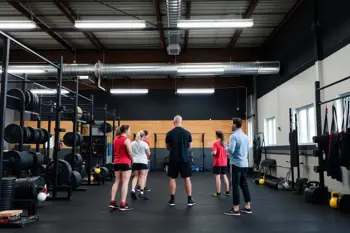
Data-Driven Selection of a Training Facility
When selecting a location, the use of objective data sources is recommended to verify the legitimacy of a facility. The official CrossFit affiliate map serves as the primary registry for authorized gyms, which is a necessary starting point to ensure the facility meets the standards of the parent organization 10. Beyond official listings, local directories such as Google Maps and Yelp provide context through historical reviews and operational details, including schedules and pricing transparency 11, 12.
| Evaluation Criteria | Objective to Monitor |
|---|---|
| Coaching Standards | Certification levels and instructor-to-athlete ratios |
| Programming | Structure, progressive overload, and variety |
| Safety Protocols | Onboarding process and scaling availability |
| Operational Transparency | Pricing, cancellation terms, and equipment upkeep |
Furthermore, platforms such as Mindbody and ClassPass can be utilized to view class schedules and availability in real time, which helps determine whether the gym's operating hours align with one's personal schedule 13, 14. It is also advisable to check business profiles on neutral platforms like the Better Business Bureau for consumer complaint information, which offers an additional layer of objective analysis regarding a gym's operational reliability 16.
Regulatory Oversight and Medical Considerations
Engagement in high-intensity functional training programs warrants a proactive approach to personal health and regulatory safety. Because these classes are categorized as high-intensity, the American College of Sports Medicine suggests that individuals with underlying health conditions or those who have been inactive should consult with a healthcare professional before beginning a new regimen 15. Medical guidance ensures that the chosen modifications to exercise intensity and volume are appropriate for an individual's unique health profile 8.
Finally, understanding the potential for orthopedic injury in high-load, high-repetition exercise is essential for long-term health. Peer-reviewed research, accessible through databases like PubMed, indicates that while the benefits of functional training are significant, maintaining proper form through diligent coaching is the most effective way to minimize injury risk 17. A responsible gym operator will prioritize educating members on these risks, fostering a culture of longevity where technique is consistently emphasized over the intensity of a specific workout 6, 8.
Strategic Integration into Daily Routine
The ultimate goal for any individual seeking a training facility is the integration of physical activity into their daily life in a way that is both manageable and consistent. This involves choosing a facility that minimizes friction in the logistics of attendance, such as proximity to home or work and the flexibility of class booking systems 6. Developing a habit of consistent attendance often requires a combination of structured programming and personal accountability, which is best achieved in an environment where members feel comfortable asking questions and requesting help with technique 4.
By selecting a facility that emphasizes sustainable progress over immediate, short-term performance, individuals can expect to see meaningful improvements in strength, confidence, and overall health over time 5, 8. The selection process should be viewed as a long-term investment, where the most suitable choice is defined by the quality of the coaching, the inclusivity of the environment, and the professional management of the facility's programming and equipment 5.
Sources
- CrossFit St. Augustine Official Website, crossfitsta.com
- Alpine CrossFit Facility Overview, alpinecrossfit.com
- CrossFit Solus Program Methodology, crossfitsolus.com
- CrossFit Silicon Valley Program Philosophy, crossfitsv.com
- CrossFit Lake Wylie Community and Coaching Standards, crossfitlakewylie.com
- CrossFit 1864 Operational Guidelines, crossfit1864.com
- Centers for Disease Control and Prevention: Physical Activity Guidelines, cdc.gov
- Mayo Clinic: Strength Training Progression, mayoclinic.org
- CrossFit ISO Beginner Onboarding Protocol, crossfitiso.com
- CrossFit Affiliate Map, map.crossfit.com
- Google Maps Location Services, google.com/maps
- Yelp Business Search, yelp.com
- Mindbody Directory, mindbodyonline.com
- ClassPass Fitness Marketplace, classpass.com
- American College of Sports Medicine Guidelines, acsm.org
- Better Business Bureau, bbb.org
- National Institutes of Health PubMed Database, pubmed.ncbi.nlm.nih.gov
Authored by MyTrendSpot team