Best Water Aerobics Programs Near Me: A Comprehensive Guide to Identifying and Evaluating Aquatic Fitness Opportunities
Finding the right water aerobics program involves navigating a variety of municipal, community, and private facilities that offer aquatic exercise sessions tailored to different fitness levels. Whether participants are seeking low-impact cardio, strength training, or specialized rehabilitative support, understanding the common operating structures of these programs is essential for locating suitable options in any given area 17. Because availability is often dictated by facility scheduling and regional demand, potential participants should approach their search by evaluating local infrastructure, membership requirements, and specific programming details 211.
Understanding Local Aquatic Fitness Landscapes
Municipal recreation departments and community centers serve as primary providers for water aerobics programs. Facilities like the Rockville Swim and Fitness Center in Maryland, for instance, offer structured classes designed for various fitness levels, often integrating accessibility features for individuals with disabilities 1. Similarly, community-based organizations such as the Lochmere aquatic program in North Carolina demonstrate how suburban or community associations manage dedicated schedules for residents, typically emphasizing a total body exercise approach that focuses on reducing skeletal stress and improving cardiovascular health 3. These programs frequently require pre-registration and adherence to specific health-based participation guidelines 35.
Large-scale health networks and regional centers also provide consistent scheduling for water fitness. The NKC Health system in Missouri utilizes specific wellness pools to host recurring sessions that emphasize movement, agility, and flexibility for a wide range of body types 2. Across different regions, such as at the Stroum Jewish Community Center in Washington or the University of the Incarnate Word (UIW) Sports and Wellness facilities in Texas, programs often require participants to meet specific enrollment criteria, such as membership status or, in the case of institutional wellness programs, proof of affiliation 410.
Evaluating Program Structure and Logistics
When investigating local options, the logistical requirements often vary significantly. Registration processes range from online portal management to in-person sign-ups, and class sizes are frequently capped to maintain a safe instructor-to-participant ratio 13. For example, programs at the Lochmere facility limit participation to 23 people, requiring sign-ups 3 days in advance to ensure equitable access 3. Understanding these constraints-such as whether a program allows drop-ins or mandates a full session registration-is critical for ensuring consistent attendance 23.
Pricing models also present a diverse spectrum. Some organizations utilize a flat fee per session, while others offer tiered pricing based on residential status or age-based categories 258. Programs like those at Ken Caryl Ranch in Colorado highlight how membership tiers-such as SilverSneakers, Renew Active, or Silver & Fit-can provide specific access benefits, whereas non-members are often subject to daily drop-in rates 5. Prospective participants should confirm these financial details and inquire about potential discounts for seniors or residents before enrolling 25.
Health Benefits and Physical Considerations
Water aerobics is widely recognized for its ability to provide aerobic and strengthening benefits with significantly lower joint impact than land-based exercise 69. The natural buoyancy of the water provides resistance that can be 12 to 14 times greater than moving through air, which helps in toning muscles and improving circulation while alleviating pressure on weight-bearing joints 56. Organizations such as the Arthritis Foundation highlight this form of exercise as a preferred method for individuals dealing with chronic pain or mobility limitations 15.
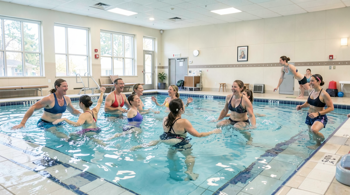
Despite these advantages, participants should consider the intensity levels offered. Some classes, such as those at the Carla Madison Recreation Center in Denver or Palo Alto’s Aqua Fit program, utilize specific setups like current channels or dance-fusion formats to challenge heart rates 79. Regardless of the format, those with cardiovascular concerns or significant physical ailments should consult with a healthcare professional to ensure the chosen class intensity is appropriate for their specific medical history 1217.
Facility Standards and Accessibility Requirements
The environment of the pool plays a crucial role in the success of a water fitness routine. Important factors include water temperature, air temperature, and the presence of accessibility equipment like ramps or chair lifts for individuals with limited mobility 25. Programs such as those in Ken Caryl Ranch specifically note that classes may be subject to external factors, such as air temperature requirements, ensuring that participants remain in a comfortable environment throughout their workout 5. Checking these facility specifications is an essential step when conducting a search for programs.
| Feature | Consideration |
|---|---|
| Registration | Check for online portals vs. in-person requirements |
| Membership | Inquire about SilverSneakers or resident discounts |
| Accessibility | Verify pool entrance methods (stairs, ramps, lifts) |
| Intensity | Confirm if the class is beginner, mild, or high-energy |
| Environment | Note pool/air temperature requirements |
Resources for Locating Programs
For those struggling to find programs through local municipal websites, national organizations offer directories that act as centralized hubs for aquatic fitness information. The YMCA, for example, provides a national locator that can help identify nearby facilities where group aquatic fitness programs are available 11. Additionally, the Aquatic Exercise Association provides resources for finding certified instructors, which can serve as a quality benchmark when evaluating local class offerings 14. Utilizing these directories, along with platforms like U.S. Masters Swimming for club-based aquatic environments, can broaden the search range beyond immediate neighborhood facilities 13.
Regulatory Oversight and Program Maintenance
Professional oversight of aquatic fitness programs is often managed through local recreation departments or specialized health systems, ensuring that instructors maintain proper safety certifications 14. When programs are community-led, participants should verify that the organizers maintain established safety protocols and that the facility adheres to standard health codes regarding water quality and equipment maintenance 814. Regular maintenance of these programs is often tied to seasonal schedules, with many facilities updating their class rosters in late summer or winter, making it necessary for participants to check back regularly for updated information 58.
Sources
- City of Rockville, Classes and Lessons at Rockville Swim and Fitness Center
- NKC Health, Water Fitness Event Calendar
- Lochmere, Water Fitness Programming Details
- Stroum Jewish Community Center, Aqua Fit Class Information
- Ken Caryl Ranch, Water Aerobics Program Guidelines
- Verywell Fit, Benefits and Risks of Water Exercise
- Active.com, Water Aerobics Class Directory
- Talbot County Parks and Recreation, Water Aerobics Schedule
- Palo Alto Swim, Aqua Fit and Water Zumba Information
- University of the Incarnate Word Sports and Wellness, Natatorium Procedures
- YMCA, Find Your Y Facility Locator
- Centers for Disease Control and Prevention, Physical Activity Guidelines
- U.S. Masters Swimming, Club Directory
- Aquatic Exercise Association, Industry Standards and Certification
- Arthritis Foundation, Water Exercise for Joint Health
- Harvard Health Publishing, Benefits of Water Exercise
- Mayo Clinic, Considerations for Aquatic Fitness
Authored by MyTrendSpot team