Italy 10-Day Escape with Flight Included: Analytical Overview of Multi-City Travel Planning
An Italy 10-Day Escape with Flight Included generally combines an international flight with hotels, intercity transportation, sightseeing, and sometimes meals or airport transfers. Published itineraries show several workable patterns, including Rome, Florence, and Venice; Rome, Naples, and Sorrento; or a broader route incorporating Tuscany, Cinque Terre, and the Amalfi Coast. 1
What a 10-day itinerary commonly includes
Ten-day programs frequently use Rome as the arrival city because it provides major historical attractions and an international airport connection. A representative route may allocate three or four nights to Rome, followed by Florence and Venice, with high-speed rail linking the main urban centers. Other programs replace Venice with Sorrento, Naples, or the Amalfi Coast to emphasize coastal scenery and southern Italian food traditions. 2
Flight inclusion does not create a uniform package standard. Some published programs include international airfare, hotels, breakfast, internal rail, transfers, and guided visits, while others describe only an itinerary framework or land arrangements. A 10-day group program lists flight inclusion, four-star accommodation, breakfast, and a route through Rome, Florence, Venice, Perugia, Naples, and Salerno. 3
- Common components include international airfare, hotel nights, rail or coach transportation, and selected sightseeing.
- Possible exclusions include meals beyond those specified, attraction reservations, local taxes, personal transport, and travel insurance.
Route structures and travel time
The classic northbound structure is Rome, Florence, and Venice, generally split into about four nights in Rome, three in Florence, and three in Venice. This arrangement avoids backtracking and uses direct high-speed trains. An open-jaw flight, arriving in Rome and departing from Venice, can reduce the need to return to the starting airport, although flight schedules and fare rules determine whether that structure is practical. 4
A southern route produces a different experience. One published 10-day plan begins with Rome, then continues to Sorrento and Naples, with optional visits to Positano, Capri, Pompeii, and the Amalfi Coast. The emphasis is on ancient history, seaside towns, marinas, and regional cuisine rather than a rapid survey of northern cities. Moving between coastal bases may require road transfers, ferries, or private vehicles, making logistics more sensitive to weather and traffic. 1
Representative day-by-day patterns
Published itineraries commonly devote the first days to Rome’s ancient and religious landmarks. Typical visits include the Colosseum, Roman Forum, Palatine Hill, Vatican Museums, Sistine Chapel, St. Peter’s Basilica, Trevi Fountain, Pantheon, Piazza Navona, and Trastevere. The itinerary design often leaves the arrival afternoon less structured, recognizing that long-haul travelers may have limited energy after airport transfers and hotel check-in. 5
Florence usually combines the Duomo complex, the Accademia Gallery, Michelangelo’s David, the Ponte Vecchio, and Renaissance collections with a Tuscany excursion. Venice programs may include St. Mark’s Square, a Grand Canal arrival, Doge’s Palace, and a glassblowing workshop. A more extensive plan can add Verona, Pisa, Assisi, the Italian Lakes, or Sorrento, but each additional stop increases hotel changes and transit exposure. 6
| Route emphasis | Typical places | Primary character |
|---|---|---|
| Classic cities | Rome, Florence, Venice | Ancient history, Renaissance art, canals |
| Central and coastal | Rome, Tuscany, Florence, Cinque Terre | Wine country, art, villages, coastline |
| Southern Italy | Rome, Naples, Sorrento, Capri, Amalfi Coast | Archaeology, seaside scenery, local food |
Costs, inclusions, and package comparisons
Available published figures vary substantially because they represent different departure markets, hotel categories, dates, and service levels. One Flight Centre listing identifies a 10-day tour from Rome at $2,875 per person, with nine hotel nights, nine breakfasts, three dinners, and sightseeing led by a local specialist. Another group itinerary lists a price of ₹242,165 and identifies flights, visas, four-star hotels, and breakfast as included. These figures are not directly comparable without matching currencies and inclusions. 6 3
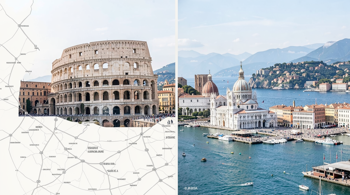
A separate planning source estimates total trip costs of approximately US$3,000 to $4,500 for a solo traveler and US$5,000 to $7,500 for a couple when flights, internal trains, mid-range lodging, food, and attractions are counted. Such estimates should be treated as planning benchmarks rather than quotations. International departure city, baggage rules, room occupancy, exchange rates, optional excursions, and peak-season availability can materially change the final amount. 7
Seasonality and booking friction
Shoulder periods, particularly May through June and September through October, are frequently identified as favorable for balancing weather and visitor volume. August presents particular constraints because of heat, crowds, and the Ferragosto holiday period, while July is described as a high-pressure travel month. These seasonal observations affect airfare, hotel availability, attraction queues, and the comfort of walking-heavy city itineraries. 7
Major attractions may require timed reservations. Published guidance specifically recommends advance arrangements for the Colosseum, Vatican Museums, Sistine Chapel, and popular restaurants. Coastal transport introduces another point of friction: ferries, mountain roads, and private transfers can be affected by weather, congestion, or local operating schedules. A package that lists an excursion does not necessarily mean every entrance, reservation, or transport segment is included in the headline price. 5
Airfare, eligibility, and regulatory considerations
Flight-inclusive travel requires careful review of the departure and return airports, ticket type, baggage allowance, connection length, and rules for changing or cancelling flights. Open-jaw routing can improve geographic efficiency, but it may involve different airline combinations or fare conditions. Some tours begin and end in Rome, while others depart from Rome and finish in Florence or Venice, so the final airport transfer must be evaluated alongside the international ticket. 8
Visa and entry arrangements also vary by nationality and package. A published group tour identifies visa inclusion, but that statement cannot be generalized to every traveler or departure market. The provided research notes that United States citizens traveling to Italy are expected to require ETIAS authorization beginning in 2025, based on European Union guidance. Travelers remain responsible for checking current passport validity, authorization requirements, and airline documentation rules before departure. 9
How to evaluate an itinerary objectively
The most useful comparison is not the number of cities but the relationship between included services and time spent in transit. A two-base private itinerary may provide more guided depth, while a multi-city group route may cover more landmarks but involve frequent departures and arrivals. Published private-tour plans can include airport transfers, first-class high-speed trains, expert guides, regional drivers, and on-call coordination, whereas independent itinerary pages may provide planning detail without supplying those services. 10
Key review questions concern the exact flight itinerary, hotel location, room category, meal schedule, rail class, attraction tickets, transfer method, cancellation terms, and insurance responsibility. Travelers should also identify whether free time is genuinely unstructured or reserved for optional activities. The central trade-off is breadth versus recovery time: Rome, Florence, Venice, and a coast experience are possible in ten days, but adding Tuscany, Cinque Terre, Naples, and the Amalfi Coast can make the schedule substantially denser.
- Confirm the arrival and departure airports before comparing routes.
- Separate included services from optional excursions and personal expenses.
- Check reservation requirements for major museums and archaeological sites.
- Match the itinerary’s walking and transfer demands with traveler preferences.
Sources
- Zicasso, Historic Cities to Treasured Coastline of Italy Tour
- Tuscan Team, 10 Day Italy Journey
- The Kangaroo Travels, 10N Italy Group Tour
- Tripstou, 10-Day Italy Itinerary
- Destination.com, Rome, Florence and Amalfi Itinerary
- Flight Centre, Italian Scene
- Packzup, 10-Day Italy Itinerary
- Europe Private Tours, 10 Day Private Italy Tour
- European Union and provided travel-research summary
- Europe Private Tours, itinerary inclusions and services
Authored by MyTrendSpot team